アピストグラマ・エリザベサエは、南米大陸のアマゾン川流域、特にネグロ川上流の限られた水系に固有に生息する小型の熱帯魚(ドワーフシクリッド)です。1980年に正式に記載されて以来、その極めて特異な形態的特徴と、産地によって異なる複雑な色彩変異から、世界中の観賞魚愛好家や魚類学者の間で強い関心を集め続けています。成長に伴い劇的に形を変える尾鰭や、過酷な自然環境に適応した特有の生態、そしてその学名に込められた19世紀の女性科学者の歴史的背景など、単なる愛玩動物の枠を超えた深い魅力と多層的な価値を持つ、至高のシクリッドと言える存在です。Apistogramma elizabethae is a small tropical fish (dwarf cichlid) endemic to specific river systems in the Amazon basin of South America, particularly the upper Rio Negro. Since its formal description in 1980, it has garnered intense interest among aquarium enthusiasts and ichthyologists worldwide due to its highly unique morphological features and complex color variations depending on its locality. With a caudal fin that dramatically changes shape as it grows, a unique ecology adapted to harsh natural environments, and the historical background of a 19th-century female scientist embedded in its scientific name, it is a supreme cichlid that possesses deep charm and multifaceted value far beyond that of a mere pet.
南米ブラジル北西部 アマゾナス州(ネグロ川上流、ウアウペス川、イサナ川水系)Amazon basin, northwestern Brazil (upper Rio Negro, Rio Uaupes, and Rio Icana drainages)
最大体長 / Max Size
雄は最大で全長約6.0センチメートル、雌は全長約3.5センチメートルMales reach a maximum total length of about 6.0 cm, while females reach about 3.5 cm.
寿命 / Lifespan
約3年から5年程度(適切な飼育環境下において)Approximately 3 to 5 years (under appropriate care).
飼育環境 / Aquarium Environment
水槽サイズ / Tank Size
単独のペアであれば45センチ規格水槽(約35リットル)から飼育可能ですが、水質変動のバッファーを持たせ安定させるためには、60センチ規格水槽(約60リットル)以上が理想的です。A 45cm standard tank (approx. 35 liters) is possible for a single pair, but a 60cm standard tank (approx. 60 liters) or larger is ideal to provide a buffer against water quality fluctuations.
水温 / Temperature
22度から29度。熱帯特有のやや高めの水温を好みますが、繁殖を促す際は一時的な水温低下がトリガーとなります。22 to 29 degrees Celsius. They prefer slightly warmer temperatures typical of the tropics, but a temporary drop in temperature triggers spawning.
水質 / Water Quality
pH4.0から6.0の強酸性、かつ総硬度(GH)が実質ゼロに近い極めて低い硬度の軟水。日本の水道水からミネラル分を除去したRO水(逆浸透膜浄水)をベースに、ピートモス等で調整したブラックウォーターが最適です。Strongly acidic (pH 4.0 – 6.0) and extremely soft water with a total hardness (GH) close to zero. Blackwater prepared with RO (Reverse Osmosis) water and peat moss is optimal.
レイアウト / Layout
本種の健康維持のため、底床の一部に必ず細かい砂(ファインサンド)を敷いてください。沈水性の流木を複雑に組んで頭上を覆う隠れ家を作り、照明は極力暗くします。ミクロソリウムや浮草など陰性水草が適しています。It is strictly required to provide fine sand substrate in part of the tank for their health. Create complex hiding spots with submerged driftwood, keep lighting dim, and use low-light plants like Microsorum or floating plants.
注意点 / Precautions
強い水流を嫌うため、エアーリフト式のスポンジフィルターの使用が推奨されます。また、有機物の蓄積やアンモニア、硝酸塩濃度の上昇に異常なほど弱いため、こまめで少量の換水による水質維持が不可欠です。ソイルの単独使用は避けてください。They dislike strong water currents, so an air-driven sponge filter is recommended. They are extraordinarily sensitive to organic buildup and ammonia/nitrate spikes, making frequent but very small water changes essential. Avoid using only aquasoil as substrate.
餌と給餌 / Feeding
餌の種類 / Diet
主に肉食性です。ブラインシュリンプ、ミジンコ、アカムシなどの生餌や冷凍飼料を好みます。高品質な沈下性の人工ペレットにも順応しますが、フレーク状の餌はあまり好みません。Primarily carnivorous. They prefer live or frozen foods such as brine shrimp, Daphnia, and bloodworms. They will adapt to high-quality sinking pellets, but generally dislike flake foods.
給餌のポイント / Feeding Tips
繁殖に向けて雌を抱卵させるためには、高タンパクな生餌を豊富に与えることが不可欠です。稚魚が孵化した後は、消化器官が未発達なため、孵化直後のブラインシュリンプなどを1日に複数回に分けて極少量ずつ与える必要があります。Feeding high-protein live foods abundantly is essential to condition females for breeding. For newly hatched fry, it is necessary to feed very small amounts of newly hatched brine shrimp several times a day due to their undeveloped digestive systems.
性格と混泳 / Temperament and Tank Mates
性格 / Temperament
基本的には非常に臆病で、物陰に隠れることを好みます。ただし、繁殖期の雌は卵や稚魚を守るために極度の攻撃状態となり、雄であっても激しく攻撃することがあります。Generally very timid and prefers hiding in the shadows. However, during the breeding period, females become hyper-aggressive to protect their eggs and fry, sometimes violently attacking even the male.
混泳の相性 / Compatibility
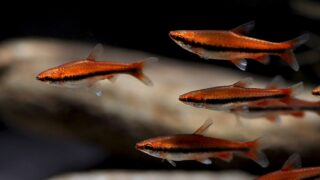
カージナル・テトラやペンシルフィッシュなど、水槽の上・中層を泳ぐ小型カラシン類との混泳が適しています。彼らが落ち着いて泳ぐ姿は、外敵がいないことを知らせる安心材料(ディザーフィッシュ)となります。同種の雄同士は激しく争うため、基本的にはペアでの飼育を推奨します。Compatible with small characins swimming in the upper to middle levels, such as Cardinal tetras and pencilfish, which act as dither fish to reassure them. Males of the same species will fight fiercely, so keeping a single pair is generally recommended.
病気と対策 / Diseases and Prevention
かかりやすい病気 / Common Diseases
自然な採餌行動ができない底床環境(粒の粗い砂利やソイルのみの環境)でのストレスや、不適切な水質管理が原因で、エロモナス感染症などの細菌性疾患にかかりやすくなります。また稚魚は微細な水質変化によるショック死に極度に弱いです。Prone to bacterial diseases like Aeromonas infections due to stress from inappropriate substrate environments (where they cannot perform natural sifting behaviors) or poor water quality management. Fry are extremely vulnerable to shock death from minute water quality changes.
対策と予防 / Prevention
水槽内に必ず細かい砂のエリアを設け、砂を口に含んで鰓から出すという彼らの自然な行動を満たしてあげることが最大の予防策です。また、アンモニア等の蓄積を防ぐため、毎日水量の10パーセント未満の「極めて少量の換水」をこまめに継続し、水質を化学的に安定させることが重要です。The greatest preventative measure is to provide an area of fine sand, satisfying their natural behavior of sifting sand through their gills. To prevent ammonia accumulation, it is crucial to maintain chemical stability by performing “extremely small water changes” of less than 10 percent of the water volume daily.
増やし方(繁殖) / Breeding
雌雄の判別 / Sexing
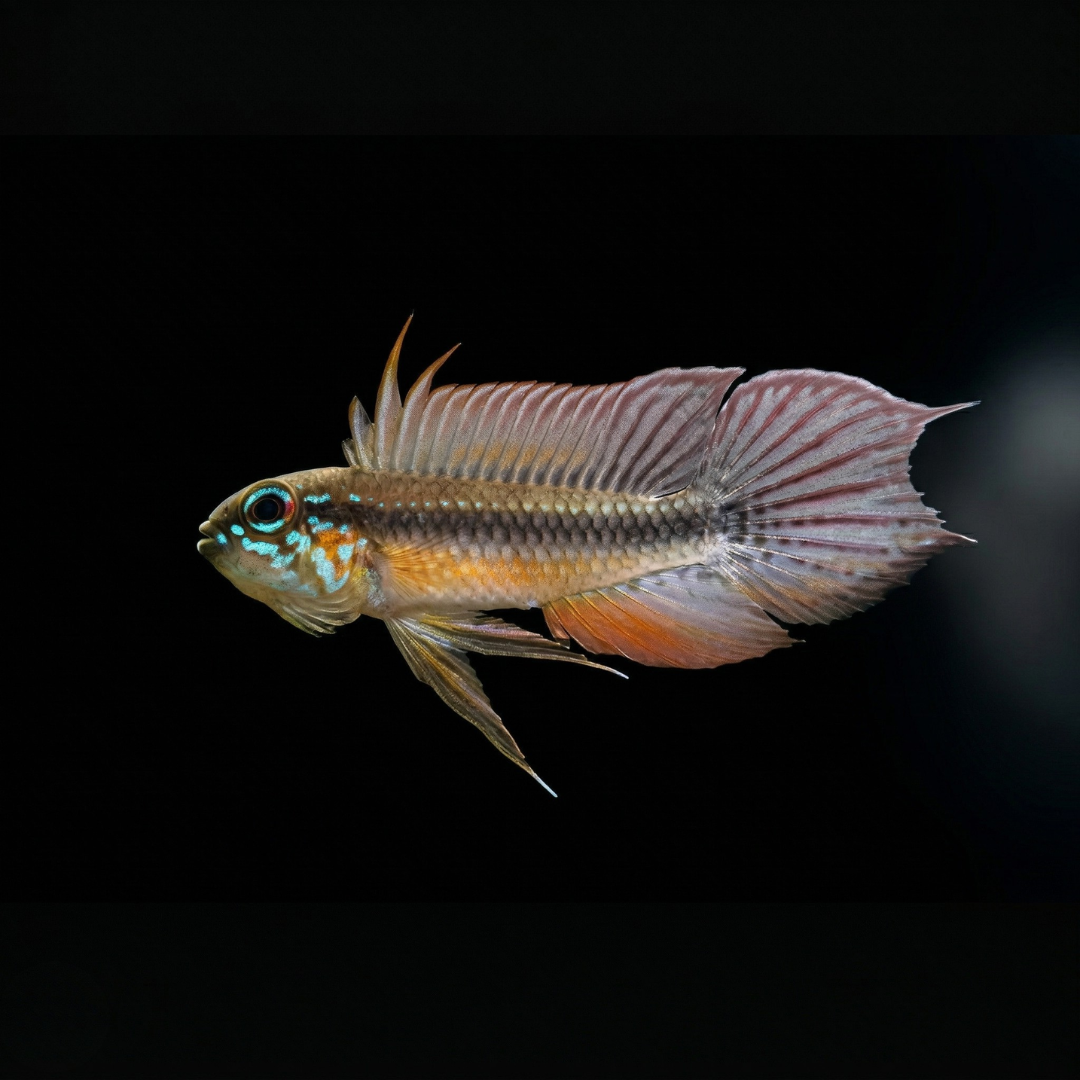
成熟した雄は背鰭の前方軟条が著しく伸長し、尾鰭が丸型から最終的に中央が尖った槍型(ランセオレートテール)へと劇的に変化します。一方、雌は小型で地味な体色ですが、繁殖期になると鮮烈な黄色に黒い斑点を持つ警戒色に変化するため、容易に判別できます。Mature males develop significantly extended anterior dorsal fin rays, and their caudal fin shape changes dramatically from a round shape to a lanceolate shape. Females are smaller and plainer, but turn a bright yellow warning color with black spots during breeding.
繁殖形態 / Reproduction
流木の裏側や洞窟状の隠れ家の天井部分に卵を産み付ける、基質産卵性です。産卵後、卵の世話から稚魚が自由に泳ぎ出すまでの保護は、すべて雌が単独で行います。They are cave spawners, attaching eggs to the underside of driftwood or the ceiling of cave-like hiding spots. After spawning, the female alone takes care of the eggs and guards the fry until they are free-swimming.
繁殖のポイント / Breeding Tips
自然界の雨季を再現するため、わずかに水温の低い純水を用いて少量の換水を行い、水質と水温を同時に下げることで産卵行動を誘発できます。産卵後は雌が雄を攻撃する可能性があるため、小型水槽の場合は雄を隔離してください。孵化後の稚魚育成が最難関であり、厳密な水質管理とマイクロフィーディングが求められます。To simulate the rainy season, trigger spawning by performing a small water change with slightly cooler pure water, lowering the hardness and temperature simultaneously. After spawning, isolate the male in small tanks to protect him from the aggressive female. Raising the hatched fry is the most difficult part, requiring strict water quality management and micro-feeding.
雑学と豆知識 / Trivia and Fun Facts
1. 尾鰭の多型性と色彩の多様性(ポリクロマティズム) / 1. Caudal Fin Polymorphism and Polychromatism
この魚の大きな魅力は、雄の尾鰭の形が成長段階に応じて劇的に変化することです。幼魚期の丸い形(ラウンドテール)から、亜成魚期には上下が伸びた琴型(ライヤーテール)となり、完全に成熟すると中央が鋭く突出した槍型(ランセオレートテール)へと進化を遂げます。さらに、生息する河川によって発色にも明確な違いがあります。ウアウペス川産はオレンジから黄色、イサナ川産は虹色のブルーライン、そしてツカナ地方で採取される腹部が深紅に染まる「スーパーレッド」など、地域ごとに遺伝的に固定された美しい色彩変異を楽しむことができます。A major appeal of this fish is that the shape of the male’s caudal fin changes dramatically as it grows. It evolves from a round shape (round tail) as a juvenile, to a lyre shape with extended upper and lower ends as a sub-adult, and finally to a lance-like shape (lanceolate tail) with a sharp central protrusion when fully mature. Furthermore, there are distinct differences in coloration depending on the river of origin, allowing enthusiasts to enjoy genetically fixed color variations.
2. 極限の環境と特異な摂食行動の秘密 / 2. Secrets of Extreme Environments and Unique Feeding Behavior
彼らが棲むネグロ川上流のブラックウォーターは、枯れ葉が溶け出したタンニンによって水が暗褐色に染まり、pHは4.0付近、ミネラル分が実質ゼロという、非常に過酷で酸性の強い環境です。この環境には細菌や寄生虫がほとんど存在しないため、彼らは「清浄な水」に依存して進化してきました。人工飼育下で水質悪化に異常なほど弱いのはこのためです。また、彼らは細かい砂を口いっぱいに含み、砂粒に付いた微生物などを濾し取ってから砂だけを鰓から排出するという特有の食事方法をとります。飼育下で砂がない環境は、人間が歯磨きをできないのと同じような多大なストレスを与え、病気を引き起こす原因となってしまうのです。The blackwater of the upper Rio Negro where they live is an extremely harsh, highly acidic environment colored dark brown by tannins from decaying leaves, with a pH around 4.0 and virtually zero minerals. Because there are almost no bacteria or parasites in this environment, they have evolved to rely on “clean water.” This is why they are so sensitive to water quality deterioration in captivity. They also have a unique feeding method where they take a mouthful of fine sand, filter out microorganisms, and expel the sand through their gills.
3. 歴史浪漫:セイヤー探検隊とエリザベス・アガシの足跡 / 3. Historical Romance: The Thayer Expedition and Elizabeth Agassiz
「エリザベサエ」という美しい響きの学名の裏には、19世紀の壮大な歴史浪漫が隠されています。1865年、アメリカの著名な動物学者ルイ・アガシは、アマゾン川流域の大規模な調査「セイヤー探検隊」を率いました。この過酷な探検に同行し、現場の管理から学術ノートの記録まで、あらゆる面で夫を支えたのが妻のエリザベス・アガシでした。彼女は後に『ブラジル紀行』を出版して大成功を収め、女性の高等教育の権利推進にも尽力した傑出した人物です。1980年にこの魚を新種として発表したスウェーデンの魚類学者Kullanderは、この魚が夫ルイの名を冠した近縁種「アピストグラマ・アガシジィ」に近いことに着目し、科学の発展を陰で支えた彼女の功績を称え、妻の名であるelizabethaeを献名しました。この魚を水槽で泳がせることは、150年以上前のアマゾン探検と、偉大な女性科学者の歴史に触れる体験でもあるのです。Behind the beautiful scientific name “elizabethae” lies a grand historical romance from the 19th century. In 1865, renowned American zoologist Louis Agassiz led the massive “Thayer Expedition” to the Amazon basin. His wife, Elizabeth Agassiz, accompanied him on this grueling journey, supporting him in every way, from site management to recording academic notes. The Swedish ichthyologist Kullander, who described this fish as a new species in 1980, noted its close relationship to “Apistogramma agassizii” named after her husband Louis. To honor her unheralded contributions to the advancement of science, he dedicated the name “elizabethae” to her.
まとめ / Conclusion
アピストグラマ・エリザベサエは、過酷なブラックウォーター環境への高度な適応が生み出した、他に類を見ない形態と色彩を持つ南米産小型シクリッドの最高峰です。その飼育には、RO水を用いた水質化学のコントロールや、鰓の健康を守るための細かい砂の敷設など、彼らの進化の過程を深く理解した科学的なアプローチが求められます。Apistogramma elizabethae is the pinnacle of South American dwarf cichlids, possessing unparalleled morphology and coloration resulting from a high degree of adaptation to the harsh blackwater environment. Caring for them requires a scientific approach that deeply understands their evolutionary process, such as controlling water chemistry using RO water and laying fine sand to protect gill health.
かつては飼育困難と言われていましたが、正しい環境さえ用意できれば、水槽内でもその本来の強健さと孤高の美しさを遺憾なく発揮してくれます。19世紀のアマゾン探検を支えたエリザベス・アガシの歴史的背景に思いを馳せながら、この複雑で魅力的な魚との対話を楽しんでみてはいかがでしょうか。Although once considered difficult to keep, if the right environment is provided, they will fully display their inherent hardiness and solitary beauty in the aquarium. We invite you to enjoy interacting with this complex and fascinating fish while reflecting on the historical background of Elizabeth Agassiz, who supported the Amazon exploration in the 19th century.
Kullander, S. O. (1980). A taxonomical study of the genus Apistogramma Regan, with a revision of Brazilian and Peruvian species (Teleostei: Percoidei: Cichlidae). Bonner Zoologische Monographien, 14, 1-152.
Koslowski, I. (1985). Die Buntbarsche der Neuen Welt – Zwergcichliden. Edition Kernen.
Miller, R. R., & Schliewen, U. K. (2005). Molecular phylogeny and evolutionary history of South American cichlid fishes.
Ready, J. S., et al. (2006). Molecular phylogenetic studies on the genus Apistogramma and Neotropical cichlids.
Agassiz, L., & Agassiz, E. C. C. (1868). A Journey in Brazil. Ticknor and Fields.
Aquarium Glaser GmbH. Stock list and fish archives.



 ポチップ
ポチップ




コメント