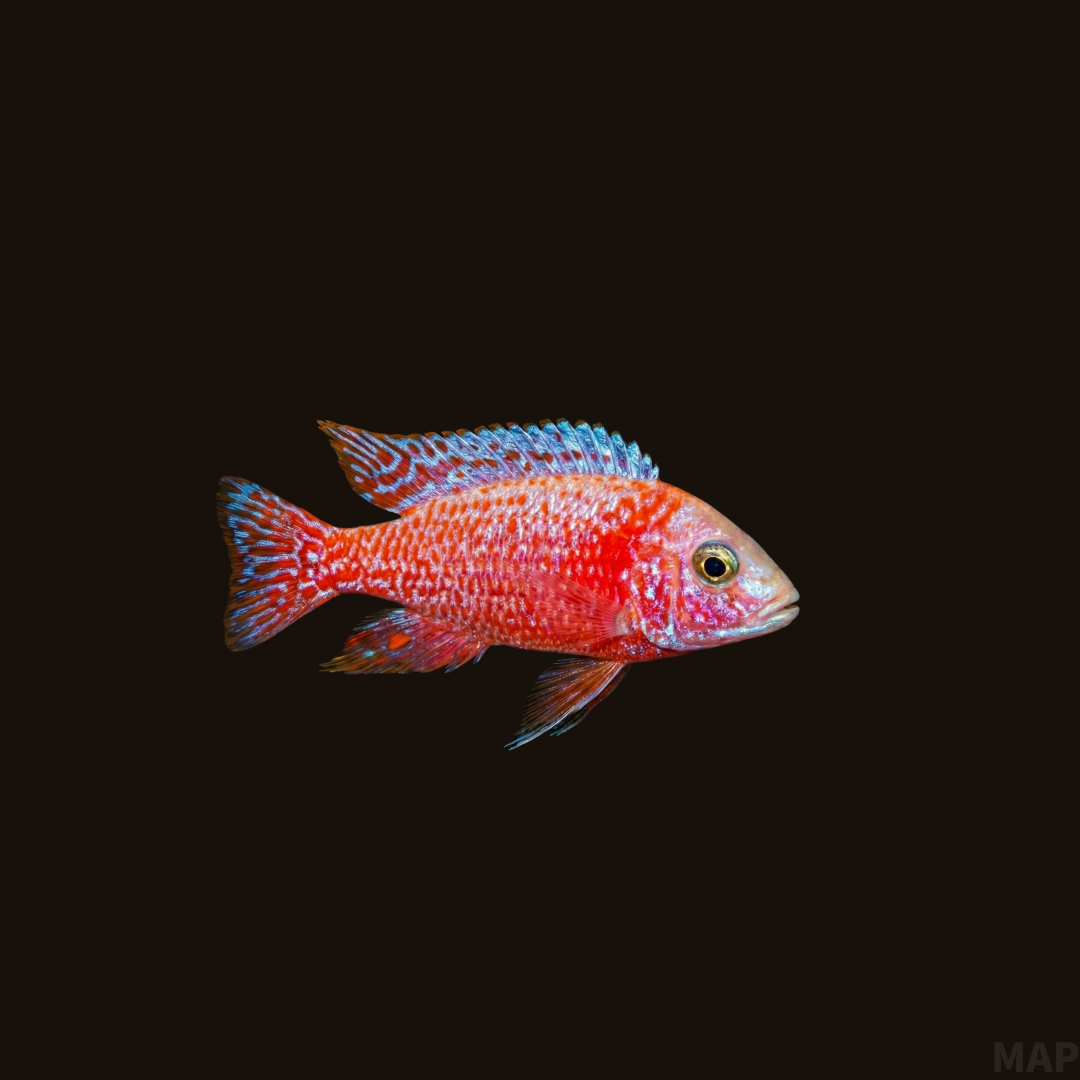
ストロベリーピーコックシクリッドは、その名の通り熟したイチゴのような鮮烈なピンクから赤色の体色を持つ、アフリカンシクリッドの改良品種です。自然界には存在しないこの色彩は、アウロノカラ属のシクリッドをベースに、長年の交配と選別を経て作出されました。オスは成長すると体色がより濃厚になり、光の当たり方によってはメタリックブルーの輝きを放ちます。その美しさと存在感から、日本国内の水槽でも主役級の人気を誇りますが、その鮮やかさを維持するには適切な環境と食事が不可欠です。The Strawberry Peacock Cichlid is a stunning aquarium strain known for its vibrant pink to red coloration, resembling a ripe strawberry. This color does not exist in the wild; it was developed through years of selective breeding and hybridization based on the Aulonocara genus. As males mature, their color intensifies, often displaying a metallic blue sheen under certain lighting. Their beauty and presence make them a popular centerpiece in Japanese aquariums, but maintaining their vivid color requires a specific environment and diet.
90cm規格水槽(約180L)以上推奨。最低でも60cmワイド水槽。90cm standard tank (approx. 180L) or larger recommended. Minimum 60cm wide tank.
水温 / Temperature
24 ~ 28℃
水質 / Water Quality
pH 7.8~8.6(弱アルカリ性)、硬水(GH 10-20dH)。日本の水道水ではサンゴ砂の使用が必須。pH 7.8-8.6 (Weakly Alkaline), Hard water (GH 10-20dH). Coral sand is essential with Japanese tap water.
レイアウト / Layout
底床にはサンゴ砂(中目が管理しやすい)を敷き、岩組みで隠れ家を作る。流木は水を酸性にするため避けるか、アク抜きを徹底する。Use coral sand for the substrate and create hiding spots with rocks. Avoid driftwood as it acidifies the water, or treat it thoroughly.
注意点 / Precautions
アルカリ性の水質ではアンモニアの毒性が強くなるため、強力なろ過設備と定期的な水換え(週1回30~50%)が重要。Ammonia toxicity increases in alkaline water, so powerful filtration and regular water changes (30-50% weekly) are crucial.
餌と給餌 / Feeding
餌の種類 / Diet
色揚げ効果のある人工飼料(キョーリン バイオゴールド+など)を主食とする。おやつとして冷凍赤虫。Color-enhancing artificial feed (e.g., Hikari Cichlid Bio-Gold+) as a staple. Frozen bloodworms as treats.
給餌のポイント / Feeding Tips
色揚げ飼料を与えすぎると色が飽和してメリハリがなくなるため、通常フードと混ぜて調整する。高脂肪・高タンパクな餌の与えすぎは腹水病の原因になるため注意。Overfeeding color enhancers can blur their patterns, so mix with regular food. Avoid excessive high-fat/protein diets to prevent Malawi Bloat.
性格と混泳 / Temperament and Tank Mates
性格 / Temperament
中程度の攻撃性を持つ。特にオス同士は縄張りを巡って激しく争う。Semi-aggressive. Males, in particular, will fight fiercely over territory.
混泳の相性 / Compatibility
体色が異なる他のアウロノカラ種やハプロクロミス類とは混泳可能。同系色のオスは争う。小型魚や一般の熱帯魚とは混泳不可。Compatible with differently colored Aulonocara or Haplochromis species. Males of similar colors will fight. Not compatible with small or general tropical fish.
病気と対策 / Diseases and Prevention
かかりやすい病気 / Common Diseases
マラウイ・ブロート(腹水病)、白点病。特に腹水病は進行が早く致命的になりやすい。Malawi Bloat and Ich (White Spot Disease). Bloat is particularly rapid and often fatal.
対策と予防 / Prevention
適切な水質維持と、植物質を含む消化の良い餌を与えることで腹水病を予防する。導入時は水合わせを慎重に行う。Prevent bloat by maintaining water quality and feeding digestible food containing vegetable matter. Acclimate carefully when introducing.
増やし方(繁殖) / Breeding
繁殖形態 / Reproduction
マウスブルーダー(メスが口の中で卵と稚魚を守る)。Maternal Mouthbrooder (Females protect eggs and fry in their mouths).
繁殖のポイント / Breeding Tips
オス1匹に対しメス複数匹のハーレム状態で飼育すると成功しやすい。抱卵したメスは隔離し、静かな環境で見守るか、人為的に稚魚を吐き出させる。Keep one male with multiple females (harem). Isolate holding females in a quiet tank or strip the fry manually.
雑学と豆知識 / Trivia and Fun Facts
1. 出自のミステリー / 1. Mystery of Origin
ストロベリーピーコックは、自然界で発見された種ではありません。その鮮烈な赤色は、アウロノカラ属に「レッドゼブラ」のような赤いムブナ類や、他のハプロクロミス類を交配させることで導入されたという説が有力です。ブリーダーたちの長年の試行錯誤と企業秘密により、その正確な遺伝的レシピは未だ多くの謎に包まれています。The Strawberry Peacock is not found in the wild. Its vivid red color is believed to have been introduced by crossing Aulonocara with red Mbuna like the “Red Zebra” or other Haplochromis species. Due to breeders’ trade secrets, its exact genetic recipe remains a mystery.
2. ドラゴンブラッドとの違い / 2. vs Dragon Blood
ショップでは「ドラゴンブラッド」や「ファイヤーフィッシュ」という名前も見かけますが、これらは遺伝的に非常に近い親戚関係にあります。一般的に、全体が均一なピンク~赤色で肉色に近いものを「ストロベリー」、鱗の縁取りがギラギラと輝き、龍の鱗のように見えるものを「ドラゴンブラッド」と呼び分けますが、明確な生物学的境界線はありません。You may see names like “Dragon Blood” or “Firefish,” which are genetically close relatives. Generally, uniform pinkish-red ones are called “Strawberry,” while those with glittering scale edges resembling dragon scales are “Dragon Blood,” though there is no clear biological boundary.
3. 砂を操る「孔」の秘密 / 3. Sensory Pores
彼らの顔をよく見ると、下顎から目の下にかけて小さな穴が並んでいるのが分かります。これは感覚孔と呼ばれ、野生のアウロノカラが砂の中に潜む獲物の微弱な動きを感知するためのレーダーです。水槽の底砂に顔を突っ込んでモグモグと砂ごと餌を探す「サンド・シフティング」というユーモラスな行動は、この優れた感覚器官によって支えられています。If you look closely at their faces, you’ll see small holes along the jaw. These are sensory pores, a radar used by wild Aulonocara to detect prey in the sand. Their humorous “sand-shifting” behavior—digging their faces into the substrate—is supported by these advanced sensory organs.
4. 尻ビレの模様の役割 / 4. Egg Spots
オスの尻ビレにある黄色い水玉模様(エッグスポット)は、単なる飾りではありません。繁殖の際、メスはこの模様を「自分の卵が落ちている」と勘違いして口で拾おうとします。その瞬間にオスが放精することで、メスの口の中にある本物の卵が受精するのです。この巧妙なメカニズムこそが、マウスブルーダーの繁殖成功の鍵を握っています。The yellow spots on the male’s anal fin (egg spots) serve a function. During breeding, the female mistakes them for eggs and tries to pick them up. At that moment, the male releases sperm, fertilizing the real eggs in her mouth. This clever mechanism is key to their breeding success.
まとめ / Conclusion
ストロベリーピーコックシクリッドは、その燃えるような赤色で水槽を一気に華やかにしてくれる存在です。日本の軟水環境では、サンゴ砂や添加剤を用いて適切な硬度とpHを維持することが飼育の最も重要な鍵となります。The Strawberry Peacock Cichlid instantly brightens up any aquarium with its fiery red color. In Japan’s soft water environment, maintaining the proper hardness and pH using coral sand or additives is the most critical key to keeping them.
適切な環境と食事を与えれば、彼らは何年にもわたってその美しさを保ち続けてくれます。少し気難しい一面もありますが、その独特の生態と美しさは、手間をかけるだけの価値が十分にあると言えるでしょう。With the right environment and diet, they will maintain their beauty for years. They can be a bit demanding, but their unique ecology and stunning appearance make them well worth the effort.



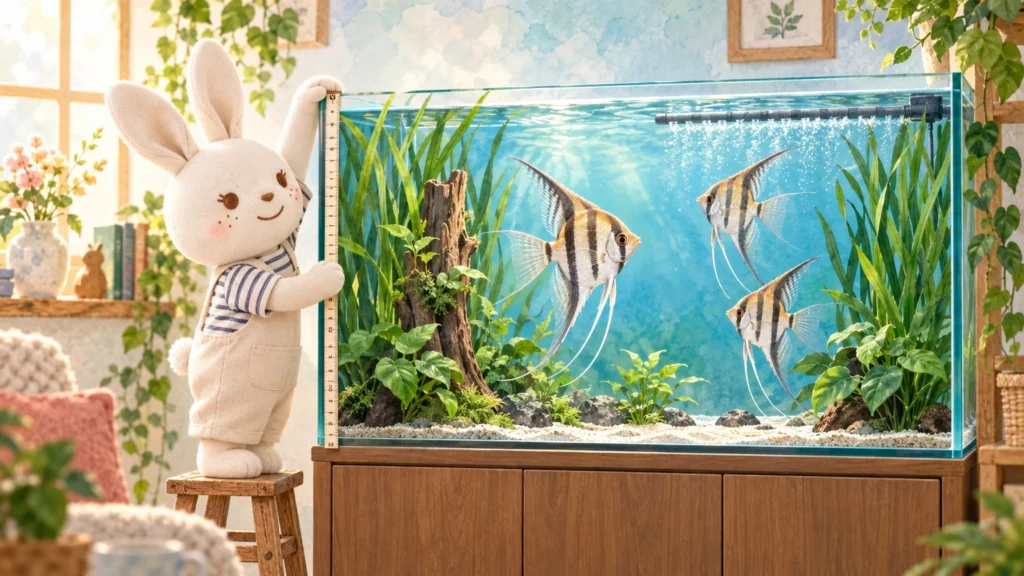 アイのアクアグッズ案内エンゼルフィッシュの飼育用品|高さのある水槽・ろ過・水草・餌の選び方道具の特徴や使い方、選ぶときのポイントをアイが紹介します。記事はコチラ →
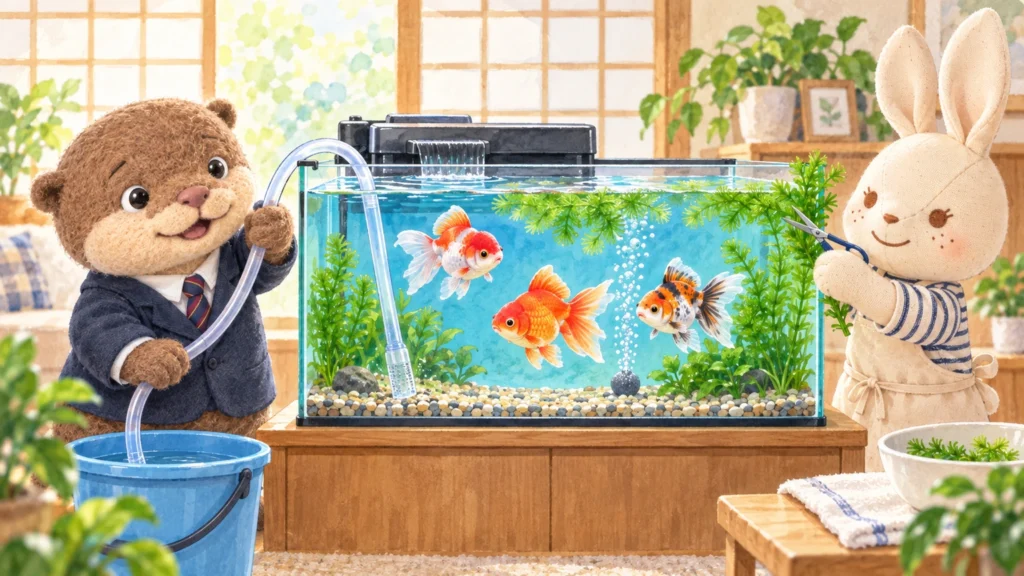 アイのアクアグッズ案内金魚を長く楽しむ飼育用品|水槽・フィルター・エアレーション・水換え道具の特徴や使い方、選ぶときのポイントをアイが紹介します。記事はコチラ →



コメント