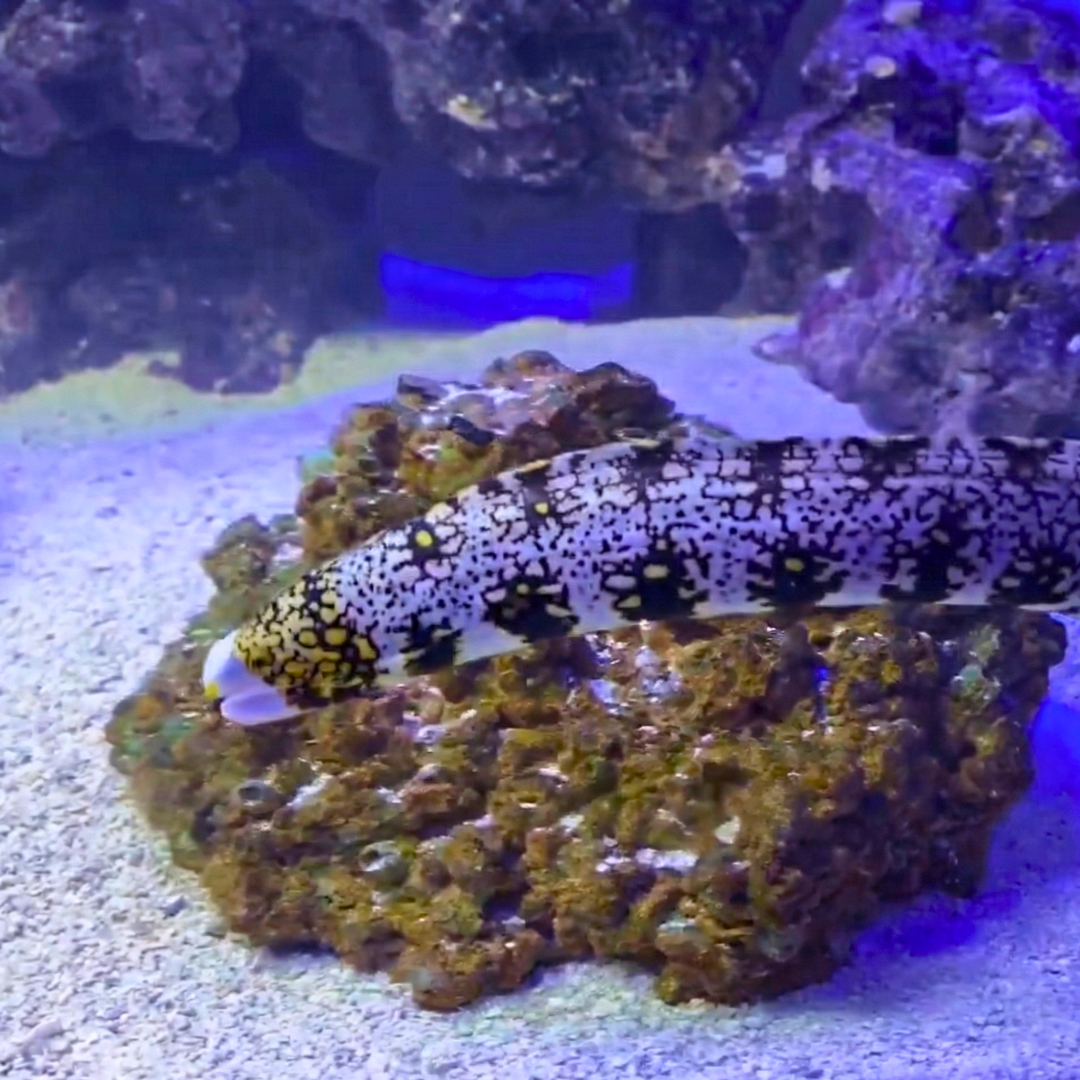
クモウツボは、白やクリーム色の体に、まるで霧(nebula)のように広がる黒い雲状の模様と、その中に散りばめられた金色の斑点が特徴的な美しいウツボです。英名では「スノーフレークモレイ(雪の結晶のようなウツボ)」とも呼ばれ、その芸術的な見た目と愛嬌のある顔立ちから、観賞魚として世界中で高い人気を誇ります。多くのウツボが魚を食べるために鋭い歯を持つのに対し、本種はカニやエビなどの甲殻類を噛み砕くことに特化した「丸い臼歯」を持っているのが最大の特徴です。非常に強健で人にも慣れやすく、適切な環境を用意できれば15年以上の長い付き合いができる、まさに海のアクアリウムの主役になれる存在です。The Snowflake Moray (Echidna nebulosa) is a stunning eel characterized by a white or cream body adorned with black cloud-like patterns resembling mist (nebula) and scattered golden spots. Its artistic appearance and charming face make it a highly popular ornamental fish worldwide. Unlike many moray eels that possess sharp teeth for catching fish, this species is specialized in “durophagy,” possessing blunt, molar-like teeth designed to crush crustaceans like crabs and shrimp. They are extremely hardy and can become quite tame. With the right environment, they can live for over 15 years, becoming a true centerpiece of a marine aquarium.
インド太平洋全域(南日本からハワイ、カリフォルニア湾まで広く分布)Indo-Pacific region (widely distributed from Southern Japan to Hawaii and the Gulf of California)
最大体長 / Max Size
野生下では最大100cm(飼育下では通常50cm~70cm程度)Up to 100cm in the wild (typically 50-70cm in captivity)
寿命 / Lifespan
飼育下で15年以上15+ years in captivity
飼育環境 / Aquarium Environment
水槽サイズ / Tank Size
90cm規格水槽(約160L)以上推奨。理想は120cm水槽。奥行きのある水槽が望ましい。Minimum 90cm standard tank (approx. 160L). 120cm tank is ideal. Tanks with greater depth (width) are preferred.
水温 / Temperature
24℃~26℃
水質 / Water Quality
一般的な海水魚飼育に適した清浄な水質(比重 1.020-1.025付近)Clean water suitable for general marine fish (Specific Gravity around 1.020-1.025)
レイアウト / Layout
ライブロックや擬岩を使用し、全身が隠れられる強固な隠れ家を作る。底砂はパウダーから中粒を厚めに敷く。Create sturdy hiding spots using live rock or artificial rock where the eel can hide completely. Use a thick layer of fine to medium grain substrate.
注意点 / Precautions
【脱走防止が最重要】フタは隙間なく密閉し、必ず重石やクリップで固定する。濾過能力の高い外部式フィルター(エーハイム2217等)やプロテインスキマーの設置を推奨。[Escape prevention is critical] The lid must be tightly sealed and secured with weights or clips. High-capacity filtration (e.g., EHEIM 2217) and a protein skimmer are recommended.
餌と給餌 / Feeding
餌の種類 / Diet
クリル(オキアミ)、冷凍イカ、殻付きの冷凍エビ、魚の切り身(アジ、キビナゴ等)。餌付けすれば人工飼料(カーニバル等)も食べる。Krill, frozen squid, frozen shrimp (with shell), fish fillets (horse mackerel, silver-stripe round herring, etc.). Can be trained to eat pellets (e.g., Carnivore pellets).
給餌のポイント / Feeding Tips
視力が弱く指を餌と間違えることがあるため、必ずピンセットや給餌棒を使用する。幼魚は毎日~1日おき、成魚は週2~3回程度与える。Use tweezers or a feeding stick as they have poor eyesight and may mistake fingers for food. Feed juveniles daily or every other day, and adults 2-3 times a week.
性格と混泳 / Temperament and Tank Mates
性格 / Temperament
比較的温和だが、食欲は旺盛。甲殻類に対しては捕食本能が働く。人馴れしやすく、餌をねだる様子も見られる。Relatively peaceful but has a voracious appetite. Predatory instinct is triggered by crustaceans. Tames easily and may beg for food.
混泳の相性 / Compatibility
【甲殻類は不可】エビやカニは好物なので食べられる。口に入らないサイズの中・大型魚(ヤッコ、ハギ等)とは混泳可能。サンゴには無害だが、固定しないと崩される。[No Crustaceans] Shrimp and crabs are natural prey and will be eaten. Compatible with medium to large fish that don’t fit in their mouth (Angelfish, Tangs, etc.). Reef safe, but corals must be glued down to prevent toppling.
病気と対策 / Diseases and Prevention
かかりやすい病気 / Common Diseases
非常に強健だが、水質悪化による皮膚病や拒食が見られることがある。スレ傷からの細菌感染に注意。Extremely hardy, but may suffer from skin diseases or refusal to eat due to poor water quality. Watch for bacterial infections from scratches.
対策と予防 / Prevention
強力な濾過と定期的な水換えで水質を保つ。レイアウトの岩は安定させ、怪我を防ぐ。噛まれた場合は細菌感染のリスクがあるため人間側も注意。Maintain water quality with strong filtration and regular water changes. Stabilize rockwork to prevent injuries. Handlers should be careful of bites due to risk of bacterial infection.
増やし方(繁殖) / Breeding
繁殖形態 / Reproduction
卵生。雌性先熟(メスからオスへ性転換する)。孵化後は「レプトケファルス」と呼ばれる透明な浮遊生活期を長く過ごす。Oviparous. Protogynous hermaphrodites (change sex from female to male). Larvae go through a long drifting “leptocephalus” stage.
繁殖のポイント / Breeding Tips
家庭での繁殖は極めて困難。浮遊期間が長く、その間の微細な餌の確保と育成が最大の壁となっている。Breeding in home aquaria is extremely difficult. The long larval drift period and the difficulty of providing suitable microscopic food present major hurdles.
雑学と豆知識 / Trivia and Fun Facts
1. 名前の由来:神話の怪物「エキドナ」 / 1. Origin of the Name: The Mythical Monster “Echidna”
クモウツボの属名 Echidna は、ギリシャ神話に登場する「エキドナ」に由来します。エキドナは上半身が美女、下半身が大蛇という姿をした怪物で、ケルベロスやヒドラの母としても知られています。この名前は、ウツボたちの蛇のような姿と、捕食者としての畏怖を象徴しています。一方、種小名の nebulosa はラテン語で「霧」や「曇った」を意味し、体表に広がる美しい雲状の模様を表しています。恐ろしい怪物の名と、幻想的な霧の名を併せ持つ、不思議な魅力のある名前です。The genus name Echidna comes from Greek mythology’s “Echidna,” a monster with the upper body of a beautiful woman and the lower body of a serpent, known as the mother of monsters like Cerberus. The species name nebulosa means “misty” or “cloudy” in Latin, describing its beautiful cloud-like patterns.
2. 陸上を這う捕食者とエイリアンのような顎 / 2. Land-Crawling Predators and Alien-like Jaws
クモウツボは、なんと陸上に上がって獲物を捕らえる能力を持っています。潮だまりや湿った岩場を移動し、カニなどを探します。水がない場所では通常の魚のように「吸い込んで」食べることができませんが、彼らは口の中にあるもう一つの顎「咽頭顎(いんとうがく)」を前方に射出し、獲物を掴んで喉の奥へと引きずり込むことができます。このSF映画のようなメカニズムにより、重力のある陸上でも食事をすることが可能なのです。Snowflake Morays can actually come onto land to hunt! They use their “pharyngeal jaws” — a second set of jaws in their throat — to grab prey and pull it down their gullet, allowing them to feed on land where suction feeding doesn’t work.
3. 結び目を作る技「ノッティング」 / 3. The Art of “Knotting”
ウツボ類には手足がありませんが、その代わりに自分の体を巧みに使います。「ノッティング(Knotting)」と呼ばれる行動では、自分の体で結び目を作り、それを支点にして獲物を引きちぎったり、岩の隙間から獲物を引きずり出したりします。また、獲物をくわえたまま高速回転する「デスロール」も得意技の一つ。これらは、硬い殻を持つ甲殻類や大きな獲物を効率よく食べるための、進化の過程で身につけた驚くべき知恵なのです。Lacking limbs, moray eels use their bodies skillfully. In “Knotting,” they tie their body into a knot to create leverage for tearing prey or pulling it out of crevices. They also perform a “death roll,” spinning rapidly to tear off pieces of meat.
4. 毒と細菌への注意 / 4. Warning: Toxins and Bacteria
クモウツボは比較的温厚ですが、噛まれた場合は注意が必要です。彼らの口内には多様な細菌が生息しており、咬傷から感染症を引き起こすリスクがあります。また、皮膚の粘液には毒素が含まれているため、傷のある手で触れるのは避けるべきです。さらに、食物連鎖を通じて体内に「シガテラ毒」を蓄積している可能性があるため、絶対に食用にしてはいけません。彼らはあくまで「見て楽しむ」パートナーです。While relatively docile, bites can be dangerous due to oral bacteria causing infections. Their skin mucus also contains toxins, and they may accumulate Ciguatoxin, so they should never be eaten.
まとめ / Conclusion
クモウツボは、そのユニークな「甲殻類食」という生態と、霧のような美しい模様が魅力の素晴らしい海水魚です。陸上での摂餌や体を結ぶノッティング行動など、知れば知るほど奥深い生態を持っています。飼育には90cm以上のしっかりとした水槽設備と、何よりも厳重な脱走防止策が必要ですが、その愛嬌のある仕草と強健さは、飼育者に大きな喜びをもたらしてくれるでしょう。The Snowflake Moray is a fascinating marine fish known for its unique crustacean diet and beautiful misty patterns. With intriguing behaviors like terrestrial feeding and knotting, they are deeply interesting creatures. While they require a secure tank of at least 90cm and strict escape prevention, their charming behavior and hardiness bring great joy to their keepers.
15年以上という長い時間を共に過ごせるパートナーとして、ぜひクモウツボとの暮らしを検討してみてください。彼らの知性と野生のたくましさは、あなたのアクアリウムライフをより豊かにしてくれるはずです。Consider the Snowflake Moray as a long-term partner that can be with you for over 15 years. Their intelligence and wild resilience will surely enrich your aquarium life.



 アイのアクアグッズ案内エンゼルフィッシュの飼育用品|高さのある水槽・ろ過・水草・餌の選び方道具の特徴や使い方、選ぶときのポイントをアイが紹介します。記事はコチラ →
 アイのアクアグッズ案内グッピー・プラティ・モーリーを親子で楽しむ飼育用品|水槽・稚魚保護・ろ過・餌・水草道具の特徴や使い方、選ぶときのポイントをアイが紹介します。記事はコチラ →



コメント