

解説 / Description
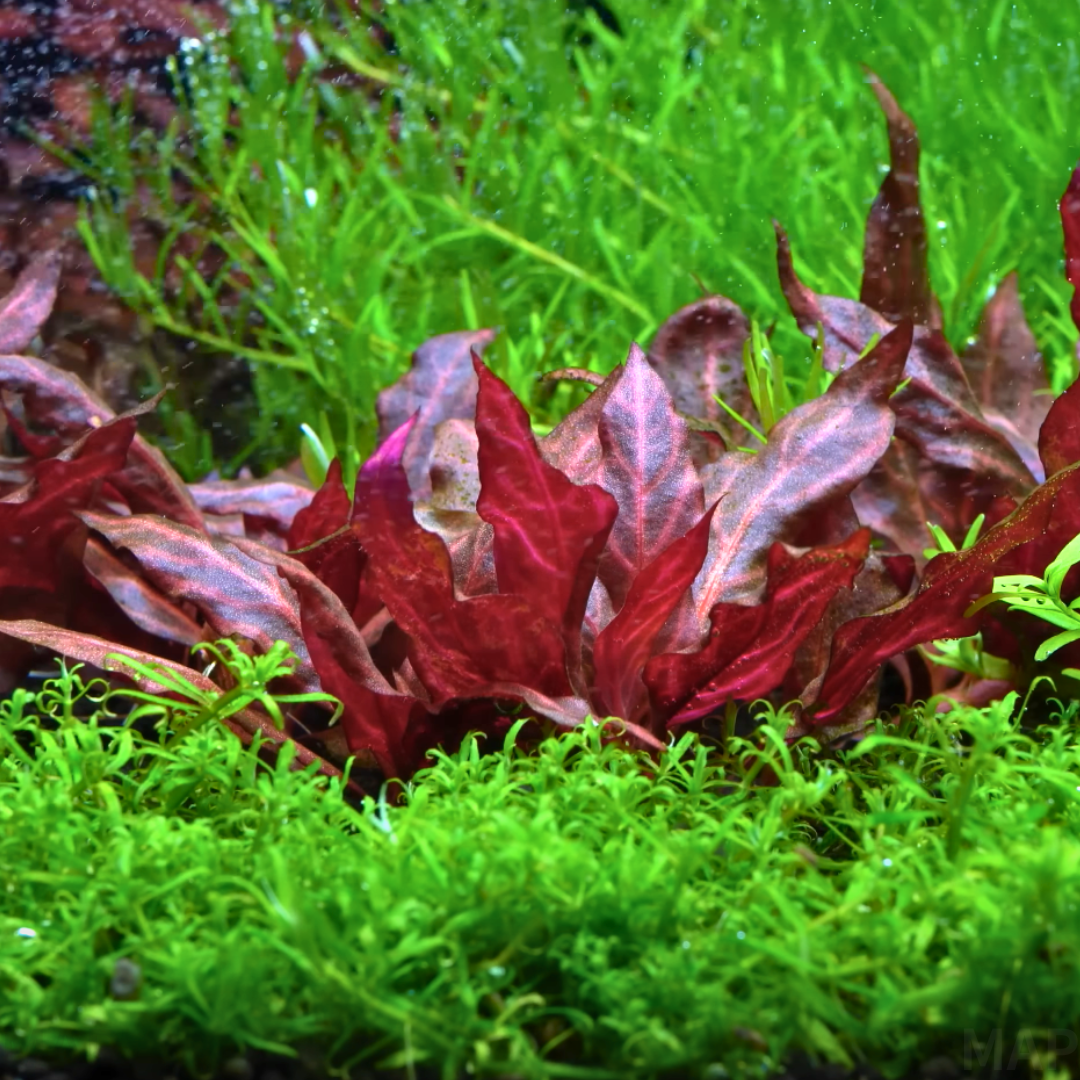
アルテナンテラ・レインキー ‘ロザエネルビス’は、ピンクから赤紫に染まる葉に、淡い色の葉脈がくっきりと浮かぶ有茎草です。赤系水草のなかでも、色だけでなく葉の模様を楽しめるところが大きな魅力。明るい緑の水草に添えると、少量でも水景に華やかなアクセントが生まれます。葉は茎の節ごとに向かい合ってつき、育成環境によって葉色や形、節と節の間隔が変わります。 Alternanthera reineckii ‘Rosanervig’ is a stem plant with pink to reddish-purple leaves highlighted by pale veins. Its appeal lies in both its color and its distinctive leaf pattern. Even a small group adds a vivid accent among bright green plants. The leaves grow in opposite pairs along the stem, while their color, shape, and spacing vary with growing conditions.
比較的まとまりのよい姿に育つ品種ですが、‘ミニ’のように低くとどまるとは限りません。伸びた茎を切り、脇芽を育てながら茂みの高さを整えると、中景で扱いやすくなります。美しい姿を保つには、十分な光に加えてCO2と栄養をバランスよく供給することが大切です。赤みだけを追うよりも、健康な新芽が次々に開く環境を目指すと、葉脈模様もじっくり楽しめます。 This cultivar tends to form a relatively compact group, but it does not necessarily remain low like ‘Mini’. Trimming the stems and allowing side shoots to develop makes it easier to maintain in the midground. Adequate light, CO2, and balanced nutrition help preserve its appearance. Prioritizing steady, healthy new growth provides a better foundation for enjoying its veined leaves than chasing the strongest possible red color.
基本情報 / Basic Information
| 学名 / Scientific Name | Alternanthera reineckii ‘Rosanervig’ レインキーの園芸品種です。単引用符で囲まれた ‘Rosanervig’ は品種名で、原種とは別の種を示すものではありません。A cultivar of A. reineckii. The name ‘Rosanervig’, enclosed in single quotation marks, identifies the cultivar rather than a separate species. |
|---|---|
| 通称 / Common Name | アルテナンテラ・レインキー ロザエネルビス、アルテルナンテラ・レインキー ロザネルビスなど。国内では属名や品種名のカタカナ表記に揺れがあるため、購入時は学名と ‘Rosanervig’ の表記を確認すると安心です。Alternanthera reineckii ‘Rosanervig’ or AR Rosanervig. Japanese trade names vary in transliteration, so checking the botanical name and the cultivar name ‘Rosanervig’ helps identify the plant. |
| 分類 / Family | ナデシコ目・ヒユ科・ツルノゲイトウ属(アルテナンテラ属)。水上でも水中でも生育できる両生の有茎草です。Order Caryophyllales, family Amaranthaceae, genus Alternanthera. An amphibious stem plant capable of growing both above and below water. |
| 分布 / Distribution | 原種は南米のボリビアからブラジル、アルゼンチン北部にかけて分布します。‘ロザエネルビス’は栽培下で維持される園芸品種であり、原種の自然分布をそのまま品種の自生地とみなすことはできません。The species is native to South America, from Bolivia to Brazil and northern Argentina. ‘Rosanervig’ is maintained in cultivation; the species’ native range should not be interpreted as a wild distribution for this cultivar. |
| 育成難易度 / Difficulty | 中程度。CO2を添加する水草水槽では育てやすくなります。無添加でも維持できる場合はありますが、成長速度や葉の大きさ、茂みのまとまりには差が出ます。導入直後の環境変化と、密植による下葉の傷みに注意しましょう。Moderate. It is easier to grow well in a planted aquarium with CO2 injection. Maintenance without added CO2 may be possible, but growth rate, leaf size, and bushiness can vary. Watch for stress after planting and deterioration of shaded lower leaves. |
育成環境 / Cultivation Environment
| 光量 / Light | 中程度の光量を基本に、葉が十分に照らされる位置へ植えます。点灯時間はまず1日6〜8時間程度から調整するとよいでしょう。照明を強くする際は、CO2や栄養が不足していないかも確認してください。水深や照明の設置高さで葉に届く光は変わるため、ワット数やルーメンだけで判断せず、新芽の色や節間の伸び方も観察します。Start with moderate light and place the plant where its leaves receive good illumination. A photoperiod of about 6–8 hours a day is a practical starting point. Check that CO2 and nutrients are sufficient before increasing light intensity. Water depth and fixture height affect the light reaching the leaves, so observe new leaf color and internode length rather than relying on wattage or lumens alone. |
|---|---|
| CO2添加 / CO2 Injection | 添加を推奨します。点灯中に安定して供給できると、葉の展開と茂みの成長を支えやすくなります。適切な添加量は光量、水流、植栽量によって異なるため、気泡数だけを基準に増やさず、CO2指示薬や生体の様子も確認して調整します。魚やエビに呼吸が苦しそうな様子が見られた場合は、添加を止めてエアレーションを行ってください。CO2 injection is recommended. A stable supply during the lighting period supports leaf development and fuller growth. The appropriate dosing rate varies with light, circulation, and plant mass. Adjust using a CO2 indicator and observations of livestock rather than bubble count alone. If fish or shrimp show respiratory distress, stop injection and aerate the aquarium. |
| 水質 / Water Quality | 水温はおおむね22〜28℃、pHは弱酸性〜中性を育成の目安とします。まずは23〜26℃前後で、急な変化の少ない環境を整えると管理しやすいでしょう。硬度は軟水〜中程度を目安にしますが、極端にミネラルの少ない水ではカルシウムやマグネシウムの不足に注意が必要です。これらは管理の目安であり、生育可能な限界を示す数値ではありません。数値を細かく合わせるより、定期的な換水と安定した水質を優先します。A practical starting range is approximately 22–28°C with slightly acidic to neutral water. Keeping the temperature around 23–26°C with minimal sudden changes is a manageable approach. Soft to moderately hard water is a useful starting point, but extremely mineral-poor water may lack calcium or magnesium. These are maintenance guidelines, not strict survival limits. Prioritize regular water changes and stability over matching narrowly defined values. |
| 底床 / Substrate | 栄養を含む水草用ソイルが使いやすい底床です。砂や砂利でも、根元への固形肥料と必要に応じた液肥で育成できます。窒素・リン・カリウムと微量元素は、給餌や底床から供給される分も考慮して補いましょう。給餌によって窒素やリンが十分に供給される水槽では、それらを含まない液肥も選択肢になります。ただし、赤みを出すために意図的な欠乏状態をつくる必要はありません。鉄だけを多く与えても、ほかの栄養素の不足は補えません。Nutrient-rich aquarium soil is a convenient choice. Sand or gravel can also work with root fertilizers and water-column dosing as needed. Supply nitrogen, phosphorus, potassium, and trace elements while accounting for contributions from feeding and the substrate. A fertilizer without nitrogen or phosphorus may suit tanks where feeding supplies enough of these nutrients. Deliberate deficiency is unnecessary for developing color, and extra iron cannot compensate for other nutrient shortages. |
レイアウト / Layout
| 配置 / Positioning | 中景のアクセントに向き、小さな水槽では後景にも使えます。容量約60Lの60cm規格水槽では、流木や石の脇にひとまとまり植えると、葉脈模様を見せながら視線を集められます。草丈はトリミングで調整しますが、育成条件によっては20cmを超えて伸びます。グリーンロタラやパールグラスなど、細かな緑の葉と組み合わせると、色と葉形の対比が引き立ちます。Use it as a midground accent, or in the background of a smaller aquarium. In a standard 60 cm aquarium with a capacity of approximately 60 L, a group beside wood or rocks creates a focal point while keeping the leaf pattern visible. Maintain height through trimming; stems may exceed 20 cm depending on growing conditions. Fine green foliage, such as green Rotala or pearl weed, provides an attractive contrast in both color and leaf shape. |
|---|---|
| 注意点 / Precautions | 茎を束のまま埋めず、1本ずつ、または小さなまとまりに分けて植えます。茎同士は2〜3cm程度を目安に離し、成長後も下葉へ光が届き、水が流れる余地を残してください。根や茎の下部を底床に差し込み、葉は埋めないようにします。組織培養の小株は無理に細かく分けず、傷めずにつかめる大きさで植えると扱いやすくなります。Separate bundled stems and plant them individually or in small groups. Starting with roughly 2–3 cm between stems leaves room for light and circulation to reach lower foliage as the plants grow. Insert the roots and lower stem into the substrate without burying leaves. Very small tissue-cultured plants are easier to handle in portions large enough to grip gently without damage. |
増やし方(トリミング) / Propagation & Trimming
| 増やし方 / Propagation | 差し戻しで増やせます。健康な茎の上部を、数節と十分な葉が残る長さで切り取り、底床に埋まる部分の下葉を外して植えます。根がなくても、状態のよい挿し穂は節付近から発根します。元の株にも健康な節と葉を残しておけば脇芽が伸びるため、切り取った先端と親株の両方を育てられます。Propagate by stem cuttings. Cut a healthy upper section with several nodes and enough leaves, remove the lower leaves from the part that will be buried, and plant it in the substrate. Healthy cuttings can root near the nodes even without existing roots. Leaving healthy nodes and foliage on the original plant allows side shoots to develop, so both the cutting and the parent can continue growing. |
|---|---|
| トリミング / Trimming | 水面に届く前に、希望する高さに近い節を選び、その少し上で茎を切ります。脇芽が育って混み合ったら、内側の茎を間引いて下部にも光が届くようにしましょう。一度に極端に短く刈り込むより、葉を残しながら段階的に整えると安心です。下葉が落ちて茎が目立つようになった株は、健康な上部を差し戻して更新すると、茂みを立て直しやすくなります。Before the stems reach the surface, choose a node near the desired height and cut just above it. As side shoots fill in, thin crowded interior stems so light can reach the lower parts. Gradual trimming that retains foliage is generally safer than cutting the entire group extremely short at once. If bare lower stems become conspicuous, replant healthy tops to renew the group. |
病気と対策(コケなど) / Pests & Algae
| かかりやすい病気 / Common Issues | 導入直後の古い葉の傷みや溶け、日陰になった下葉の脱落、葉へのコケの付着が主なトラブルです。新芽が白っぽくなったり変形したりする症状や、古い葉に穴が開く症状には、栄養不足やCO2供給の不安定さなどが関係する場合があります。ただし、見た目だけで原因をひとつに決めることはできません。本品種にもともとある淡い葉脈模様は、葉全体が黄化する症状と区別して観察します。Common problems include damaged or melting older leaves after introduction, loss of shaded lower leaves, and algae on the foliage. Pale or distorted new growth and holes in older leaves may involve nutrient shortages, unstable CO2, or other factors. Appearance alone does not establish a single cause. Distinguish the cultivar’s naturally pale veins from yellowing that affects the broader leaf tissue. |
|---|---|
| 対策と予防 / Prevention | 傷んだ葉は取り除き、健康な新芽が伸びているかを見守ります。コケが増えたら、点灯時間、光量、CO2、水流、施肥、茂みの混み具合を確認し、調整はひとつずつ行いましょう。組織培養株は、寒天状・液状のどちらの培地も植栽前にやさしく洗い流します。鉢植えや束売りの株はウールやおもりを外し、貝や卵などが付着していないか点検してください。エビのいる水槽では農薬の使用状況を販売店に確認し、使用歴が不明な株については、水洗いだけで安全と判断しないことも大切です。Remove deteriorating leaves and watch whether healthy new growth continues. If algae increases, review the photoperiod, light intensity, CO2, circulation, fertilization, and crowding, making adjustments one at a time. Gently rinse both gel and liquid culture media from tissue-cultured plants before planting. Remove wool and weights from potted or bundled plants and inspect for snails and eggs. For shrimp aquariums, confirm pesticide status with the seller; rinsing alone does not establish the safety of plants with an unknown treatment history. |
雑学と豆知識 / Trivia and Fun Facts
| 1. 葉脈まで楽しむ赤系水草 / 1. A Red Plant with an Extra Layer of Detail | ‘ロザエネルビス’の魅力は、遠くから見たときの赤い茂みと、近づいたときに現れる細かな葉脈模様の両方にあります。葉脈は白っぽく見えたり、淡いピンクに見えたりし、周囲の葉色とのコントラストも育成環境や照明によって変わります。ハイグロフィラ・ポリスペルマにも ‘Rosanervig’ と呼ばれる品種がありますが、こちらはキツネノマゴ科の別の植物です。品種名が同じでも育成上の性質が同じとは限らず、葉脈模様が生じる仕組みも、見た目の類似だけでは判断できません。From a distance, ‘Rosanervig’ offers a colorful group of stems; up close, its fine vein pattern adds another layer of interest. The veins may appear whitish or pale pink, and their contrast with the surrounding leaf tissue varies with growing conditions and lighting. Hygrophila polysperma also has a cultivar called ‘Rosanervig’, but it belongs to the separate family Acanthaceae. Sharing a cultivar name does not imply identical growing requirements, and a similar appearance does not establish the same cause of the vein pattern. |
|---|---|
| 2. 赤紫色をつくるベタレイン / 2. Betalains and Reddish-Purple Color | 植物の赤い色といえばアントシアニンがよく知られていますが、アルテナンテラ属を含むヒユ科では、ベタレインという別の色素群が重要です。ベタレインには赤紫色のベタシアニンと黄色のベタキサンチンがあり、アミノ酸のチロシンを出発点としてつくられます。ビーツの濃い赤も同じ色素群によるものです。つまり、赤く見える植物でも、その色をつくる物質がすべて同じとは限りません。この背景は本品種の色を理解する手がかりになりますが、詳しい色素組成や淡い葉脈模様との関係は、外観だけでは分かりません。Anthocyanins are familiar red plant pigments, but a different group called betalains is important in Amaranthaceae, including Alternanthera. Betalains include reddish-purple betacyanins and yellow betaxanthins and are synthesized from the amino acid tyrosine. The deep red of beetroot belongs to the same pigment group. In other words, plants that look red do not necessarily owe their color to the same compounds. This offers context for understanding ‘Rosanervig’, although its detailed pigment composition and the relationship to its pale veins cannot be determined from appearance alone. |
| 3. 発色と健康な成長を一緒に楽しむ / 3. Enjoying Color through Healthy Growth | ベタレインを持つ植物では、この色素が強い光による障害を和らげる働きも研究されています。赤い色には、見た目を彩るだけでなく、植物を守る役割があるということです。ただし、他の植物での研究や培養実験の結果を、そのまま ‘ロザエネルビス’の水槽栽培に当てはめることはできません。発色のためにリンを極端に減らしたり、特定の色の光を強めたりするよりも、光・CO2・栄養のバランスを整えることが基本です。また、RGB照明では、植物自身の色に加えて照明の色合いによって赤みが鮮やかに見えることがあります。発色を比べるときは同じ照明条件で観察し、新芽の大きさや葉数も一緒に見ると、成長と見え方の変化を捉えやすくなります。Studies of betalain-producing plants have shown that these pigments can help reduce damage from strong light. Their color can therefore have a protective role as well as a visual one. However, findings from other plants or laboratory cultures cannot be applied directly to aquarium-grown ‘Rosanervig’. Balanced light, CO2, and nutrition remain a better foundation than severe phosphorus restriction or intensifying a particular light color. RGB lighting can also make red foliage appear more vivid through the color of the illumination. Compare plants under the same lighting and observe new leaf size and leaf production alongside color. |
| 4. 組織培養カップから始まる小さな茂み / 4. A Small Group Beginning in a Culture Cup | 国内では、組織培養カップや鉢植えなどの形態で販売されます。組織培養は、茎の先端や節などを無菌的に培養し、小さな株を増やす方法です。適切に生産・密閉された製品は、貝やコケを持ち込みにくい点で便利ですが、苗が水槽環境に慣れるまでには時間が必要です。水上栽培された株も、導入後は新しい環境に適した葉を伸ばしながら、古い葉を順次置き換えていきます。古い葉が傷んでも、茎がしっかりして健康な新芽が出ていれば、その後の成長を見守りましょう。In Japan, the plant is sold in forms such as tissue-culture cups and pots. Tissue culture multiplies small plants by growing shoot tips or nodes under sterile conditions. Properly produced and sealed products help reduce the introduction of snails and algae, but their young plants still need time to adjust to an aquarium. Emersed-grown plants also gradually replace older foliage as they produce leaves suited to the new environment. If older leaves deteriorate but the stems remain firm and healthy new shoots appear, allow time for further growth. |
まとめ / Conclusion
アルテナンテラ・レインキー ‘ロザエネルビス’は、ピンクから赤紫の葉色と繊細な葉脈模様を楽しめる水草です。緑の水草の間に添えるだけでも存在感があり、トリミングによって茂みの高さや輪郭を整える楽しみもあります。光、CO2、栄養をバランスよく供給し、混み合った茎を適度に間引くことが、美しい姿を長く保つ基本です。 Alternanthera reineckii ‘Rosanervig’ combines pink to reddish-purple foliage with delicate vein patterns. It makes a striking accent among green plants and offers the pleasure of shaping its height and outline through trimming. Balanced light, CO2, and nutrition, together with occasional thinning, provide the foundation for maintaining its appearance.
育成の手がかりになるのは、新しく開く葉と脇芽の様子です。健やかな成長に合わせて少しずつ姿を整えていくと、小さな株は葉脈模様の美しい茂みへと育ちます。遠くから眺める華やかさと、一枚の葉を見つめる面白さをあわせ持つ、水景のアクセントです。 New leaves and side shoots offer useful clues to the plant’s condition. Shaping the group gradually as it grows allows small plants to develop into a fuller display of finely veined foliage. It is an aquarium accent that rewards both a view from a distance and a closer look at individual leaves.
気になる道具や飼い方を見つけてみませんか?
 アイのアクアグッズ案内コケを食べるコイの仲間に合わせる飼育用品|フライングフォックス・アルジイーター・ガラ道具の特徴や使い方、選ぶときのポイントをアイが紹介します。記事はコチラ →
 アイのアクアグッズ案内お魚を撮ったのに、ボクが写ってる! スマホで楽しむ水槽撮影と便利な道具道具の特徴や使い方、選ぶときのポイントをアイが紹介します。記事はコチラ →
さまざまな飼育テーマをご紹介。リンク先の記事には広告・商品紹介が含まれます。
案内・紹介記事一覧へ →分布マップ
原種のアルテナンテラ・レインキー(Alternanthera reineckii)は、南米のボリビアからブラジル、アルゼンチン北部にかけて分布します。‘ロザエネルビス’は栽培下で維持される園芸品種のため、地図は原種の分布地域を見渡すためのものです。
Google Earthで開く地図は分布地域の概略表示です。表示範囲全体に自生していることや、正確な分布境界を示すものではありません。マーカーは地域を案内するための代表地点であり、実際の採集地点ではありません。
参考文献
-
Royal Botanic Gardens, Kew.
Alternanthera reineckii Briq. — Plants of the World Online
原種の学名、分類、自然分布、生育地域の情報。 -
Tropica Aquarium Plants.
Alternanthera reineckii ‘Rosanervig’
生産者による品種解説。葉色と葉脈模様、成長特性、草丈、配置、光量・CO2の要求。 -
Tropica Aquarium Plants.
Fertiliser and CO2 for your aquarium
水草水槽におけるCO2供給、主要栄養素・微量元素、底床と水中への施肥の考え方。 -
Tropica Aquarium Plants.
Trimming
有茎草の切り戻し、差し戻しによる増殖、切り戻した茎からの新芽の成長。 -
Tropica Aquarium Plants.
Care
定期的な換水、傷んだ植物の除去、設備の点検、施肥の調整、コケの早期発見と維持管理。 -
Tropica Aquarium Plants.
The right aquarium plants: 1-2-Grow!
組織培養水草の一般的な特徴と、植栽前の培地の洗浄・小分けの手順。 -
Cai, Y., Sun, M. & Corke, H. (2005).
HPLC Characterization of Betalains from Plants in the Amaranthaceae.
Journal of Chromatographic Science, 43(9), 454–460.
ヒユ科植物のベタシアニン・ベタキサンチンを分析した研究。ベタレイン色素の種類に関する基礎資料。 -
Jain, G., Schwinn, K. E. & Gould, K. S. (2015).
Betalain induction by L-DOPA application confers photoprotection to saline-exposed leaves of Disphyma australe.
New Phytologist, 207(4), 1075–1083.
Disphyma australeを対象に、塩ストレス下でのベタレインの光保護作用を調べた研究。
コメント