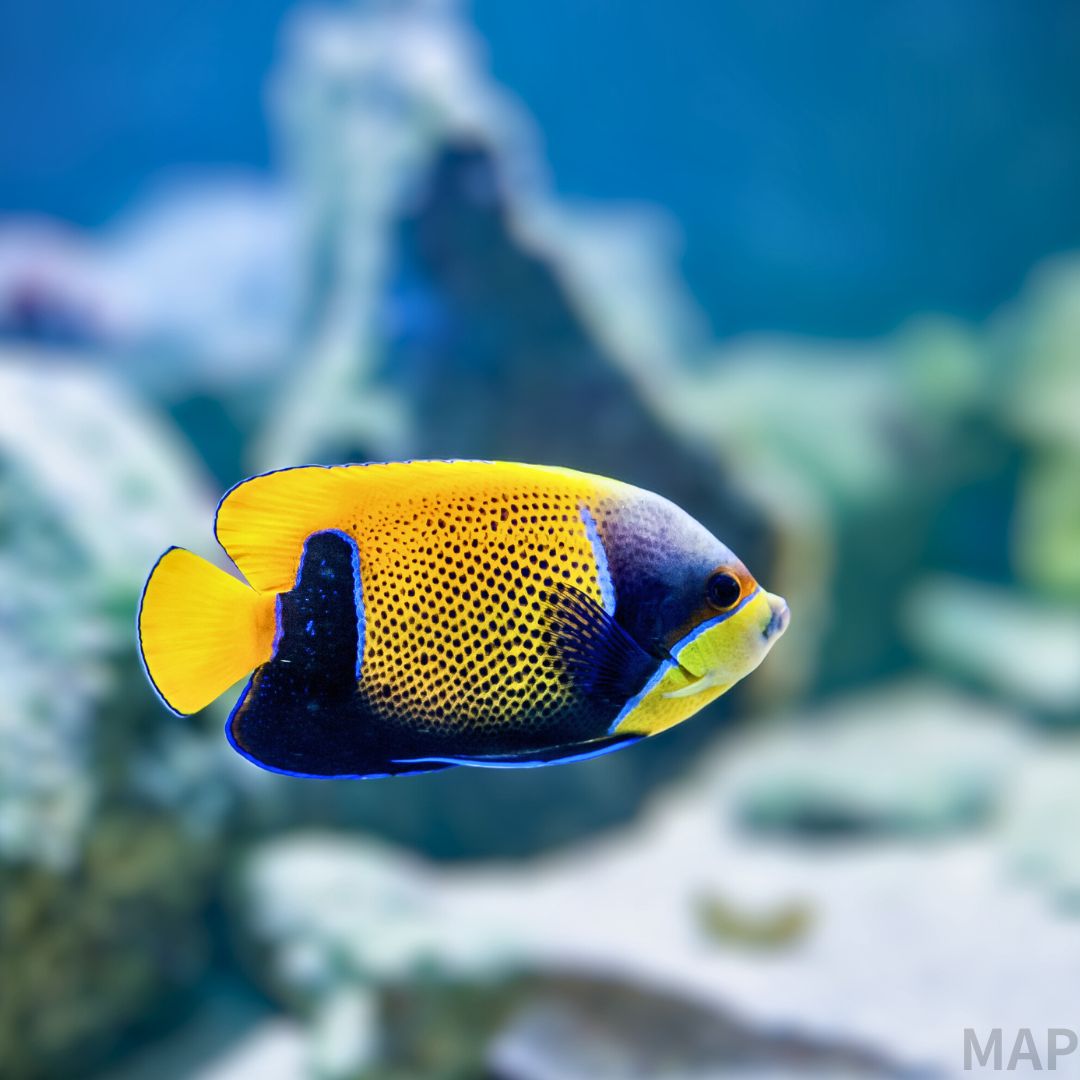
イナズマヤッコは、キンチャクダイ科の中でも群を抜いて鮮やかで気品ある色彩を持つ中型の海水魚です。オレンジ、ダークブルー、レモンイエローが複雑に絡み合うその模様は、自然が生み出した芸術品そのものといえるでしょう。特に成魚の体側を斜めに走る太い青帯は、かつての提督が身にまとったタスキを思わせる威厳を放ちます。野生ではサンゴ礁の陰に潜む臆病な一面を持ちますが、環境に馴染むと水槽の主役として堂々とした姿を見せてくれます。近年では完全養殖個体の流通も安定しており、人工飼料への餌付きや環境適応能力が向上したことで、現代のアクアリウムにおいてより身近で魅力的な存在となっています。The Majestic Angelfish is a medium-sized marine fish with exceptionally vibrant and elegant colors among the Pomacanthidae family. Its pattern, a complex mix of orange, dark blue, and lemon yellow, is truly a masterpiece of nature. Especially, the thick blue diagonal band on the side of the adult fish exudes a dignity reminiscent of the sashes worn by former admirals. While it has a shy nature in the wild, hiding in coral reefs, it becomes a grand centerpiece of the tank once acclimated. In recent years, the distribution of captive-bred individuals has become stable, improving their response to artificial feed and environmental adaptability, making them a more accessible and attractive presence in modern aquaria.
インドネシア、フィリピン、オーストラリア北部などのインド太平洋熱帯海域Indo-Pacific: Indonesia, Philippines, Northern Australia, and Micronesia.
最大体長 / Max Size
約25センチメートルから28センチメートルApprox. 25-28 cm (10-11 inches).
寿命 / Lifespan
15年以上(理想的な飼育環境下では20年以上に達することもあります)15+ years (can reach 20+ years under ideal conditions).
飼育環境 / Aquarium Environment
水槽サイズ / Tank Size
90センチメートルから120センチメートル規格水槽以上(水量約180リットル以上を推奨。理想は120センチメートルワイド以上の大型水槽)Minimum 90-120cm standard tank (approx. 180L+ recommended), ideally 120cm wide or larger.
比重1.020から1.025、pH 8.1から8.4。硝酸塩を低く抑えた清浄かつ安定した水質。Specific Gravity 1.020-1.025, pH 8.1-8.4. Clean and stable water with low nitrates.
レイアウト / Layout
ライブロックを複雑に組み、複数の隠れ家(洞窟やアーチ)を用意します。臆病な性質を考慮し、安心できるシェルターが必要です。Layout with complex live rock structures providing multiple hiding places (caves, arches). Shelters are necessary for their shy nature.
注意点 / Precautions
水質の急変は白点病を誘発しやすいため、高機能なプロテインスキマーやUV殺菌灯の導入が効果的です。導入初期の検疫は必須です。Sudden water changes can trigger Ich; using a high-performance protein skimmer or UV sterilizer is effective. Quarantine is essential for new arrivals.
餌と給餌 / Feeding
餌の種類 / Diet
海綿(スポンジ)成分を含むヤッコ専用人工飼料、イサザアミ、冷凍コペポーダ、海藻類。Specialized angelfish pellets with sponge matter, Mysis shrimp, frozen copepods, and marine algae.
給餌のポイント / Feeding Tips
1日に2、3回に分けて少量ずつ給餌します。植物性飼料を重視することで、海綿食のヤッコに特有の肝疾患や失明のリスクを軽減できます。Feed small amounts 2-3 times daily. Emphasizing plant-based food helps mitigate the risk of fatty liver or blindness common in sponge-eating angelfish.
性格と混泳 / Temperament and Tank Mates
性格 / Temperament
中程度の気性(セミ・アグレッシブ)。同種や似た体型のヤッコに対しては強い排他性を示します。Semi-aggressive. Shows strong exclusivity towards the same species or similar-shaped angelfish.
混泳の相性 / Compatibility
ハギ、ベラ、ハナダイ等の他種とは混泳しやすいですが、ヤッコ同士の場合は本種を最後に導入するのがセオリーです。Good compatibility with Tangs, Wrasses, and Anthias. For mixing with other angelfish, the general rule is to introduce this species last.
病気と対策 / Diseases and Prevention
かかりやすい病気 / Common Diseases
白点病、ウーディニウム症、および輸送ストレスに伴う細菌感染症。Marine Ich, Oodinium, and bacterial infections associated with shipping stress.
対策と予防 / Prevention
トリートメントタンクでの2週間から4週間の検疫を推奨します。水温と水質の安定維持が最大の防御策となります。Quarantine in a treatment tank for 2-4 weeks is recommended. Maintaining stable temperature and water quality is the best defense.
増やし方(繁殖) / Breeding
雌雄の判別 / Sexing
雌性先熟の性転換を行います。群れの中で最も優位な個体が雄になりますが、外見での明確な判別は容易ではありません。Protogynous hermaphrodites. The dominant individual in a group becomes male, though visual sexing is not straightforward.
繁殖形態 / Reproduction
浮遊性卵産出型。自然界では日没時に中層へと上昇しながら放卵・放精を行います。Pelagic spawners. In the wild, they release eggs and sperm while ascending into the water column at sunset.
繁殖のポイント / Breeding Tips
家庭内での繁殖は困難ですが、Bali Aquarich社などの大規模施設では完全養殖に成功しており、養殖個体が広く普及しています。Breeding in home aquaria is difficult, but large facilities like Bali Aquarich have succeeded in captive breeding, making such individuals widely available.
雑学と豆知識 / Trivia and Fun Facts
1. 学名が示す「艦隊提督」の威厳 / 1. The Dignity of a “Fleet Admiral” in its Name
種小名のナバルクス(navarchus)は、ラテン語で「艦隊の提督」を意味します。成魚の体側を斜めに横切る太い青帯が、軍の提督が正装時に着用するサッシュ(肩掛けの帯)を彷彿とさせることから命名されました。英名のマジェスティック(Majestic)も、その荘厳な佇まいを象徴しています。The species name “navarchus” means “fleet admiral” in Latin. It was named after the thick blue diagonal band on its side, which resembles the formal sashes worn by naval admirals. The English name “Majestic” also symbolizes its grand appearance.
2. 和名「イナズマ」の由来と文化的解釈 / 2. Origin and Cultural Interpretation of the Japanese Name “Inazuma”
和名のイナズマ(稲妻)は、幼魚期に見られる細い白の曲線模様に由来するとされています。この複雑なラインを、暗雲を裂く光跡や水面の波紋に見立てたのは、自然の現象に美を見出す日本独自の情緒的な通説です。欧米が成魚の権威に注目したのに対し、日本は幼魚の繊細な模様に注目したという対比も興味深い点です。The Japanese name “Inazuma” (Lightning) likely comes from the thin white curved patterns of the juvenile. Interpreting these lines as lightning strikes or ripples on water is an emotional, traditional Japanese view. It is an interesting contrast to the Western focus on the adult’s authority.
3. 海綿動物を分解する特異な生理機能 / 3. Unique Physiology for Decomposing Sponges
成魚は自然界で食餌の70パーセント以上を海綿動物に依存しています。海綿はガラス質の骨片(spicules)や毒性を持ち、多くの魚にとって食用には適しませんが、イナズマヤッコはこれらを効率よく分解・吸収する特殊な消化酵素を獲得しています。このため、飼育下でも海綿成分を含んだ専用飼料の給餌が推奨されます。Adults rely on sponges for over 70% of their diet in the wild. While sponges are unsuitable for most fish due to their spicules and toxicity, the Majestic Angelfish has specialized enzymes to digest them efficiently. Thus, specialized food containing sponge matter is recommended in captivity.
4. 防御の武器「頬棘」と取り扱いの注意点 / 4. The Defensive “Cheek Spines” and Handling Precautions
キンチャクダイ科の大きな特徴であるエラ蓋の鋭い棘(頬棘)は、捕食者に対する強力な武器です。しかし、移動時にナイロン製の網を使うと、この棘が網目に絡まって深刻な裂傷や顎の損傷を招くリスクがあります。安全な取り扱いのために、水ごと掬うウォータースクープ法を実践するのがプロのアクアリストの標準です。The sharp spines on the gill covers, common to all pomacanthids, are powerful weapons against predators. However, using nylon nets for transport poses a risk of these spines getting caught, leading to severe injury. Professionals use the “water scoop method” for safe handling.
まとめ / Conclusion
イナズマヤッコは、その鮮烈な色彩と歴史的な物語性を併せ持つ、海水魚飼育の最高峰の一角です。最新の分類学や生理学的な知見に基づいた適切なケアを提供することで、彼らは水槽の中で20年近い歳月を共に過ごす最高のパートナーとなってくれます。The Majestic Angelfish is one of the pinnacles of marine fish keeping, combining vibrant colors with historical narrative. By providing appropriate care based on the latest taxonomic and physiological knowledge, they can become great partners sharing nearly 20 years with you in an aquarium.
特に近年主流となった養殖個体は、人工飼料への適応も早く、初めて大型ヤッコに挑戦する方にとっても心強い選択肢となります。この「海中の提督」が放つ威厳と美しさを、ぜひご自身の水槽で体感してください。Particularly, the now-common captive-bred individuals adapt quickly to artificial feed, making them a reassuring choice for those attempting large angelfish for the first time. Experience the dignity and beauty of this “admiral of the sea” in your own aquarium.



 アイのアクアグッズ案内海水魚初心者の必需品|水槽・人工海水・比重計・水質検査道具の特徴や使い方、選ぶときのポイントをアイが紹介します。記事はコチラ →
 アイのアクアグッズ案内ダニオの仲間に合わせる飼育用品|ゼブラダニオから超小型種まで水槽・ろ過・餌を選ぶ道具の特徴や使い方、選ぶときのポイントをアイが紹介します。記事はコチラ →
 アイのアクアグッズ案内水槽の流木の選び方|枝・マングローブ・アク抜きとおすすめ商品水槽に小さな森を作る流木。枝流木やマングローブという名前の違いから、魚の隠れ家、水草の取り付け、浮く・水が茶色くなるときの準備まで、アイとコタロウが商品とともに案内します。記事はコチラ →
 アイのアクアグッズ案内そのごはん、泳いでる! 卵から始めるブラインシュリンプの孵化と道具選び道具の特徴や使い方、選ぶときのポイントをアイが紹介します。記事はコチラ →



コメント