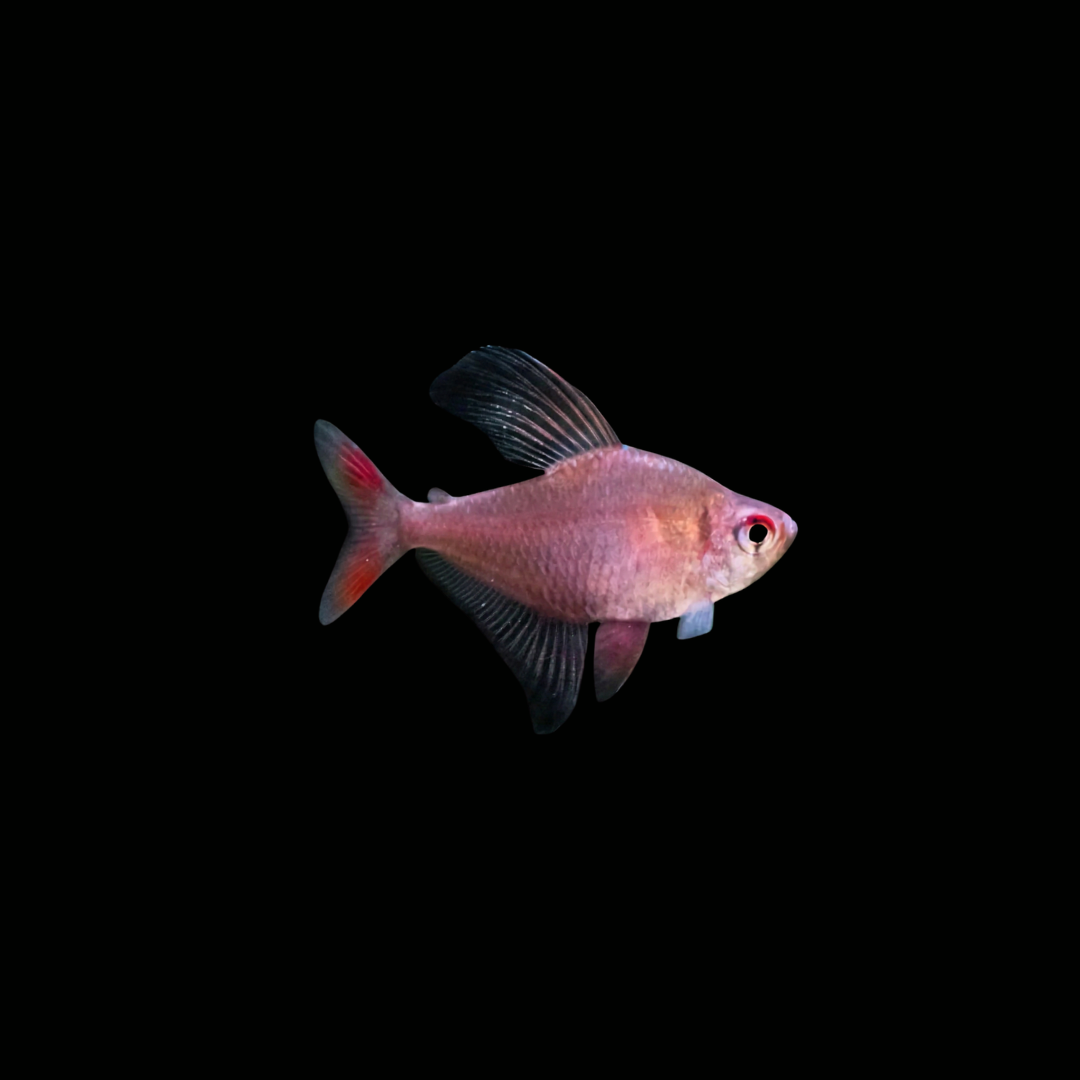
ロベルティテトラは、南米ペルーのアマゾン川上流域を原産とする、カラシン目の中でも特に優雅な姿を持つ小型魚です。最大の魅力は、成熟したオスに見られる大きく伸長した背びれで、その形状から「シックルテトラ(鎌のテトラ)」とも呼ばれます。体色は深みのある赤褐色からワインレッドに染まり、水草の緑に非常に美しく映えます。長年、近縁種との混同により分類学的な位置づけが不安定でしたが、2014年に正式に新種として記載され、現在ではその独立した美しさが広く認められています。Robert’s Tetra is a small fish with a particularly elegant appearance among the Characiformes, native to the upper Amazon River basin in Peru. Its greatest attraction is the significantly elongated dorsal fin seen in mature males, which is why it is also known as the “Sickle Tetra.” Its body color shades into a deep reddish-brown or wine red, making it stand out beautifully against green aquatic plants. For many years, its taxonomic position was unstable due to confusion with closely related species, but it was formally described as a new species in 2014, and its independent beauty is now widely recognized.
南米ペルー:パスタサ川流域(マラニョン川支流)Peru: Pastaza River basin (tributary of the Marañón River)
最大体長 / Max Size
約4cm 〜 4.5cmApprox. 4.0cm – 4.5cm
寿命 / Lifespan
約3年 〜 5年Approx. 3 – 5 years
飼育環境 / Aquarium Environment
水槽サイズ / Tank Size
60L以上(60cm規格水槽推奨)。オス同士のディスプレイ(誇示行動)のための遊泳スペースが必要です。60L or more (60cm standard tank recommended). Sufficient swimming space is needed for male display behavior.
水温 / Temperature
24℃ 〜 28℃。夏季の高温には注意が必要です。24°C – 28°C. Caution is needed for high temperatures in summer.
水質 / Water Quality
弱酸性 〜 中性(pH 5.5 〜 7.0)。軟水を好みますが、東南アジアブリード個体は日本の水道水にもよく適応します。Slightly acidic to neutral (pH 5.5 – 7.0). Prefers soft water, though tank-bred specimens adapt well to various conditions.
レイアウト / Layout
流木や水草を配置した、少し薄暗い環境が理想です。浮き草で遮光し、マジックリーフなどでブラックウォーターを再現すると発色が向上します。An environment with driftwood and plants under relatively dim lighting is ideal. Using floating plants and botanicals like Indian almond leaves to create blackwater will enhance their colors.
注意点 / Precautions
水質の急変に敏感な面があるため、導入時の水合わせは慎重に行います。また、硝酸塩の蓄積を嫌うため定期的な換水が不可欠です。They can be sensitive to sudden changes in water quality, so acclimatization must be done carefully. Regular water changes are essential to keep nitrate levels low.
餌と給餌 / Feeding
餌の種類 / Diet
人工飼料(フレーク、小粒のペレット)、冷凍アカムシ、ブラインシュリンプ、ミジンコなど。Dry foods (flakes, small pellets), frozen bloodworms, brine shrimp, and daphnia.
給餌のポイント / Feeding Tips
基本的には何でもよく食べますが、美しい発色と伸長するヒレを維持するためには、動物性プランクトンなどの生餌や冷凍餌をバランスよく与えることが重要です。While they accept most foods, a balanced diet including live or frozen foods like zooplankton is crucial for maintaining vibrant colors and healthy fin growth.
性格と混泳 / Temperament and Tank Mates
性格 / Temperament
非常に温和で群れを作る性質があります。オス同士でヒレを広げ合うディスプレイを行いますが、激しく傷つけ合うことは稀です。Very peaceful and shoaling. Males will display by spreading their fins at each other, but serious fighting is rare.
混泳の相性 / Compatibility
同サイズのテトラ類、コリドラス、アピストグラマなどのドワーフシクリッドと好相性です。8〜10匹以上の群れで飼育すると落ち着きます。Compatible with similar-sized tetras, Corydoras, and dwarf cichlids like Apistogramma. They feel more secure in groups of 8-10 or more.
急激な水温変化や水質の悪化を避けることが最大の予防策です。導入時のトリートメントを徹底し、異常が見られた場合は早めに薬浴などの処置を行います。The best prevention is avoiding sudden temperature changes and poor water quality. Ensure thorough quarantine upon introduction and act quickly if any abnormalities occur.
増やし方(繁殖) / Breeding
繁殖形態 / Reproduction
卵をばらまくバラまき型の産卵形態(散乱性)です。親魚に卵を食べる習性があるため、採卵には工夫が必要です。They are egg-scatterers. Since parents tend to eat their own eggs, specific measures are needed for successful collection.
繁殖のポイント / Breeding Tips
繁殖用の別水槽を用意し、ウィローモスなどの産卵床を敷き、極軟水の弱酸性に調整します。孵化した稚魚は非常に小さいため、インフゾリアなどの微小な餌から開始します。Setup a separate breeding tank with fine-leaved plants like Java moss and adjust the water to very soft and slightly acidic. Fry are tiny and require infusoria as their first food.
雑学と豆知識 / Trivia and Fun Facts
1. 50年越しの正式な名前:ジャック・ロバーツ氏への献名 / 1. A Proper Name After 50 Years: Dedicated to Mr. Jack Roberts
この魚が初めて観賞魚市場に登場したのは1958年のことですが、当時は学術的な新種記載を経ないまま「ロベルティテトラ」という流通名だけが一人歩きしていました。その名の由来は、アメリカのフロリダ州で熱帯魚卸業を営み、この魚を初めて市場に紹介したジャック・ロバーツ氏にちなんでいます。しかし、正式な学名がついたのは2014年になってからのことで、ザルスケ博士により改めて「Hyphessobrycon jackrobertsi」と命名されました。半世紀以上にわたって「名前があるようでなかった」という、観賞魚の歴史の中でも珍しいエピソードを持つ魚なのです。While this fish first appeared in the aquarium trade in 1958, it circulated only under the trade name “Robert’s Tetra” without a formal scientific description. The name originates from Jack Roberts, a tropical fish wholesaler in Florida who first introduced the species. It wasn’t until 2014 that Dr. Zarske formally named it Hyphessobrycon jackrobertsi. For over half a century, it was a fish that “had a name, but didn’t,” a rare occurrence in the history of aquarium fishes.
2. 近縁種「オーネイトテトラ」との見分け方 / 2. Distinguishing from the Related “Ornate Tetra”
かつてロベルティテトラは、よく似たオーネイトテトラ(H. bentosi)と同一視されていた時期がありました。しかし、専門的な観察眼を持つアクアリストなら、エラ蓋の後ろにある「肩部斑紋」に注目することで見分けることができます。オーネイトテトラの斑紋が垂直に細長いのに対し、ロベルティテトラの斑紋はより円形に近い形をしています。また、オスの背びれの伸び方はロベルティテトラの方がより顕著で、後方に湾曲する鎌のようなシルエットは本種ならではの美しさです。Robert’s Tetra was once considered identical to the similar Ornate Tetra (H. bentosi). However, keen aquarists can tell them apart by looking at the humeral spot behind the gill cover. While the Ornate Tetra’s spot is vertically elongated, the Robert’s Tetra’s spot is more circular. Furthermore, the dorsal fin extension in males is more pronounced in Robert’s Tetra, featuring a distinctive sickle-like curve that is unique to this species.
3. 野生の姿を再現するブラックウォーターの魔力 / 3. The Magic of Blackwater in Replicating the Wild
ロベルティテトラの故郷であるペルーの小川は、熱帯雨林の落ち葉から溶け出したタンニンやフミン酸によって、紅茶のような茶褐色に染まった「ブラックウォーター」の環境です。飼育下でもマジックリーフやピートモスを使用してこの環境を再現してあげると、魚は安心感を得て、本来持っている鮮烈なワインレッドの発色を存分に見せてくれるようになります。特にワイルド(野生採集)個体の場合、このブラックウォーターでの管理が、その美しさを引き出す最大の鍵となります。The native streams in Peru where Robert’s Tetra originates are “blackwater” environments, stained tea-brown by tannins and humic acids from rainforest leaf litter. Replicating this in captivity using Indian almond leaves or peat moss helps the fish feel secure, allowing them to display their full, vivid wine-red coloration. For wild-caught specimens in particular, blackwater management is the primary key to unlocking their true beauty.
まとめ / Conclusion
ロベルティテトラは、その歴史的な背景から飼育の細部に至るまで、知れば知るほど奥行きのある素晴らしい熱帯魚です。成熟したオスが水槽の中でヒレを広げ、深い赤色に輝く姿は、まさにリビングに再現されたアマゾンの宝石と呼ぶにふさわしい光景です。Robert’s Tetra is a wonderful tropical fish that reveals more depth the more you learn about its historical background and husbandry details. The sight of a mature male spreading its fins and glowing with a deep red color is truly fitting for a “gem of the Amazon” replicated in your living room.
適切な水質管理と少しの工夫で、この魚は最高のコンディションを見せてくれます。ぜひ、まとまった数で飼育し、彼らが織りなす優雅なダンスと、アマゾンの湿地帯を思わせる情緒豊かなアクアリウムを楽しんでみてください。With proper water management and a bit of care, these fish will show their best condition. We highly recommend keeping them in a group to enjoy their graceful dances and the evocative atmosphere of an Amazonian wetland in your aquarium.
・
Zarske, A. (2014). Hyphessobrycon jackrobertsi sp. n. – ein neuer Salmler aus Peru (Teleostei: Characiformes: Characidae). Vertebrate Zoology, 64(2), 121-132.
・
Weitzman, S. H., & Palmer, L. (1997). A new species of Hyphessobrycon (Teleostei: Characidae) from the Neblina region of Venezuela and Brazil, with a generalized diagnosis of the genus.
・
Axelrod, H. R. (1958). Tropical Fish Hobbyist. (商業名ロベルティテトラの初出資料).


 ポチップ
ポチップ



コメント