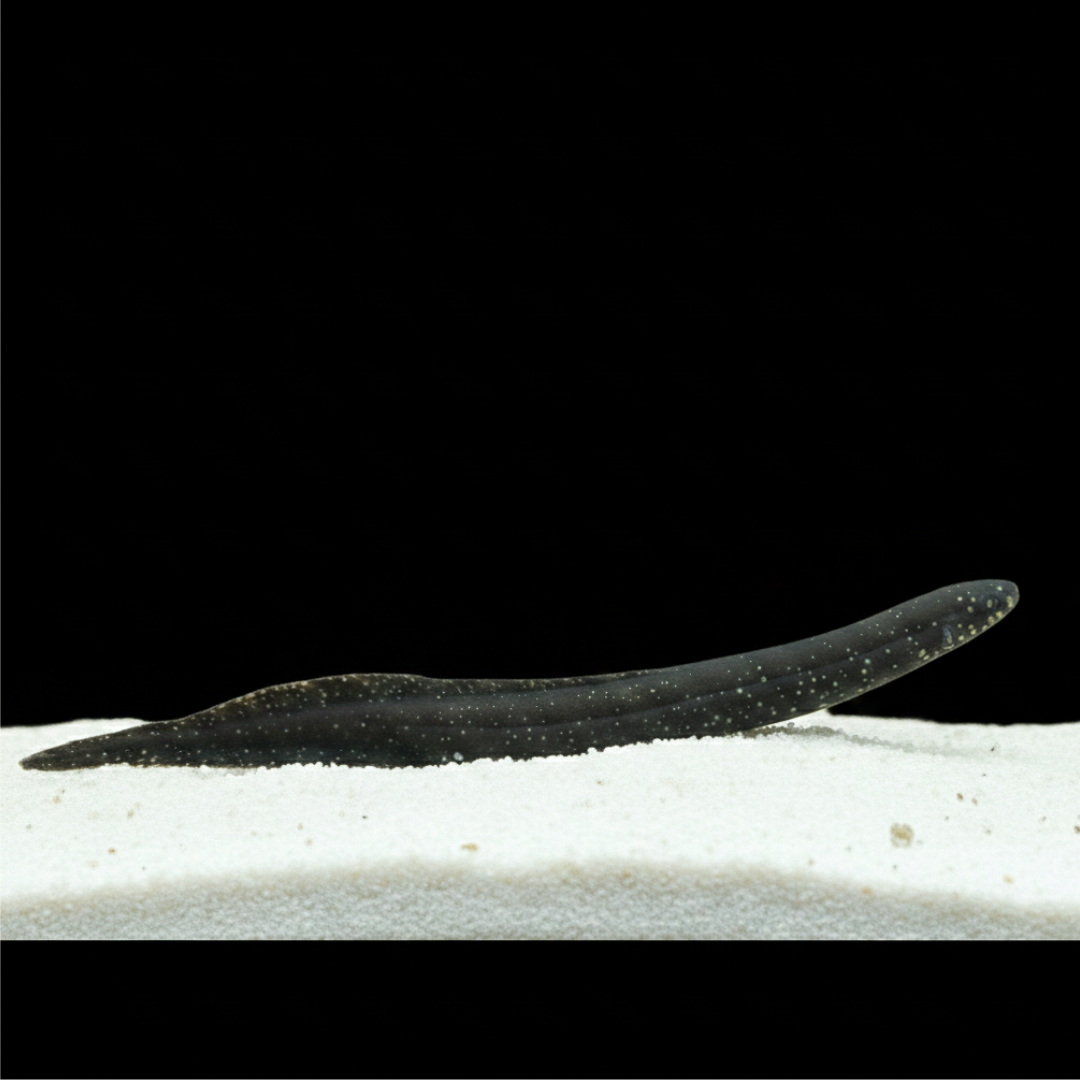
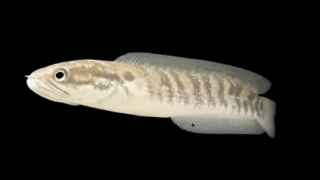
レピドシレン・パラドクサは、南アメリカ大陸に唯一生息するハイギョの仲間で、4億年以上の歴史を背負う「生きた化石」として知られています。ウナギのように細長い体と、サンショウウオの四肢を思わせる肉厚な鰭(肉鰭)を持ち、魚類が陸上へと進出していく進化の過渡期を色濃く残しています。最大の特徴は、成長とともに鰓(えら)が退化し、空気呼吸への依存度が高まる点です。成魚は水面に顔を出して空気を吸わなければ溺れてしまう「絶対的空気呼吸動物」であり、その特異な生態は多くの研究者を魅了し続けています。2024年には、本種のゲノムサイズが動物界で最大であることが判明し、進化生物学の新たな扉を開く存在として世界中の注目を浴びています。Lepidosiren paradoxa, the only lungfish species native to South America, is a renowned living fossil with a history spanning over 400 million years. Characterized by an eel-like elongated body and fleshy, limb-like fins, it vividly exhibits the evolutionary transition from fish to land-dwelling tetrapods. Its most striking feature is the development of lungs as its primary respiratory organ; as it matures, its gills become vestigial, making it an obligate air-breather that will drown if denied access to the surface. In 2024, it gained global attention when scientific analysis revealed that it possesses the largest genome of any animal ever studied, positioning it as a cornerstone of evolutionary biology.
基本情報 / Basic Information
学名 / Scientific Name
Lepidosiren paradoxa
通称 / Common Name
レピドシレン・パラドクサ、ミナミアメリカハイギョ、ピランボイアSouth American Lungfish, American Mud-fish
成魚は週1回程度の給餌で十分。哺乳類の肉は内臓疾患の原因となるため厳禁。Adults only need feeding once a week. Never feed mammalian meat as it causes organ failure.
性格と混泳 / Temperament and Tank Mates
性格 / Temperament
肺魚の中では比較的温和だが、口に入るものはすべて捕食対象となる。Relatively peaceful for a lungfish, but opportunistic; anything that fits in its mouth is food.
混泳の相性 / Compatibility
大型ナマズやアロワナ等と可能だが、超大型設備が必要。プレコは体表を舐めるため不適。Compatible with large catfish or Arowanas in massive tanks. Plecos are unsuitable.
病気と対策 / Diseases and Prevention
かかりやすい病気 / Common Diseases
肥満による内臓疾患、水質悪化による皮膚病、不適切な給餌による脂肪肝。Internal diseases from obesity, skin issues from poor water, and fatty liver disease.
対策と予防 / Prevention
過給餌を避け、高効率な濾過システム(オーバーフロー式)で安定した水質を保つ。Avoid overfeeding and maintain stable water quality with efficient filtration (sump system).
増やし方(繁殖) / Breeding
繁殖形態 / Reproduction
卵生。雨季に泥底に巨大なトンネルを掘り、奥の産卵室で産卵・育児を行う。Oviparous. They dig deep burrows in mud during the rainy season for nesting.
繁殖のポイント / Breeding Tips
飼育下での繁殖は極めて困難。オスが腹鰭の仮鰓から卵に酸素を供給する。Extremely difficult in captivity. Males provide oxygen to eggs via vascularized fins.
雑学と豆知識 / Trivia and Fun Facts
1. 動物界最大!910億塩基対の衝撃 / 1. The 91-Gigabase Shock: Animal Kingdom’s Largest Genome
2024年の研究により、本種のゲノムサイズが約910億塩基対に達することが判明しました。これはヒトのゲノムの約30倍という途方もない大きさであり、動物界での公式記録を塗り替えました。この巨大化の理由は、ゲノム内の「トランスポゾン(動く遺伝子)」を抑制する防衛システムが弱く、1億年以上にわたって自己複製が繰り返された結果だと考えられています。A 2024 study revealed that this species possesses a genome of 91 billion base pairs, roughly 30 times larger than the human genome, setting a new record for the animal kingdom. This expansion is attributed to a weakened defense system against “jumping genes” (transposons), which have self-replicated unchecked for over 100 million years.
2. 乾季を生き抜く究極の術「夏眠」 / 2. Survival Master: The Art of Aestivation
生息地の水が干上がると、レピドシレンは泥の中に深さ50cmほどの穴を掘り、自身の粘液で「繭(コクーン)」を作って休眠します。これを夏眠と呼びます。この間、代謝は極限まで低下し、雨季が戻るまでの数ヶ月間、一切の飲み食いなしで生き延びることができます。まさに生命の神秘を感じさせる適応能力です。When their habitat dries up, they burrow 50cm into the mud and create a protective cocoon from mucus. This dormant state, known as aestivation, allows them to survive for months without food or water until the rains return, showcasing incredible metabolic adaptation.
3. 献身的な父親と「魔法の鰭」 / 3. Dedicated Fathers and Their “Magic Fins”
繁殖期のオスは、腹鰭に羽毛状の仮鰓(かさい)を発達させます。産卵室となる泥の奥底は酸素が非常に少ないため、オスは水面で取り込んだ酸素をこの特殊な鰭の血管を通じて卵や稚魚に直接分け与えます。オスが自らの体力を削って子孫を守るこの行動は、魚類の中でも極めて珍しい献身的な子育てです。During breeding, males grow feathery, vascularized structures on their pelvic fins. Since the nesting burrows are nearly anoxic, the male releases oxygen from its own blood through these fins to keep the eggs and fry alive—a rare and selfless display of parental care in the fish world.
4. 指の起源をその身に宿す / 4. Carrying the Blueprint of Fingers
ゲノム解析の結果、ヒトの「指」の形成に不可欠な遺伝子制御システムが、すでに肺魚の段階で備わっていることが特定されました。レピドシレンが泥の上を「這う」ための肉厚な鰭は、まさに私たちの手足へと繋がる進化の設計図そのものなのです。Genetic analysis shows that the regulatory modules required for “digit development” in humans were already present in lungfish. Their fleshy fins, used to crawl over mud, are the literal evolutionary blueprints that eventually led to our own hands and feet.
まとめ / Conclusion
レピドシレン・パラドクサは、単なる観賞魚の枠を超え、生命進化の壮大な歴史をその身に刻んだ類まれなる生物です。ヒトの30倍という巨大なゲノムを持ちながら、過酷な環境に適応し、数千万年もの時を生き抜いてきたその姿は、私たちに生命の力強さと神秘を教えてくれます。Lepidosiren paradoxa is more than just an aquarium fish; it is a unique biological entity that bears the grand history of life’s evolution within its cells. Holding a genome 30 times larger than our own and possessing the ability to endure extreme environmental shifts for millions of years, it stands as a profound testament to the resilience and mystery of life.
しかし、その飼育には水族館レベルの巨大な設備と、20年以上にわたる長期的な責任が伴います。この「生きた化石」の真の価値を理解し、最高の環境を提供できる情熱的なアクアリストにとって、レピドシレンは日々の生活の中で進化の最前線を観察できる、かけがえのないパートナーとなることでしょう。However, keeping this species requires museum-grade facilities and a commitment spanning over two decades. For the dedicated aquarist capable of providing such an environment, this living fossil offers an unparalleled opportunity to witness the frontier of evolution in their own home.
Schartl, M., Meyer, A., Schneider, I., et al. (2024). “The genomes of all lungfish inform on genome expansion and tetrapod evolution.” Nature. (動物界最大のゲノム解明、および四肢動物への進化に関する主論文)
Icardo, J. M., et al. (2008). “Aestivation in the South American lungfish, Lepidosiren paradoxa: effects on cardiovascular function, blood gases, osmolality and leptin levels.” Journal of Comparative Physiology B. (南米肺魚の夏眠中の循環機能や血液ガスなどの生理学的変化に関する文献)
Chew, S. F., et al. (2004). “Nitrogen excretion and defence against ammonia toxicity in the African lungfish…” Journal of Experimental Biology. (近縁種であるアフリカハイギョの夏眠中の窒素代謝およびアンモニア毒性回避戦略に関する参考論文)



 ポチップ
ポチップ
コメント