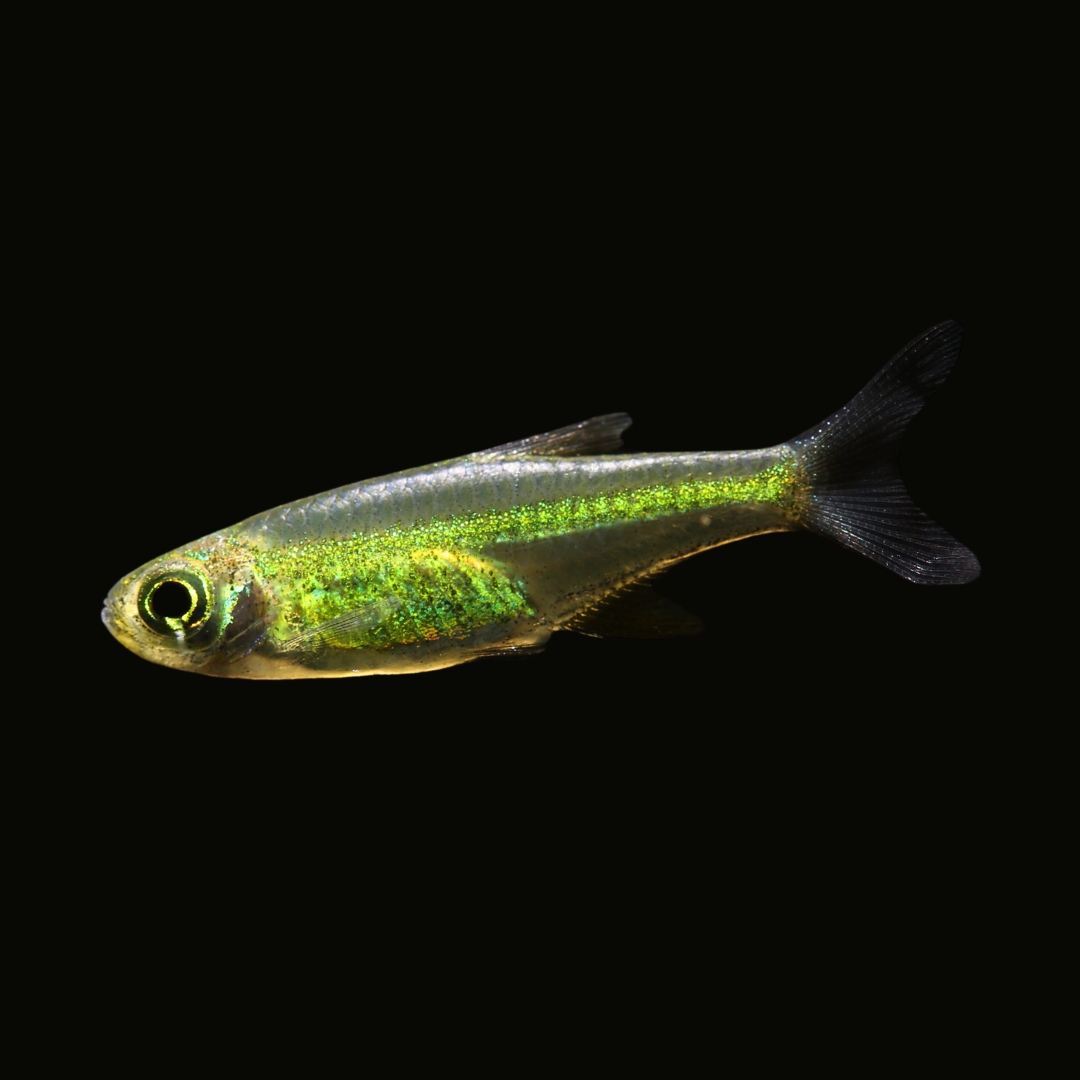
ミクロラスボラ・ブルーネオンは、全長2cmから3cmほどの極めて小さなコイ科の魚です。「生きた宝石」とも称されるその体色は、光の当たる角度によって透明感のあるネオングリーンから、深みのあるメタリックブルーへと変化します。2000年代初頭に登場して以来、小型水槽(ナノアクアリウム)に最適な美魚として不動の人気を誇っています。かつてはタイやミャンマーの国境地帯で採集された個体が中心でしたが、現在は養殖技術が確立され、より飼育しやすい魚として親しまれています。Microdevario kubotai is an extremely small cyprinid fish, reaching only 2-3 cm in length. Often referred to as a “living jewel,” its body color shifts from a translucent neon green to a deep metallic blue depending on the angle of light. Since its introduction in the early 2000s, it has remained a favorite for nano aquariums. While wild-caught individuals from the Thai-Myanmar border were once the norm, captive breeding techniques have now been established, making them more accessible and easier to keep.
基本情報 / Basic Information
学名 / Scientific Name
Microdevario kubotai
通称 / Common Name
ミクロラスボラ・ブルーネオン、ブルーネオン、ネオングリーン・ラスボラKubotai Rasbora, Neon Green Rasbora, Blue Neon
分類 / Family
コイ目 ダニオ科 ダニオ亜科 Microdevario属Cypriniformes, Danionidae, Danioninae, Genus Microdevario
英名 / English Name
Kubotai Rasbora
分布 / Distribution
タイ西部(ラノーン県、ターク県など)、ミャンマー南東部(カレン州アタラン川水系など)Western Thailand (Ranong, Tak) and Southeastern Myanmar (Kayin State, Ataran River basin)
最大体長 / Max Size
約 2.0cm 〜 3.0cmApprox. 2.0cm – 3.0cm
寿命 / Lifespan
約 2年 〜 3年(飼育環境による)Approx. 2 – 3 years (depending on environment)
飼育環境 / Aquarium Environment
水槽サイズ / Tank Size
30cmキューブ水槽(約25L)から飼育可能ですが、活発に泳ぐため45cm〜60cm規格水槽(約40L〜60L)での群泳が推奨されます。Minimum 30cm cube tank (approx. 25L), but a 45cm-60cm standard tank (40L-60L) is recommended for schooling behavior.
水温 / Temperature
22℃ 〜 26℃
水質 / Water Quality
弱酸性〜中性(pH 6.0〜7.0)、軟水(GH 3〜8dH)。日本の水道水は適しています。Slightly acidic to neutral (pH 6.0-7.0), soft water (GH 3-8dH).
レイアウト / Layout
水草を密植した環境を好みます。ソイル(土)を使用し、暗めの底床にすると体色が鮮やかになります。泳ぐためのオープンスペースも確保してください。Prefers densely planted tanks. Using dark soil substrate enhances their coloration. Ensure open swimming space is available.
注意点 / Precautions
高水温(28℃以上)には弱いため、夏場は冷却ファンやクーラーが必要です。また、酸欠にも弱いため、緩やかな水流を作って酸素を供給してください。Sensitive to high temperatures (above 28°C); cooling is necessary in summer. Also sensitive to low oxygen, so provide gentle water flow.
餌と給餌 / Feeding
餌の種類 / Diet
口が非常に小さいため、指ですり潰したフレークフードや、マイクロペレットなどの微粒人工飼料を与えます。沸かしたてのブラインシュリンプ幼生は最良の餌です。Due to their tiny mouths, feed crushed flakes or micro-pellets. Freshly hatched baby brine shrimp are the best food source.
給餌のポイント / Feeding Tips
痩せやすいため、こまめに給餌します。大きな粒の餌は食べられないため、必ず細かくしてから与えてください。They can lose weight easily, so feed frequently. Always crush larger food particles as they cannot ingest them.
性格と混泳 / Temperament and Tank Mates
性格 / Temperament
極めて温和ですが、臆病な面があります。10匹以上のまとまった数で飼育することで、群れを作って安心して泳ぐようになります。Extremely peaceful but shy. Keeping them in a school of 10 or more encourages them to swim confidently.
混泳の相性 / Compatibility
ボララスや小型テトラ、オトシンクルスなど、同サイズの温和な魚と相性が良いです。エンゼルフィッシュなど口に入るサイズの魚とは混泳できません。稚エビは食べられる可能性があります。Compatible with similar-sized peaceful fish like Boraras, small tetras, and Otocinclus. Avoid fish large enough to eat them. Baby shrimp may be predated upon.
病気と対策 / Diseases and Prevention
かかりやすい病気 / Common Diseases
水温低下時の白点病や、水質悪化時のカラムナリス症などに注意が必要です。小さな魚体は環境変化に敏感です。Watch for Ich in low temperatures and Columnaris in poor water quality. Their small bodies are sensitive to environmental changes.
対策と予防 / Prevention
急激な水温・水質の変化を避けることが最大の予防です。導入時の水合わせは慎重に行い、適切な濾過システムで清浄な水を維持します。Avoiding rapid changes in temperature and water quality is key. Acclimate carefully and maintain clean water with good filtration.
増やし方(繁殖) / Breeding
繁殖形態 / Reproduction
ばら撒き型の産卵を行います。水草の茂みなどに卵を産み落としますが、親魚は卵を食べてしまう習性があります。They are egg scatterers. They spawn among plants, but parents will eat their own eggs.
繁殖のポイント / Breeding Tips
親魚から卵を守るため、底にネットを敷いた専用水槽を使用します。稚魚は極小サイズのため、初期飼料としてインフゾリア(ゾウリムシ)やPSBなどの微細な餌が必須となります。Use a separate tank with a mesh bottom to protect eggs. Fry are tiny and require microscopic food like infusoria or PSB initially.
雑学と豆知識 / Trivia and Fun Facts
1. 学名に刻まれた日本人の功績 / 1. Honoring a Japanese Collector
本種の学名「Microdevario kubotai」に含まれる「kubotai」は、タイを拠点に活動する日本人観賞魚輸出業者、久保田勝馬(Katsuma Kubota)氏に献名されたものです。1990年代後半、まだ調査が進んでいなかったタイ・ミャンマー国境地帯の河川を精力的に探索し、多くの新種発見に貢献した彼の功績を称えて、魚類学者Maurice Kottelat博士が名付けました。The specific epithet “kubotai” honors Mr. Katsuma Kubota, a Japanese ornamental fish exporter based in Thailand. It was named by Dr. Maurice Kottelat to recognize Kubota’s energetic exploration of the Thai-Myanmar border rivers in the late 90s and his contribution to discovering many new species.
2. 色彩の秘密は「構造色」 / 2. The Secret of Structural Color
この魚が放つ輝きは、色素によるものではなく「構造色」と呼ばれる物理現象によるものです。体表にあるグアニン結晶の層が光を反射・干渉させることで色が生まれます。自然光の下では透明感のあるネオングリーンに見えますが、水槽用の青みのあるLEDライトの下では、鮮烈なメタリックブルーに輝きます。これが「ブルーネオン」という通称の由来でもあります。Their shimmer is not from pigment but “structural color.” Guanine crystals in their skin reflect and interfere with light. Under natural light, they appear neon green, but under bluish aquarium LEDs, they shine a brilliant metallic blue, hence the name “Blue Neon.”
3. 「ゴミ箱分類」からの独立 / 3. Taxonomy Update
かつて本種は「Microrasbora(ミクロラスボラ)」属に分類されていましたが、近年のDNA解析により、インレー湖産の他のミクロラスボラとは系統が異なることが判明しました。現在は、より広域に分布するデバリオ属に近い仲間として新設された「Microdevario(ミクロデバリオ)」属に移されています。これは「小型のデバリオ」を意味しています。Originally classified in the genus “Microrasbora,” DNA analysis revealed they are distinct from Inle Lake species. They were reclassified into the new genus “Microdevario” (meaning “small Devario”), indicating their closer relationship to the widespread Devario genus.
まとめ / Conclusion
ミクロラスボラ・ブルーネオンは、日本の水道水(軟水)になじみやすく、水草水槽に最適な美魚です。その小さな体には、進化の不思議と、発見に尽力した人々の物語が詰まっています。Microdevario kubotai adapts well to Japan’s soft tap water and is perfect for planted tanks. Their tiny bodies hold the wonders of evolution and the stories of those who discovered them.
群れで泳ぐ彼らの姿は、水槽の中に清涼な小川の風景を作り出してくれることでしょう。ぜひ、10匹以上の群泳でその本来の美しさを堪能してください。A school of them creates a refreshing stream landscape in your tank. Please enjoy their true beauty by keeping them in a group of 10 or more.


 ポチップ
ポチップ

コメント