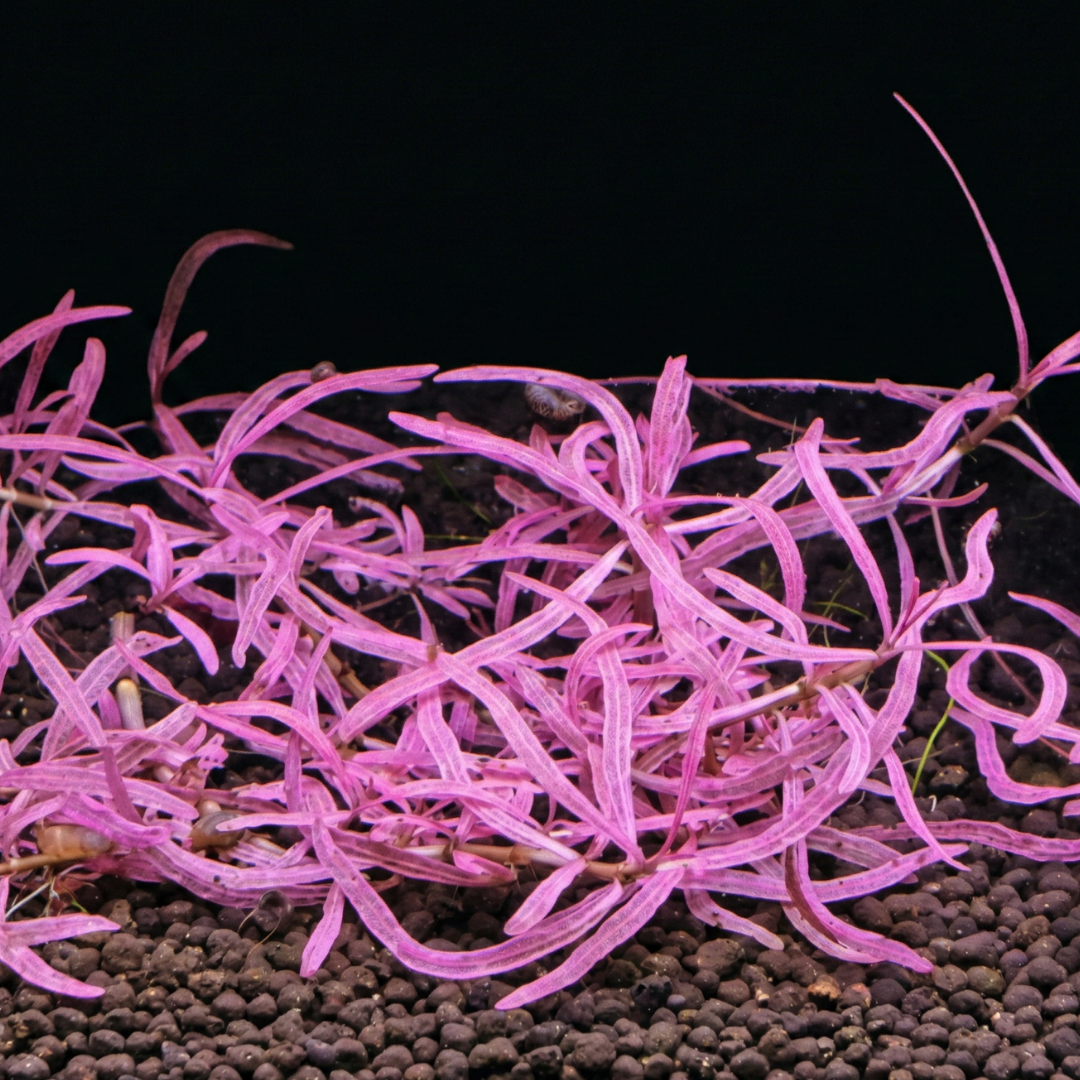
ハイグロフィラsp.チャイは、現代のアクアリウムシーンにおいて最も衝撃的な色彩を持つ水草の一つです。一般的な「ハイグロフィラ・ランセア・アラグアイア」から突如として現れたこの変異株は、鮮烈なネオンピンクから淡いパステルピンクの葉を展開し、水景の中に圧倒的な存在感を放ちます。その美しさはまさに「奇跡」と呼ぶにふさわしいものですが、同時に光合成を担う葉緑素(クロロフィル)が極めて少ないというデリケートな性質も併せ持っています。そのため、育成には強烈な光、高濃度のCO2、そして細やかな栄養管理が不可欠であり、アクアリストの情熱と技術が試される究極のステートメント・プランツと言えるでしょう。Hygrophila sp. ‘Chai’ is one of the most visually stunning aquatic plants in the modern aquascaping scene. This mutation of the common ‘Araguaia’ variety features vibrant neon to pastel pink leaves that create an incredible contrast within an aquarium. While its beauty is truly miraculous, it possesses a delicate nature due to significantly reduced chlorophyll levels. Consequently, it requires intense lighting, high CO2 levels, and precise nutrient management, making it the ultimate statement piece for dedicated aquarists.
基本情報 / Basic Information
学名 / Scientific Name
Hygrophila lancea ‘Chai’
通称 / Common Name
ハイグロフィラsp.チャイHygrophila sp. ‘Chai’
分類 / Family
ミソハギ科 (Lythraceae)Lythraceae
分布 / Distribution
シンガポール(ファームでの変異株)、原種は南米ブラジルSingapore (Farm-derived mutation), original species from Brazil
育成難易度 / Difficulty
最上級クラス(非常に難しい)Advanced (Very Difficult)
育成環境 / Cultivation Environment
光量 / Light
非常に強い光(60-80 PAR以上推奨)。60cm規格水槽であれば高出力のRGB LEDライトを多灯することで、アントシアニンの発色を促進させます。Very high light (60-80 PAR+ recommended). For a standard 60cm tank, multiple high-output RGB LED units are necessary to promote anthocyanin coloration.
CO2添加 / CO2 Injection
必須かつ高濃度(20-30 ppm以上)。光合成効率が低いため、外部からの豊富な炭素供給が長期維持の鍵となります。Mandatory and high concentration (20-30 ppm+). Due to low photosynthetic efficiency, a rich external carbon supply is key to long-term survival.
水質 / Water Quality
水温:22-25℃(低めを推奨)、pH:6.0-7.0(弱酸性)、GH:2-8 dGH(軟水)。日本の水道水は相性が良いですが、夏場の高水温には特に注意が必要です。Temp: 22-25°C (lower is better), pH: 6.0-7.0 (slightly acidic), GH: 2-8 dGH (soft water). Japanese tap water is generally suitable, but cooling is essential during hot summers.
底床 / Substrate
栄養系ソイル(アクアソイル)必須。根からの栄養吸収を重視するため、追肥や鉄分を多く含む肥料の併用が効果的です。Nutrient-rich soil (Aqua Soil) is mandatory. Root-based nutrient uptake is crucial, so root tabs and iron supplements are highly effective.
レイアウト / Layout
配置 / Positioning
中景から後景。コンパクトな茂みを形成するため、視線を惹きつけるフォーカルポイントとして最適です。Mid-ground to background. Its compact bush-forming habit makes it an ideal focal point to draw the eye.
注意点 / Precautions
周囲の成長の早い水草による影(シェーディング)を避けてください。光が遮られると、途端に葉が溶けたり緑色に戻ったりするリスクが高まります。Avoid shading from fast-growing neighboring plants. Lack of light increases the risk of leaf melting or reversion to green.
増やし方(トリミング) / Propagation & Trimming
増やし方 / Propagation
差し戻し。健康な茎の頂点を数節分切り取り、再びソイルへ深く植え込むことで増やします。根付くまでは動かさないことが肝要です。Stem cuttings. Cut healthy tops with several nodes and replant them deeply into the soil. Avoid moving them until roots are established.
トリミング / Trimming
ピンチカット。頂芽を切り取ることで脇芽の発生を促し、密度のある鮮やかなピンクの茂みを作ります。成長が非常に遅いため、切りすぎには注意してください。Pinching. Removing the apical bud encourages lateral growth, creating a dense, vibrant pink bush. Be cautious not to over-trim due to its very slow growth rate.
病気と対策(コケなど) / Pests & Algae
かかりやすい病気 / Common Issues
導入直後の葉の溶け(メルト)や、古い葉へのコケ(黒髭苔や斑点状藻類)の付着。Leaf melting (melting) immediately after introduction and algae growth (BBA or green spot algae) on older leaves.
対策と予防 / Prevention
溶けた葉は速やかに除去します。お掃除役の生物としてヤマトヌマエビなどを多めに導入し、常に葉の表面を清潔に保つ生態学的制御が不可欠です。Promptly remove any melted leaves. Ecological control by introducing Amano shrimp to keep the leaf surfaces clean is essential.
雑学と豆知識 / Trivia and Fun Facts
1. 発見の歴史と愛の命名 / 1. Discovery and a Loving Name
この水草は2008年、シンガポールの栽培家Wilson Law氏によって発見されました。膨大なアラグアイアの群生の中にたった一筋だけ現れたネオンピンクの茎を、彼は長い年月をかけて固定化しました。その名は、彼の最愛の妻である「チャイ(Chai)」さんにちなんで名付けられました。Discovered in 2008 by Singaporean cultivator Wilson Law, this plant originated from a single neon-pink stem found among a vast colony of Araguaia. Law stabilized this trait over several years and named it after his beloved wife, Chai.
2. ピンク色の科学:アントシアニンの防御 / 2. Science of Pink: Anthocyanin Defense
チャイの鮮やかな色彩は、アントシアニンという色素によるものです。この植物は遺伝的に葉緑素が少ないため、強すぎる光から身を守るための「日焼け止め」としてアントシアニンを大量に生成します。私たちが愛でるあの美しさは、実は過酷な環境で生き抜くための植物の必死の防御反応なのです。The vivid color of ‘Chai’ comes from pigments called anthocyanins. Due to a genetic lack of chlorophyll, the plant produces high levels of anthocyanin as a “sunscreen” to protect itself from intense light stress. The beauty we admire is actually a survival response to harsh conditions.
3. 「先祖返り」という生存本能 / 3. The Survival Instinct of Reversion
光量やCO2が不足すると、チャイは生き残るためにピンクの色素を捨て、効率よく光合成ができる緑色や茶色の葉(原種に近い状態)に戻ろうとします。これを「先祖返り」と呼びます。緑色の芽が出た場合は、ピンクの芽に光を届けるために、速やかにその部分を根元から剪定することが維持のコツです。When light or CO2 is insufficient, ‘Chai’ discards its pink pigments and reverts to green or brown leaves to photosynthesize more efficiently. This is known as “reversion.” To maintain the pink variety, promptly prune any green shoots to ensure light reaches the pink parts.
4. 日本国内のユニークな流通事情 / 4. Unique Distribution in Japan
日本ではADAの「BIO みずくさの森」などの組織培養カップが正規流通の主流です。無農薬で安全な反面、導入時の「溶け」のリスクがあるため、個人間で取引される「完全水中葉」も即戦力として非常に高い価値で取引されています。この二層構造の市場は、日本のアクアリストのこだわりの深さを物語っています。In Japan, tissue culture cups like ADA’s “BIO Mizukusa no Mori” are the mainstream distribution. While safe and pesticide-free, they carry a risk of melting. Consequently, fully submerged leaves traded between individuals are highly valued for their immediate stability in aquariums.
まとめ / Conclusion
ハイグロフィラsp.チャイは、単に美しいだけでなく、アクアリウムにおける環境制御の奥深さを教えてくれる特別な水草です。強烈な光と豊富なCO2、そして低めの水温という厳しい条件を満たした時、水槽の中に現れるネオンピンクの茂みは、他のどんな植物でも代えがたい感動を私たちに与えてくれます。Hygrophila sp. ‘Chai’ is more than just a beautiful plant; it is a special species that teaches us the depth of environmental control in an aquarium. When the strict requirements of intense light, abundant CO2, and cool water temperatures are met, the neon-pink bush that appears offers an inspiration that no other plant can replicate.
育成は決して容易ではありませんが、科学的なアプローチと日々の観察をもって接すれば、必ずそれに応えてくれるはずです。この「奇跡のピンク」を自分の水槽で完成させた時、あなたは一段上のアクアリストへと成長していることでしょう。ぜひ、この素晴らしい挑戦を楽しんでください。Cultivation is by no means easy, but if you approach it with a scientific mindset and daily observation, it will surely respond. Completing this “Miraculous Pink” in your own tank will mark your growth as a high-level aquarist. Please enjoy this wonderful challenge.
Zhang, J. et al. (2019), “Transcriptome and metabolome analysis of the anthocyanin biosynthesis pathway in ornamental kale”, Scientific Reports.(観賞用植物における葉色変異とアントシアニン合成経路の解析事例)



 ポチップ
ポチップ


コメント