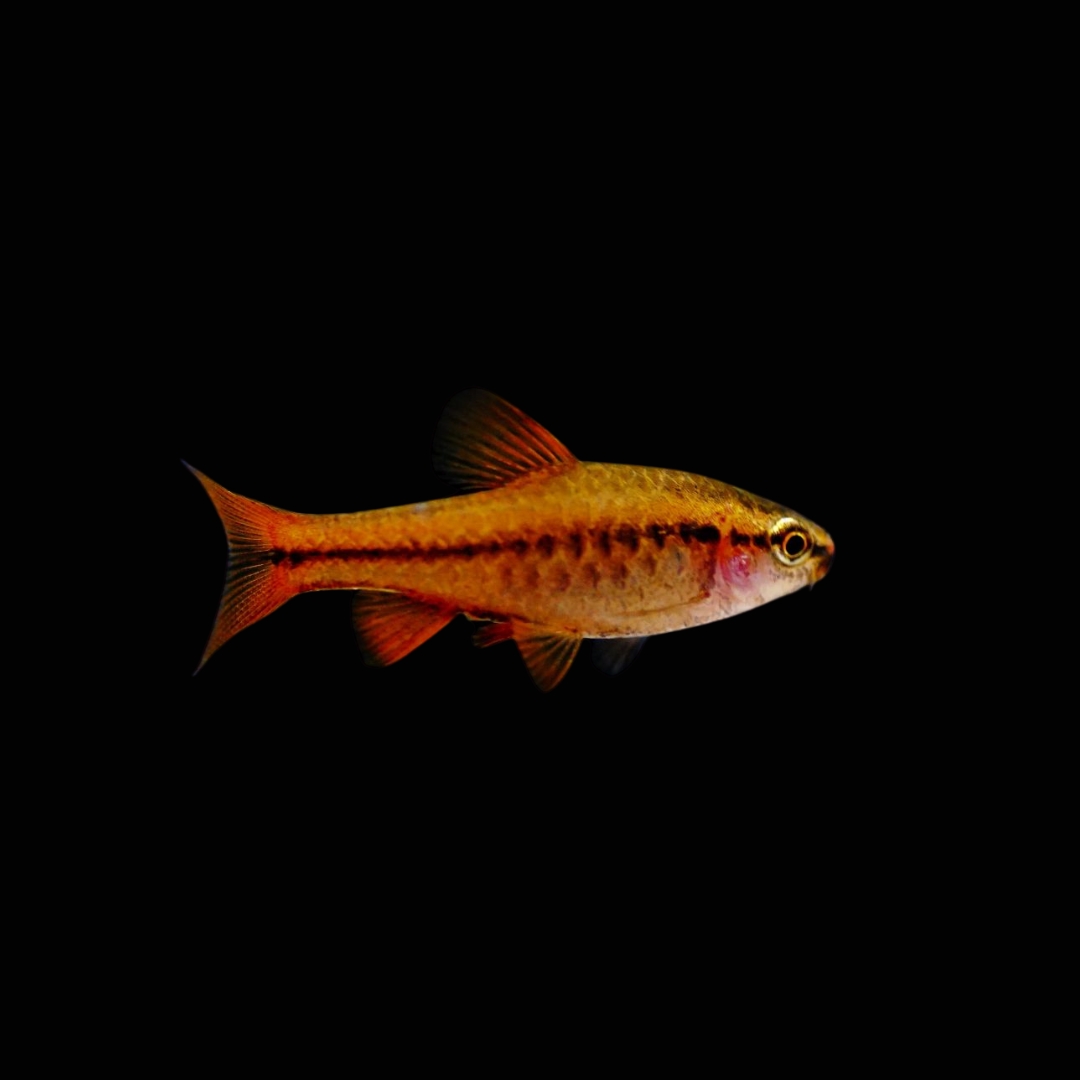
スリランカ固有の小型コイ科魚類であるチェリーバーブは、その名の通りサクランボのような愛らしい赤色が特徴の熱帯魚です。特に成熟したオスが見せる、全身が燃えるような深い赤色(婚姻色)は圧巻で、「スリランカの宝石」と呼ぶにふさわしい美しさを誇ります。古くから親しまれている入門種でありながら、水草水槽での映え方や、オス同士が見せるフィンスプレッディング(ヒレを広げての誇示行動)の面白さから、ベテランのアクアリストにも深く愛され続けています。長らく「プンティウス属」の代表種として知られてきましたが、近年の研究により新たな属「ロハネラ(Rohanella)」に分類が変更されるなど、学術的にも注目を集めている魚です。
Endemic to Sri Lanka, the Cherry Barb is a small cyprinid famous for its lovely cherry-red coloration. The deep, burning red nuptial coloration displayed by mature males is particularly spectacular, earning them the title “Gem of Sri Lanka.” While they have long been a popular entry-level species, they are also deeply loved by veteran aquarists for their stunning appearance in planted tanks and the fascinating fin-spreading displays between males. Historically known as a representative of the genus Puntius, recent research has reclassified them into the new genus Rohanella, making them a subject of academic interest as well.
基本情報 / Basic Information
学名 / Scientific Name
Rohanella titteya (旧 Puntius titteya)
通称 / Common Name
チェリーバーブ、チェリーバルブCherry Barb
分類 / Family
コイ科 Rohanella属Cyprinidae (Genus: Rohanella)
英名 / English Name
Cherry Barb
分布 / Distribution
スリランカ南西部(ケラニ川〜ニルワラ川流域の固有種)Endemic to southwestern Sri Lanka (Kelani to Nilwala river basins)
最大体長 / Max Size
約 4cm 〜 5cmApprox. 4cm – 5cm
寿命 / Lifespan
約 3年 〜 5年(飼育下)Approx. 3 – 5 years (in captivity)
飼育環境 / Aquarium Environment
水槽サイズ / Tank Size
30cmキューブ水槽(約27L)以上推奨。群泳を楽しむなら45cm規格水槽(約35L)〜60cm規格水槽(約60L)が理想的です。30cm cube tank (approx. 27L) or larger recommended. Standard 45cm (35L) to 60cm (60L) tanks are ideal for schooling.
水温 / Temperature
22℃ 〜 28℃
水質 / Water Quality
弱酸性 〜 中性(pH 6.0 〜 7.5)。日本の水道水(軟水)と非常に相性が良いです。Slightly acidic to neutral (pH 6.0 – 7.5). Matches well with Japanese tap water (soft water).
レイアウト / Layout
水草を密に植えた環境を好みます。特にクリプトコリネなどの陰性水草や流木を用いたレイアウトは、原産地の雰囲気を再現でき、魚も落ち着きます。底砂は大磯砂やソイルなどの「暗色系」を選ぶと、体色が濃く鮮やかになります。Prefers densely planted environments. Layouts using Cryptocoryne or driftwood recreate their native habitat and calm the fish. Dark substrates like soil or Oiso sand enhance their coloration.
注意点 / Precautions
緩やかな流れを好むため、フィルターの水流が強すぎないように調整してください。また、驚いた拍子に飛び出すことがあるため、水槽には蓋(フタ)が必須です。They prefer gentle currents, so adjust the filter flow accordingly. A tank lid is essential as they may jump out when startled.
餌と給餌 / Feeding
餌の種類 / Diet
人工飼料(フレーク、顆粒)、冷凍赤虫、ブラインシュリンプなど何でもよく食べます。Omnivorous; accepts flakes, pellets, frozen bloodworms, and brine shrimp.
給餌のポイント / Feeding Tips
「色揚げ用」の人工飼料やブラインシュリンプを与えると、オスの赤みがより一層強くなります。1日1〜2回、数分で食べきれる量を与えてください。Color-enhancing foods and brine shrimp will intensify the males’ red coloration. Feed once or twice a day, only what they can consume in a few minutes.
性格と混泳 / Temperament and Tank Mates
性格 / Temperament
基本的には温和ですが、オス同士は「フィンスプレッディング」と呼ばれる小競り合いをします。これはお互いのヒレを広げて美しさを競うディスプレイであり、深刻な怪我につながることは稀です。6匹以上のグループで飼育すると、本来の群れを作る習性が観察でき、ストレスも軽減されます。Generally peaceful, but males engage in “fin-spreading” displays to compete. This is rarely harmful. Keeping them in groups of 6 or more reduces stress and encourages natural schooling behavior.
混泳の相性 / Compatibility
ネオンテトラなどの小型カラシン、ラスボラ、コリドラスとの混泳は非常に良好です。ただし、ミナミヌマエビやチェリーシュリンプなどの小型エビとの混泳には注意が必要です。成体のエビは問題ありませんが、生まれたばかりの稚エビは捕食されるリスクが高いため、繁殖を目指す場合は混泳を避けるか、隠れ家を十分に用意してください。Excellent with small tetras, rasboras, and Corydoras. Caution is needed with small shrimp like Cherry Shrimp; while adults are safe, shrimplets are likely to be eaten. Avoid cohabitation if breeding shrimp is the goal.
病気と対策 / Diseases and Prevention
かかりやすい病気 / Common Diseases
水温の急変による白点病や、水質悪化による水カビ病にかかることがあります。Susceptible to Ich (White Spot Disease) from temperature shock and fungal infections from poor water quality.
対策と予防 / Prevention
導入時の水合わせを慎重に行うこと、定期的な水換えで清潔な水質を保つことが最大の予防です。また、スリランカ原産のため、マジックリーフなどを使用してブラックウォーター気味にすると、殺菌効果とストレス緩和が期待できます。Careful acclimatization and regular water changes are key. Using Catappa leaves to create blackwater conditions can provide antibacterial benefits and reduce stress, mimicking their native habitat.
増やし方(繁殖) / Breeding
繁殖形態 / Reproduction
粘着性のある卵を水草や底床にばら撒く「基質産卵・散布型」です。Egg-scatterers; they scatter sticky eggs over plants and substrate.
繁殖のポイント / Breeding Tips
成熟したペアがいれば産卵自体は難しくありませんが、親魚が自分の卵を食べてしまう「食卵」の習性があります。繁殖を成功させるには、ウィローモスを敷き詰めた専用の産卵水槽を用意し、産卵を確認したらすぐに親魚を元の水槽に戻す「隔離法」が推奨されます。稚魚の初期飼料にはインフゾリアやブラインシュリンプの幼生が必要です。While spawning is easy with a mature pair, parents will eat their own eggs. For success, use a separate breeding tank with Java moss and remove parents immediately after spawning. Fry require infusoria or baby brine shrimp.
雑学と豆知識 / Trivia and Fun Facts
1. 学名の変遷と「ロハネラ」の物語 / 1. The Story of “Rohanella”
長年、チェリーバーブは Puntius titteya という学名で親しまれてきました。しかし、近年のDNA解析による分類再編の波の中で、2023年に新設された Rohanella 属に移され、Rohanella titteya となりました。この新しい属名は、スリランカの淡水魚研究に多大な功績を残したロハン・ペティヤゴダ氏(Rohan Pethiyagoda)への献名です。アクアリウムの世界ではまだ旧名や流通名で呼ばれることが一般的ですが、この名前の変更は、本種がスリランカ独自の進化を遂げた特別な存在であることを科学が証明した結果なのです。
For years, the Cherry Barb was known as Puntius titteya. However, recent DNA analysis led to its reclassification in 2023 into the new genus Rohanella. This genus name honors Rohan Pethiyagoda, a renowned researcher of Sri Lankan freshwater fish. While still commonly known by its old name in the hobby, this change scientifically highlights the species as a unique evolutionary entity endemic to Sri Lanka.
お店で販売されている若い個体はベージュ色をしていることが多いですが、飼い込まれたオスが発情期に見せる「婚姻色」は、まさに熟したサクランボのような深紅です。特にオス同士がヒレを広げて争うフィンスプレッディングの瞬間、その赤色は最高潮に達します。また、より赤さを追求した改良品種「スーパーレッド(極火)」や、神秘的な美しさを持つ「アルビノ」、優雅な「ロングフィン」タイプなども作出されており、コレクションする楽しみも尽きません。
Young store-bought individuals are often beige, but mature males display a deep crimson “nuptial coloration” like a ripe cherry. This red peaks during fin-spreading displays between males. Selective breeding has also produced varieties like “Super Red,” the mystical “Albino,” and the elegant “Long-fin,” offering endless enjoyment for collectors.
日本で安価に流通しているチェリーバーブのほぼ100%は、東南アジアで養殖(ブリード)された個体です。実は、原産地スリランカの野生個体は、生息地の減少や乱獲により個体数が激減しており、IUCNレッドリストで「危急種(VU)」に指定されています。現在は野生個体の輸出が厳しく規制されています。私たちが手軽にこの美しい魚を楽しめるのは、養殖技術の確立のおかげであり、ブリード個体を大切に飼育することは、間接的に現地の野生個体を守ることにも繋がっているのです。
Almost all Cherry Barbs sold in Japan are captive-bred in Southeast Asia. In their native Sri Lanka, wild populations are severely threatened by habitat loss and are listed as “Vulnerable” on the IUCN Red List. With strict export regulations in place, our ability to enjoy these fish relies on aquaculture. Cherishing these captive-bred individuals indirectly helps protect the wild populations in nature.
4. 意外な特技:スネールバスター / 4. Secret Skill: Snail Eater
あまり知られていませんが、チェリーバーブは水槽に発生する小さな巻貝(スネール)やその卵を突っついて食べる習性があります。完全に撲滅するほどの威力はありませんが、予防や抑制には十分な効果を発揮します。美しいだけでなく、水槽の環境維持にも貢献してくれる「メンテナンスフィッシュ」としての一面も持っているのです。
It is not well known, but Cherry Barbs have a habit of pecking at and eating small snails and their eggs. While they may not eradicate them completely, they are effective enough for prevention and control. Beyond their beauty, they also serve as “maintenance fish” that contribute to keeping the aquarium environment clean.
まとめ / Conclusion
チェリーバーブは、丈夫で飼いやすく、日本の水道水にも馴染みやすい、まさに理想的な観賞魚の一つです。水草の緑とオスの赤色のコントラストは、水槽内に鮮烈な芸術を描き出します。
Hardy and adaptable to Japanese tap water, the Cherry Barb is an ideal aquarium fish. The contrast between the green of aquatic plants and the red of the males creates a stunning living art piece in your tank.
「スリランカの宝石」と呼ばれる彼らを迎え入れ、じっくりと飼い込むことでしか見られない、あの燃えるような赤色をぜひあなたの水槽で楽しんでください。
We invite you to welcome these “Gems of Sri Lanka” and enjoy the burning red coloration that can only be seen by patiently raising them in your own aquarium.



 ポチップ
ポチップ


コメント