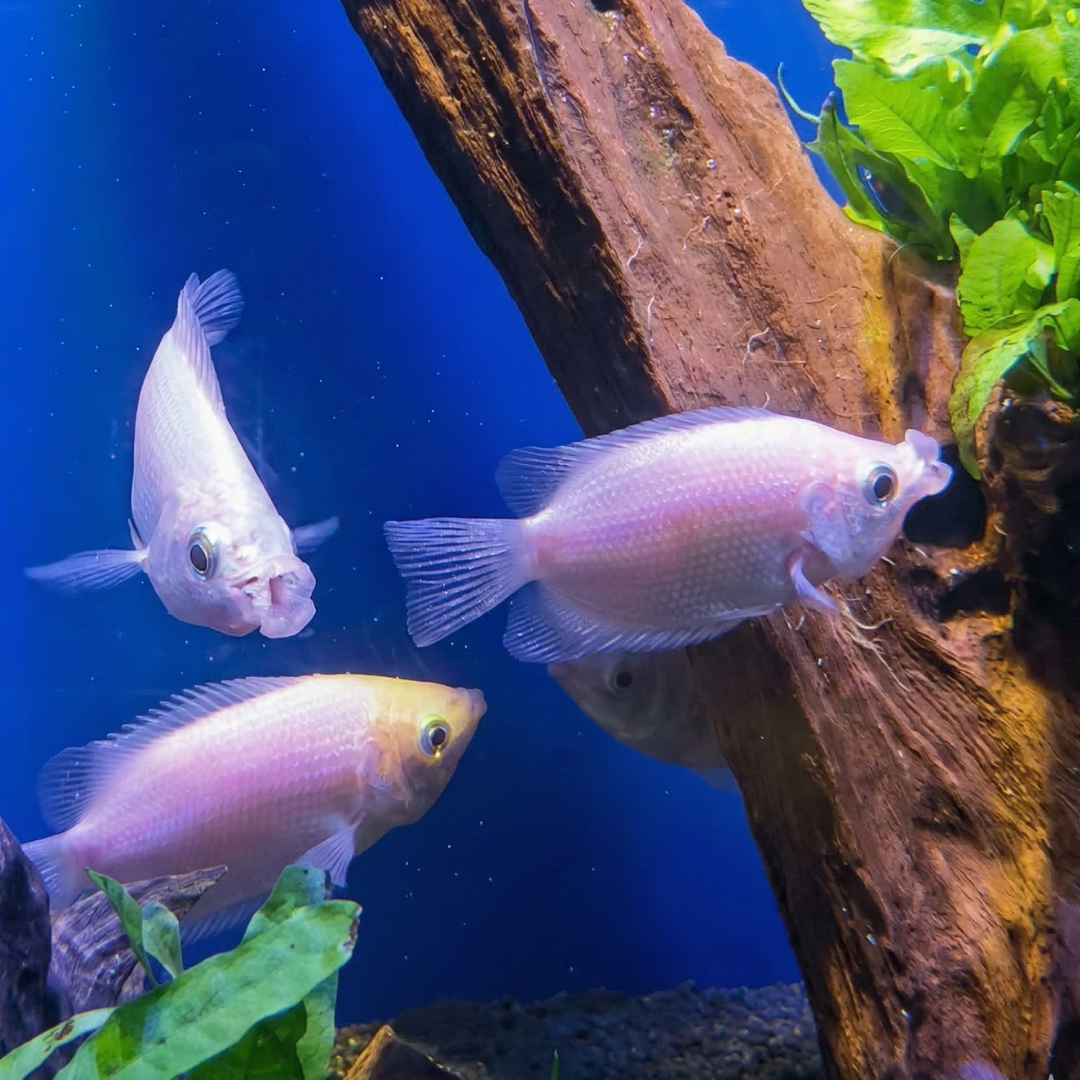
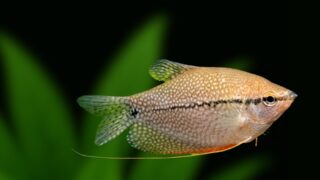
キッシンググラミーは、互いの唇を押し付け合う「キス」のような行動で世界的に知られる熱帯魚です。この愛らしい姿から観賞魚として高い人気を誇りますが、その実態は驚くべき進化を遂げたユニークな生命体です。独自の「顎内関節(IMJ)」を持つことで、他の魚には真似できないほど口を大きく開き、基質から藻類を削り取って食べる「お掃除役の魚」としての卓越した能力を備えています。また、東南アジアでは古くから重要な食用資源としても重宝されており、文化的な背景も非常に深い魚種です。The Kissing Gourami is a world-renowned tropical fish famous for its “kissing” behavior. While highly popular as an ornamental fish due to its charming appearance, it is a biologically unique creature with remarkable evolutionary adaptations. Equipped with a specialized “intramandibular joint (IMJ),” it can open its mouth exceptionally wide to scrape algae from substrates, functioning as an expert “utility fish.” Furthermore, it has a deep cultural history in Southeast Asia, where it has long been valued as a significant food resource.
基本情報 / Basic Information
学名 / Scientific Name
Helostoma temminckii
通称 / Common Name
キッシンググラミーKissing Gourami
分類 / Family
キノボリウオ目ヘロストマ科Anabantiformes Helostomatidae
英名 / English Name
Kissing Gourami
分布 / Distribution
タイ、カンボジア、マレー半島、インドネシアThailand, Cambodia, Malay Peninsula, Indonesia
最大体長 / Max Size
約30cm(飼育下では20cm前後が多い)Approx. 30 cm (usually around 20 cm in captivity)
寿命 / Lifespan
約10〜15年Approx. 10 to 15 years
飼育環境 / Aquarium Environment
水槽サイズ / Tank Size
90cm規格水槽(160L以上)を推奨。幼魚期は45cm水槽でも可能ですが、成長が早いため最終的には大型の水槽が必要です。90cm standard tank (160L or more) recommended. While a 45cm tank suffices for juveniles, their rapid growth necessitates a larger setup eventually.
水温 / Temperature
22℃〜30℃。熱帯魚のため、ヒーターによる恒温維持が不可欠です。22 to 30 degrees Celsius. As a tropical fish, maintaining a constant temperature with a heater is essential.
水質 / Water Quality
弱酸性〜中性(pH 6.0〜7.5)。非常に強健で、幅広い水質に適応します。Weakly acidic to neutral (pH 6.0 to 7.5). Very hardy and adaptable to various water conditions.
レイアウト / Layout
流木や石を配置し、削り取って食べるための表面積を確保します。水草は食べられてしまう可能性があるため、アヌビアスなどの硬い葉の種類を選びます。Provide driftwood and stones to create surfaces for grazing. Choose tough-leaved plants like Anubias, as softer plants may be consumed.
注意点 / Precautions
ラビリンス器官を持つため、空気呼吸を行います。水面を覆い尽くさないようにし、常に新鮮な空気を取り込めるようにしてください。They possess a labyrinth organ for air-breathing. Ensure the water surface isn’t entirely covered so they can access fresh air.
餌と給餌 / Feeding
餌の種類 / Diet
植物質中心の雑食性。人工飼料(フレーク、ペレット)のほか、茹でたホウレンソウなどの野菜も好みます。Omnivorous with a vegetable preference. They accept artificial foods (flakes, pellets) and enjoy vegetables like blanched spinach.
給餌のポイント / Feeding Tips
削り取る摂食スタイルを持つため、一度に大量に与えるよりも、少量を数回に分けて与えるのが理想的です。水槽内のコケも積極的に食べます。Due to their scraping feeding style, it’s ideal to feed small amounts several times a day. They also actively consume algae within the tank.
性格と混泳 / Temperament and Tank Mates
性格 / Temperament
やや気が強く、特に同種間では激しく争います。キッシング行動は愛の表現ではなく、激しい縄張り争いです。Somewhat aggressive, especially towards their own kind. The kissing behavior is not an expression of love but an intense territorial struggle.
混泳の相性 / Compatibility
体格差のない中型魚や、底生魚(コリドラス、プレコ)との相性は良好です。小型魚やヒレの長い魚は攻撃対象になることがあります。Good compatibility with medium-sized fish of similar stature or bottom-dwellers (Corydoras, Plecos). Small fish or those with long fins may be targeted.
病気と対策 / Diseases and Prevention
かかりやすい病気 / Common Diseases
白点病、ウーディニウム病。導入直後や水温急変時に発生しやすいです。Ichthyophthiriasis (White Spot Disease) and Oodinium. These occur often after introduction or sudden temperature changes.
対策と予防 / Prevention
週に一度の換水と、安定した水温維持が最大の予防策です。異変を感じたら早めに昇温や薬浴を行います。Weekly water changes and stable temperature maintenance are the best preventatives. Use early heat treatment or medication if abnormalities are spotted.
増やし方(繁殖) / Breeding
繁殖形態 / Reproduction
バラ撒き型の産卵。他のグラミー類と異なり、泡巣を作らず水中に大量の卵を放ちます。Egg scatterer. Unlike other gouramis, they do not build bubble nests but release numerous eggs into the water column.
繁殖のポイント / Breeding Tips
親魚が卵を食べてしまうため、産卵後は親魚を隔離するか、卵を別の容器に移す必要があります。一度に1,000個以上の卵を産むこともあります。Since parents may eat the eggs, they should be isolated after spawning or the eggs moved to a separate container. They can lay over 1,000 eggs at once.
雑学と豆知識 / Trivia and Fun Facts
1. キスの真実:愛ではなく戦いの証 / 1. The Truth About the Kiss: Not Love, but War
キッシンググラミーの代名詞である「キス」は、ロマンチックな挨拶ではありません。これは「顎内関節(IMJ)」を最大限に広げ、互いの力の強さを競い合う激しい闘争行動(アゴニスティック・ビヘイビア)です。この進化上の工夫により、彼らは驚異的な開口角度を獲得しましたが、代償として水を吸い込む「吸引力」を失ってしまいました。The iconic “kiss” of the Kissing Gourami is far from a romantic gesture. It is an intense territorial struggle (agonistic behavior) where they flare their “intramandibular joint (IMJ)” to contest strength. This evolutionary adaptation allows for an incredible gape angle, but at the functional trade-off of losing the ability to create strong suction to capture prey.
2. 郷土の味「ビアワン」:東南アジアの食用文化 / 2. Local Flavor “Biawan”: SE Asian Culinary Culture
原産地のインドネシアでは「ビアワン」と呼ばれ、生活に欠かせない貴重なタンパク源です。乾季に水位が下がると、村を挙げての大規模な漁が行われます。獲れた魚は伝統的な燻製「サライ」や、米と一緒に乳酸発酵させた「ペジャ」へと加工され、厳しい環境下での保存食として人々の命を支えてきました。まさに、自然と共生する知恵の象徴といえます。In its native Indonesia, it is known as “Biawan” and is a vital protein source. When water levels drop during the dry season, entire villages participate in large-scale fishing. The catch is processed into traditional smoked fish called “Salai” or fermented with rice into “Peja,” serving as essential preserved food that sustains lives in harsh tropical environments.
3. ラビリンス器官と極限環境への適応 / 3. Labyrinth Organ and Extreme Environmental Adaptation
彼らは泥炭湿地林の火災などで水質が悪化した、極めて酸素の少ない過酷な環境でも生き残ることができます。これは、頭部に備わった特殊な補助呼吸器官「ラビリンス器官」のおかげです。水面に口を出して直接大気を取り込むこの能力は、他の多くの魚類が生存できない「死の水域」をも彼らの楽園へと変えてしまうのです。They can survive in extreme, oxygen-depleted environments where water quality has deteriorated due to peat swamp fires. This is thanks to the “labyrinth organ,” a specialized auxiliary breathing organ in their head. By gulping air at the surface, they can thrive in “dead zones” where most other fish would perish.
まとめ / Conclusion
キッシンググラミーは、その愛くるしい行動の裏に、過酷な環境を生き抜くための驚異的な進化の歴史を秘めています。特異な顎の構造や、東南アジアの食文化を支える実用的な側面を知ることで、この魚への理解はより一層深まることでしょう。Behind its charming behavior, the Kissing Gourami hides a remarkable evolutionary history designed for survival in harsh conditions. Understanding its unique jaw structure and its practical role in Southeast Asian food culture adds a profound layer of appreciation for this species.
強健で飼いやすい魚ですが、最大サイズや性格を考慮した適切な環境を提供することが、彼らと長く付き合うための秘訣です。アクアリウムという小さな生態系の中で、そのダイナミックな「キス」を通じて生命の神秘を感じてみてください。While hardy and easy to keep, providing an appropriate environment that accounts for its maximum size and temperament is the key to a long-lasting relationship. Within the mini-ecosystem of your aquarium, you can witness the mysteries of life through their dynamic “kisses.”
Cuvier, G. (1829). Le Règne Animal distribué d’après son organisation, pour servir de base à l’histoire naturelle des animaux et d’introduction à l’anatomie comparée.(ヘロストマ属の原記載および分類学的基礎)
Ferry, L. A., et al. (2012). “The role of the intramandibular joint in feeding kinematics of the kissing gourami Helostoma temminkii.” Journal of Experimental Zoology Part A: Ecological Genetics and Physiology.(顎内関節の運動力学的解析および摂食メカニズム)
Liem, K. F. (1967). “Functional morphology of the head of the anabantoid fish, Helostoma temmincki, with reference to the ethological and morphological evolution of the order.” Journal of Morphology.(頭部形態機能学および行動進化の研究)
United States Geological Survey (USGS). “Helostoma temminkii (Cuvier, 1829): Nonindigenous Aquatic Species Database.”(米国フロリダ州等における外来種としての流出記録および定着評価)
Froese, R. and D. Pauly. Editors. (2024). FishBase. World Wide Web electronic publication. www.fishbase.org.(分布、最大体長、繁殖形態等の生物学的データベース)
Indonesian Journal of Ichthyology / Local Fisheries Reports.(インドネシア・カプアス川流域における「ビアワン」の伝統的漁法および保存食文化に関する報告)
European Food Safety Authority (EFSA).(養殖魚の安全性および水生植物を介した有害物質蓄積に関するリスク分析資料)



 ポチップ
ポチップ



コメント