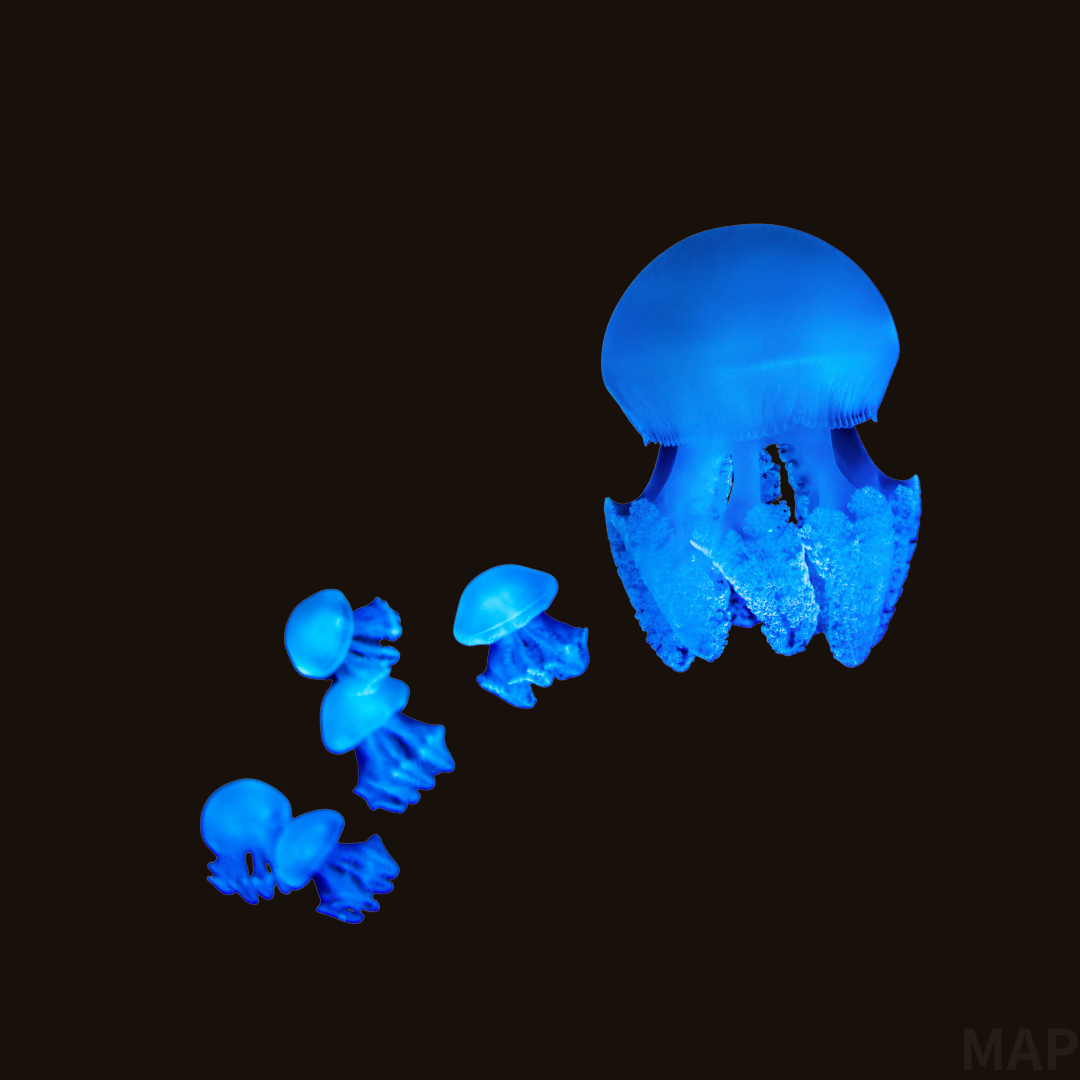
アクアリウムショップの水槽で、青や白、時には紫色の丸い体がフワフワと舞っている姿を見たことはありませんか?それが「カラージェリー」です。正式な和名を「モザイククラゲ」と言い、その名の通りモザイク画のように多様な色彩変異を持つ根口クラゲの仲間です。一般的なクラゲと異なり、傘の縁に長い触手を持たず、代わりに発達した8本の「口腕(こうわん)」を持つのが特徴です。その愛くるしい姿から「癒やしのインテリア」として大人気ですが、実は長期飼育には「水流」と「栄養」に対する深い理解が必要な、奥の深い生き物でもあります。適切なケアを行えば、水槽の中で成長し、私たちに海の神秘的な生態を見せてくれます。Have you ever seen round, fluffy bodies dancing in aquarium tanks in blue, white, or sometimes purple? That is the “Color Jellyfish,” also known scientifically as Catostylus mosaicus or the Blue Blubber Jellyfish. As the name suggests, they come in a mosaic-like variety of colors. Unlike common jellyfish, they lack long tentacles on the bell margin and instead feature eight developed “oral arms.” While popular as “healing interior decor” due to their adorable appearance, long-term care actually requires a deep understanding of water flow and nutrition. With proper care, they can grow in the tank and reveal the mysterious ecology of the ocean to us.
基本情報 / Basic Information
学名 / Scientific Name
Catostylus mosaicus
通称 / Common Name
カラージェリー、モザイククラゲBlue Blubber Jellyfish, Color Jelly
分類 / Family
根口クラゲ目 カトスティラス科Rhizostomeae, Catostylidae
英名 / English Name
Blue Blubber Jellyfish
分布 / Distribution
オーストラリア東岸、フィリピン、インドネシアなどのインド太平洋域Eastern coast of Australia, Indo-Pacific regions including Philippines and Indonesia.
最大体長 / Max Size
傘径 10~25cm(自然下では最大35cm以上)Bell diameter 10-25cm (Up to 35cm+ in the wild).
寿命 / Lifespan
飼育下では通常半年~1年程度(管理状態に大きく依存)Typically 6 months to 1 year in captivity (highly dependent on care).
飼育環境 / Aquarium Environment
水槽サイズ / Tank Size
クラゲ専用水槽(推奨)、または60cm規格水槽以上の背面ろ過水槽を改造したもの。通常の四角い水槽は不適。Specialized jellyfish tank (recommended), or modified 60cm standard tank. Regular rectangular tanks are unsuitable.
水温 / Temperature
24 – 25℃ (22 – 27℃)
水質 / Water Quality
pH: 8.1-8.3, 比重: 1.023前後。アンモニア・亜硝酸はゼロであることが必須。pH: 8.1-8.3, SG: around 1.023. Ammonia and Nitrite must be zero.
レイアウト / Layout
原則として「ベアタンク(何も入れない)」。砂利や岩はクラゲの傘を傷つけるため厳禁です。Bare tank (nothing inside) is mandatory. Gravel and rocks are strictly prohibited as they damage the jellyfish’s bell.
注意点 / Precautions
水流で円を描くように泳がせることが最重要です。吸水口には必ずスポンジ等を被せ、吸い込み事故を防いでください。また、気泡が傘の中に入ると致命傷になるため、細かい泡が入らないようにします。It is crucial to make them swim in a circle using water flow. Always cover intakes with sponge to prevent suction accidents. Also, prevent microbubbles, as trapped air in the bell is fatal.
餌と給餌 / Feeding
餌の種類 / Diet
栄養強化した孵化直後のブラインシュリンプが基本。冷凍コペポーダや、クラゲ用液体フードも補助的に使用可能。Enriched newly hatched Brine Shrimp are the staple. Frozen copepods and liquid jellyfish food can be used as supplements.
給餌のポイント / Feeding Tips
「バケツ給餌法」が推奨されます。クラゲを別容器に移して高密度の餌を与え、食べ終わったら水槽に戻すことで、飼育水の汚染を防げます。1日1〜2回、胃が餌の色で満たされるまで与えます。“Bucket Feeding Method” is recommended. Move the jellyfish to a separate container to feed densely, then return it to the tank to prevent water pollution. Feed 1-2 times daily until stomachs are full.
性格と混泳 / Temperament and Tank Mates
性格 / Temperament
温和で遊泳力は弱いです。毒性は弱いですが、皮膚の薄い部分に触れると刺激を感じる場合があります。Peaceful with weak swimming ability. Toxicity is mild, but contact with sensitive skin may cause irritation.
混泳の相性 / Compatibility
「単独飼育」が基本です。魚と一緒にすると、クラゲが突かれて食べられるか、逆に魚が刺される可能性があります。サンゴ水槽のような強い水流も不向きです。Single-species keeping is the rule. Fish may nip at the jellyfish or get stung. Strong flow like in reef tanks is also unsuitable.
病気と対策 / Diseases and Prevention
かかりやすい病気 / Common Diseases
細菌感染による傘の溶解、縮小化(餓死)、気泡病(体内に空気が溜まる)、傘の反転。Bacterial melting, Shrinking (starvation), Gas Bubble Disease, Bell eversion.
対策と予防 / Prevention
傘が溶け始めたら直ちに大量換水を行います。縮小化は餌不足が原因なので、給餌量を見直します。気泡病は水中の細かい泡をなくすことで予防します。Perform massive water changes immediately if melting starts. Shrinking is caused by starvation, so increase feeding. Prevent Gas Bubble Disease by eliminating microbubbles in the water.
増やし方(繁殖) / Breeding
繁殖形態 / Reproduction
有性生殖で生まれたプラヌラ幼生がポリプになり、無性生殖で増えます。ポリプは温度変化でクラゲの赤ちゃん(エフィラ)を放出します。Planula larvae from sexual reproduction become polyps, which reproduce asexually. Polyps release baby jellyfish (ephyra) triggered by temperature changes.
繁殖のポイント / Breeding Tips
成熟した個体からプラヌラを採取してポリプを育てます。25℃から18℃程度への温度変化を与えることで、ストロビレーション(クラゲ化)を誘導できることがあります。Collect planula from mature individuals to grow polyps. Temperature shock from 25°C to around 18°C can induce strobilation.
雑学と豆知識 / Trivia and Fun Facts
1. 色の秘密は「共生」と「構造」 / 1. The Secret of Colors
カラージェリーの美しい色は、体内の色素タンパク質だけでなく、共生している微細な藻類(褐虫藻)にも由来しています。ショップで青かった個体が家で茶色くなることがありますが、これは照明を浴びて褐虫藻が増えた証拠かもしれません。逆に白くなるのは、栄養不足や光量不足のサインの可能性があります。彼らの体色は、健康状態を映す鏡なのです。Their beautiful colors come from pigment proteins and symbiotic algae (zooxanthellae). A blue jelly turning brown at home might mean algae growth due to lighting. Turning white could signal malnutrition. Their color is a mirror of their health.
2. 海外では食材!? / 2. Is it Edible!?
実は東南アジアでは、このクラゲは「Blue Blubber(青い脂肪)」と呼ばれ、重要な水産資源として扱われています。塩とミョウバンで加工され、コリコリとした食感の食材として輸出されているのです。とはいえ、観賞用に売られている個体は薬品などが使われている可能性があるため、絶対に食べてはいけません。あくまで水槽の中での姿を愛でましょう。In Southeast Asia, this jellyfish is called “Blue Blubber” and is an important fishery resource. Processed with salt, it’s exported as a crunchy food ingredient. However, never eat ornamental ones as they may be treated with chemicals. Just admire them in the tank.
3. バケツ給餌のすすめ / 3. Bucket Feeding Logic
クラゲ飼育のプロが実践する「バケツ給餌」。一見面倒に思えますが、理にかなっています。クラゲは大量の餌を必要としますが、食べ残しは瞬く間に水を汚し、水質に敏感なクラゲ自身を苦しめます。「食堂(バケツ)」と「リビング(水槽)」を分けることで、いつもピカピカの水槽で優雅に泳ぐ姿を維持できるのです。Pros use “Bucket Feeding”. It seems tedious but logical. Jellyfish need lots of food, but leftovers foul the water quickly. By separating the “dining room” (bucket) from the “living room” (tank), you can keep the tank sparkling clean.
まとめ / Conclusion
カラージェリー(モザイククラゲ)は、その見た目の愛らしさとは裏腹に、飼育者に「水の流れ」と「生命のサイクル」への深い理解を求めてくる生き物です。しかし、適切な専用水槽を用意し、手間を惜しまずケアをすれば、彼らはその美しい拍動で日々の疲れを癒やしてくれる最高のパートナーとなります。短期的な消費ではなく、少しでも長くその命を輝かせることが、アクアリストとしての腕の見せ所と言えるでしょう。Catostylus mosaicus demands a deep understanding of “water flow” and “life cycles” from its keeper, contrary to its cute appearance. However, with a proper specialized tank and dedicated care, they become the best partners to heal daily fatigue with their beautiful pulsation. Keeping them shining for as long as possible is the true show of an aquarist’s skill.
初めて挑戦する際は、必ず水流調整が可能な設備と、孵化させたばかりの新鮮なブラインシュリンプを用意してからお迎えしてくださいね。When challenging for the first time, make sure to prepare equipment with adjustable water flow and fresh hatched brine shrimp before welcoming them.


 ポチップ
ポチップ

コメント