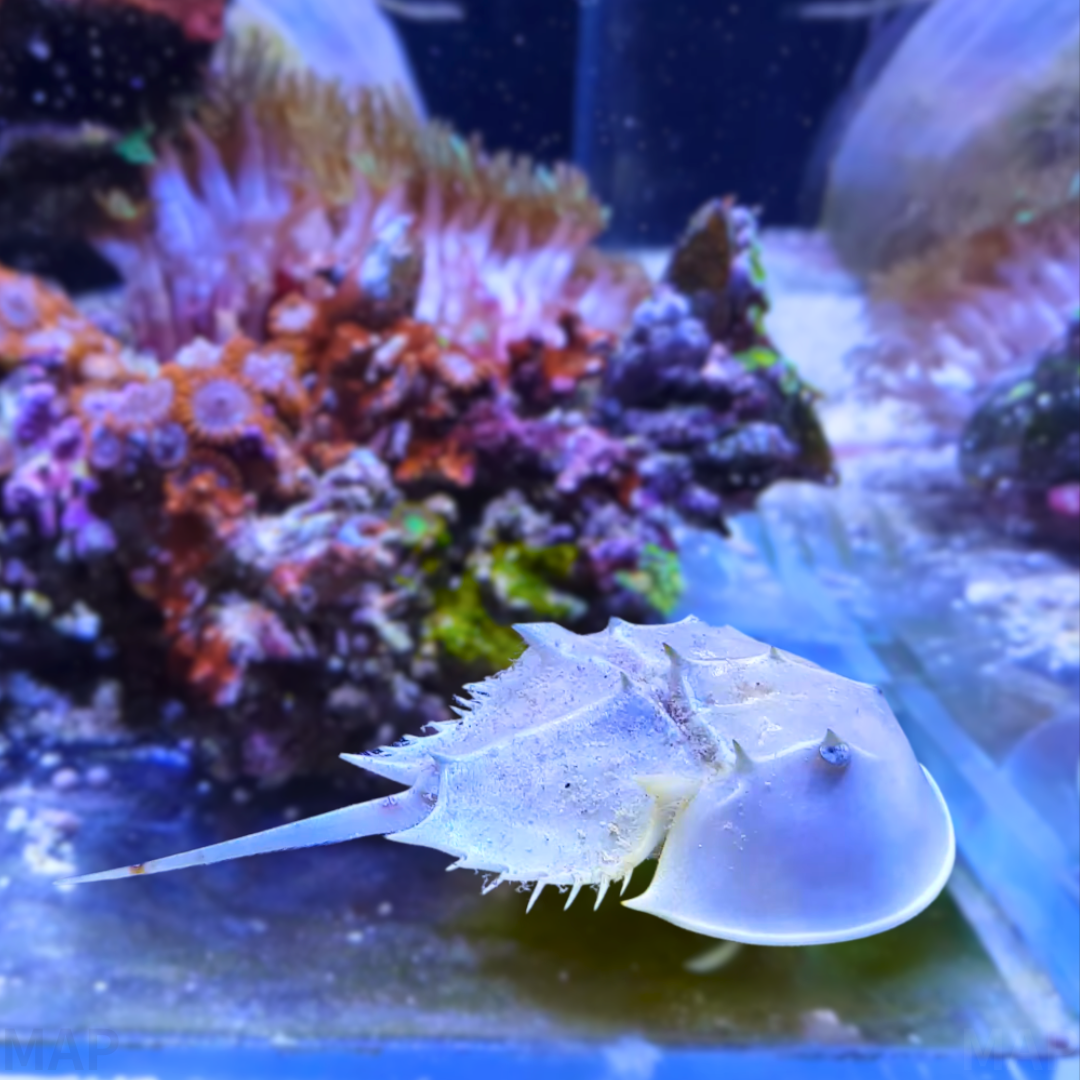
最大の特徴は、その青い血液とユニークな体の構造です。水底を「歩く」ための脚や、呼吸と推進力を生み出す「書鰓(しょさい)」など、古代の海に適応した機能的な体を今も受け継いでいます。日本では水族館の人気者ですが、適切な設備があれば家庭でも飼育することが可能です。太古のロマンを感じさせるその姿は、アクアリウムにおいても圧倒的な存在感を放ちます。The American Horseshoe Crab is truly a “living fossil,” having survived for over 400 million years with little change in its appearance. Despite its name, it is not a true crab (crustacean) but is more closely related to spiders and scorpions. Native to the East Coast of North America, it possesses a hard, dome-shaped carapace and a long, sword-like tail.
Its most distinctive features are its blue blood and unique body structure. With legs designed for “walking” on the sea floor and “book gills” for respiration and propulsion, it retains a functional body adapted to ancient seas. While popular in aquariums in Japan, they can also be kept in home aquariums with proper equipment. Their prehistoric appearance brings an overwhelming presence and sense of wonder to any tank.
基本情報 / Basic Information
学名 / Scientific Name
Limulus polyphemus
通称 / Common Name
アメリカカブトガニAmerican Horseshoe Crab
分類 / Family
カブトガニ科(鋏角亜門)Limulidae (Subphylum Chelicerata)
英名 / English Name
American Horseshoe Crab
分布 / Distribution
北米大陸東岸(メキシコ湾~メイン州)East Coast of North America (Gulf of Mexico to Maine)
最大体長 / Max Size
約60cm(メスの方が大型になります)Approx. 60cm (Females are larger)
寿命 / Lifespan
約20年(野生下推定)Approx. 20 years (Wild estimate)
飼育環境 / Aquarium Environment
水槽サイズ / Tank Size
底面積が最重要です。成体には120cm×60cm以上の広さ(水量約680L以上相当)が必要です。幼体でも成長に合わせてサイズアップが必須です。Floor space is paramount. Adults require a footprint of at least 120cm x 60cm (approx. 180 gallons+). Even for juveniles, tank upgrades are essential as they grow.
水温 / Temperature
22~26℃
水質 / Water Quality
海水(比重 1.022-1.026 / pH 8.1-8.4)。アンモニア・亜硝酸は検出されてはいけません。Marine (SG 1.022-1.026 / pH 8.1-8.4). Ammonia and Nitrite must be undetectable.
レイアウト / Layout
パウダー状のサンゴ砂(アラゴナイトサンドなど)を厚く敷きます。幼体で5-7cm、成体では10-15cm以上の深さが必要です。障害物は減らし、広く潜れるスペースを確保します。Use a deep bed of fine coral sand (e.g., aragonite). A depth of 5-7cm for juveniles and 10-15cm+ for adults is required. Minimize obstacles to ensure ample space for burrowing.
注意点 / Precautions
角のある砂利は体を傷つけるため厳禁です。また、ひっくり返って起き上がれない事故を防ぐため、毎日観察が必要です。Sharp gravel is strictly prohibited as it can injure the body. Daily observation is necessary to prevent accidents where they flip over and cannot right themselves.
餌と給餌 / Feeding
餌の種類 / Diet
アサリやハマグリのむき身、イカ、エビ、魚の切り身など。沈下性の肉食魚用人工飼料にも餌付きます。Clam meat, squid, shrimp, fish fillets, etc. They will also accept sinking pellets for carnivorous fish.
給餌のポイント / Feeding Tips
大食漢です。幼体には毎日~1日おき、成体には週2~3回与えます。食べ残しは水質を急激に悪化させるため、すぐに取り除いてください。They are heavy eaters. Feed juveniles daily or every other day, and adults 2-3 times a week. Remove leftovers immediately to prevent rapid water quality deterioration.
性格と混泳 / Temperament and Tank Mates
性格 / Temperament
非常に温厚で、他の魚を襲うことはありません。鋭い尾は武器ではなく、起き上がるための道具です。Very gentle and will not attack other fish. The sharp tail is not a weapon but a tool for righting themselves.
混泳の相性 / Compatibility
遊泳性の魚とは混泳可能ですが、底を這う魚や、砂を掘り返す生物とは生活圏が被るため注意が必要です。基本的には単独飼育が最も管理しやすいでしょう。Compatible with swimming fish, but caution is needed with bottom dwellers or other burrowers. Generally, keeping them alone makes management easiest.
病気と対策 / Diseases and Prevention
かかりやすい病気 / Common Diseases
脱皮不全、シェルロット(甲羅の感染症)、転倒による衰弱。特に脱皮不全は命に関わります。Molting failure (Dysecdysis), Shell Rot (infection of the carapace), weakness from flipping over. Molting failure is particularly life-threatening.
対策と予防 / Prevention
脱皮を助けるためにヨウ素の添加が有効とされています。また、砂を清潔に保ち、脱皮のスペースを確保することが重要です。Iodine supplementation is considered effective to aid molting. Keeping the sand clean and ensuring ample space for molting is also crucial.
増やし方(繁殖) / Breeding
繁殖形態 / Reproduction
卵生。野生では大潮の満月・新月の夜に砂浜へ産卵します。Oviparous. In the wild, they spawn on sandy beaches during high tides of full and new moons.
繁殖のポイント / Breeding Tips
一般家庭での繁殖は極めて困難です。潮の干満や季節変化などの環境再現が必要なため、通常は観賞のみを楽しみます。Breeding in home aquariums is extremely difficult. It requires reproducing environmental cues like tides and seasonal changes, so they are usually kept for observation only.
雑学と豆知識 / Trivia and Fun Facts
1. ノーベル賞を生んだ「目」1. Nobel Prize-Winning Eyes
カブトガニの目は、視覚神経の研究において非常に重要な役割を果たしました。彼らの複眼を使った研究により、輪郭をくっきりさせる「側抑制」という仕組みが解明され、研究者は1967年にノーベル生理学・医学賞を受賞しました。単純に見えて、実は非常に高度な仕組みを持った目をしているのです。Horseshoe crab eyes played a crucial role in visual nerve research. Studies using their compound eyes revealed the mechanism of “lateral inhibition,” which enhances edge contrast, earning researchers the Nobel Prize in Physiology or Medicine in 1967. Despite appearing simple, their eyes possess a highly sophisticated mechanism.
2. 命を救う「青い血」2. Life-Saving “Blue Blood”
彼らの血液は、銅を含んでいるため美しい青色をしています。この血液に含まれる成分は、細菌の毒素(エンドトキシン)に触れると即座に固まる性質があります。この性質を利用した「LAL試験」は、現代の医療現場で医薬品やワクチンの安全性をチェックするために不可欠なものとなっています。私たちの健康は、カブトガニによって守られているとも言えるのです。Their blood is a beautiful blue due to its copper content. Components in this blood coagulate instantly upon contact with bacterial toxins (endotoxins). The “LAL test,” utilizing this property, is indispensable in modern medicine for checking the safety of drugs and vaccines. It can be said that our health is safeguarded by horseshoe crabs.
3. 一つ目の巨人?3. One-Eyed Giant?
学名にある「polyphemus(ポリュペーモス)」は、ギリシャ神話に登場する一つ目の巨人サイクロプスの名前に由来します。甲羅の中央にある単眼や、離れた複眼がまるで一つの大きな目のように見えることから名付けられました。The species name “polyphemus” comes from the one-eyed giant Cyclops in Greek mythology. It was named this way because the simple eye in the center of the carapace, or the widely spaced compound eyes, can give the impression of a single large eye.
4. 赤ちゃんは「背泳ぎ」が得意4. Babies Love the Backstroke
重厚な成体は海底を歩きますが、幼体や若い個体は活発に泳ぎ回ります。その際、お腹を上に向けて「背泳ぎ」をするのが特徴です。水槽で一生懸命パタパタと泳ぐ姿はとても愛らしいですが、もし成体が頻繁に泳ぐ場合は、底砂が汚れていて着底を嫌がっているサインかもしれないので注意しましょう。While the massive adults walk on the seabed, juveniles and young individuals swim actively. Interestingly, they swim on their backs, doing the “backstroke.” While adorable to watch, if an adult swims frequently, be careful—it might be a sign that the substrate is dirty and they are reluctant to settle down.
まとめ / Conclusion
アメリカカブトガニは、太古の海からやってきた生きたタイムカプセルのような存在です。そのユニークな姿や生態は、私たちに生命の歴史と進化の不思議を教えてくれます。飼育には大型の水槽や適切な底砂環境が必要であり、決して容易ではありませんが、長期飼育に成功した時の喜びはひとしおです。The American Horseshoe Crab is like a living time capsule from ancient seas. Its unique appearance and ecology teach us about the history of life and the wonders of evolution. Husbandry requires a large tank and appropriate substrate conditions, and while not easy, the joy of successfully maintaining them long-term is exceptional.
彼らは20年以上生きる長寿な生き物です。その命を預かる責任を持ち、大切に育てることで、古代から続く命のリレーをあなたの水槽で守り続けてあげてください。They are long-lived creatures that can survive for over 20 years. Please take responsibility for their lives and cherish them, protecting the relay of life that has continued since ancient times in your own aquarium.





コメント