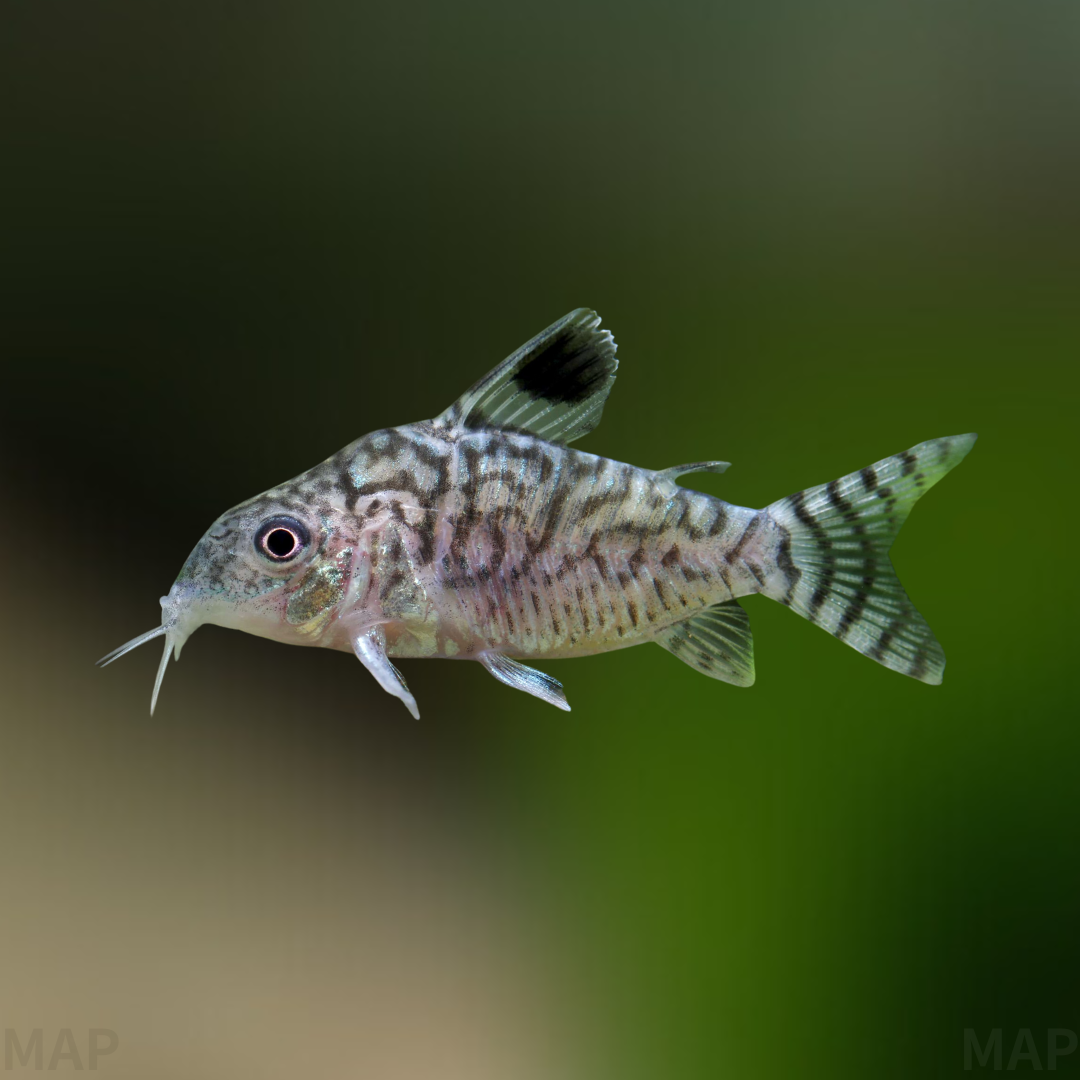
ブロキス・レティキュラータスは、南米アマゾン川流域に広く分布するカリクティス科の底生魚です。日本では長年「コリドラス・レティキュラータス」の学名と、ネットワーク・コリドラスという通称で親しまれてきました。その最大の特徴は、全身を覆う緻密な網目模様(レティキュラータス・パターン)と、背鰭に大きく入る漆黒の斑紋です。やや突き出したセミロングノーズの顔つきは愛嬌があり、砂を掘り起こして餌を探す姿は多くのアクアリストを魅了しています。2024年の大規模な系統分類の再編により、現在は正式にブロキス属へと移管されています。Brochis reticulata is a benthic fish of the family Callichthyidae, widely distributed in the Amazon River basin of South America. In Japan, it has long been popular under the scientific name Corydoras reticulatus and the common name Network Corydoras. Its most prominent features are the dense, net-like pattern covering its body and a large, deep black blotch on the dorsal fin. With its charming semi-long nose and its habit of digging through sand for food, it has captivated many aquarists. Following a major taxonomic revision in 2024, it is now officially classified under the genus Brochis.
ペルー(ウカヤリ川、アンピヤク川など)、ブラジル(アマゾン川本流、モンテ・アレグレ近郊)Peru (Rio Ucayali, Rio Ampiyacu, etc.), Brazil (Amazon main stem, near Monte Alegre)
最大体長 / Max Size
約6.0cm〜6.5cm(メスの方が一回り大きくなる)Approx. 6.0cm – 6.5cm (Females tend to be slightly larger)
寿命 / Lifespan
約3年〜5年(適切な飼育環境下)Approx. 3 – 5 years (under proper care)
飼育環境 / Aquarium Environment
水槽サイズ / Tank Size
60cm規格水槽(約60L)以上、推奨は90cm規格水槽または60cmワイド水槽。群泳を好むため底面積の広さが重要です。60cm standard tank (approx. 60L) or larger; 90cm standard or 60cm wide tanks are recommended. A large bottom area is vital as they prefer schooling.
水温 / Temperature
22℃ 〜 26℃(極端な高温は避け、夏場はクーラーやファンでの対策が望ましい)22°C – 26°C (Avoid extreme heat; cooling measures are recommended in summer)
水質 / Water Quality
pH 6.0 〜 7.2(弱酸性から中性)、軟水。定期的な換水で硝酸塩濃度を低く保つことが健康維持の秘訣です。pH 6.0 – 7.2 (slightly acidic to neutral), soft water. Keeping nitrate levels low through regular water changes is key to health.
レイアウト / Layout
底床には必ず角のない非常に細かいパウダー状の砂を使用してください。流木やアヌビアスなどの水草で隠れ家を作ると落ち着きます。Always use very fine, smooth powder sand for the substrate. Providing hideouts with driftwood or plants like Anubias will help them feel secure.
注意点 / Precautions
底汚れに非常に敏感です。また、腸内呼吸を行うため、水面とフタの間に新鮮な空気の層を必ず確保してください。They are sensitive to substrate pollution. Ensure a layer of fresh air exists between the water surface and the lid for intestinal respiration.
餌と給餌 / Feeding
餌の種類 / Diet
沈下性のタブレットフードを主食とし、冷凍赤虫、イトミミズ、ブラインシュリンプなどをバランスよく与えます。Sinking tablet food as a staple, balanced with frozen bloodworms, Tubifex, and brine shrimp.
給餌のポイント / Feeding Tips
夜行性が強いため、消灯直前に与えるのも効果的です。他の遊泳魚に餌を奪われないよう、給餌量と場所に配慮してください。They are somewhat nocturnal, so feeding just before lights out is effective. Ensure other fish don’t steal all the food.
性格と混泳 / Temperament and Tank Mates
性格 / Temperament
極めて温和で平和的です。社会性が強く、同種で5匹以上の群れを作って飼育すると安心感が増し、活発に動き回ります。Extremely peaceful and social. Keeping them in a group of 5 or more increases their sense of security and activity levels.
混泳の相性 / Compatibility
小型カラシンやラスボラなど、多くの中・上層魚と好相性です。攻撃的な魚や、彼らを飲み込んでしまう大型魚との混泳は避けてください。Highly compatible with mid-to-top dwellers like small tetras and rasboras. Avoid aggressive fish or large species that could swallow them.
病気と対策 / Diseases and Prevention
かかりやすい病気 / Common Diseases
ヒゲの細菌感染症(バクテリアル・ネクローシス)、尾腐れ病、エロモナス感染症など。Barbel bacterial infections (necrosis), fin rot, and Aeromonas infections.
対策と予防 / Prevention
底床を清潔に保つことが最大の予防です。ヒゲに異常が見られたら、速やかに換水を行い、必要に応じて抗菌剤での薬浴を検討します。Maintaining a clean substrate is the best prevention. If barbel issues arise, change water immediately and consider medicated baths.
増やし方(繁殖) / Breeding
繁殖形態 / Reproduction
卵散布型。Tポジションと呼ばれる独特の姿勢で交尾し、ガラス面や水草に粘着性のある卵を産み付けます。Egg scatterer. They mate in the unique T-position and attach adhesive eggs to glass or plants.
繁殖のポイント / Breeding Tips
雨季を模した大量換水(水温を2〜3℃下げる)がトリガーとなります。孵化後はインフゾリアやブラインシュリンプを与えて育てます。A large water change mimicking the rainy season (dropping temp by 2-3°C) triggers spawning. Raise fry on infusoria and brine shrimp.
雑学と豆知識 / Trivia and Fun Facts
1. 2024年の歴史的大改訂と学名の変化1. The 2024 Taxonomic Shift and Name Change
長年コリドラス属の代表格として知られてきた本種ですが、2024年に発表されたDias氏らによるゲノム解析に基づいた論文により、属名がブロキス(Brochis)へと変更されました。これに伴い、ラテン語の文法規則に従って種小名の語尾も女性形のaとなり、現在は「Brochis reticulata」が正式な学名となっています。Long known as a representative of the Corydoras genus, this species was reclassified into the Brochis genus in 2024 following a phylogenomic study by Dias et al. Due to Latin gender agreement rules, the species name changed to “reticulata,” making “Brochis reticulata” the current official scientific name.
2. 化石戦争の主役が設立した属2. A Genus Founded by a Bone Wars Legend
ブロキス属を1871年に設立したのは、アメリカの天才古生物学者エドワード・ドリンカー・コープです。彼はライバルのマーシュと恐竜化石の発掘競争(化石戦争)を繰り広げたことで有名ですが、実は優れた魚類学者でもありました。彼の死後100年以上を経て、最新のDNA解析が彼の設立した属の妥当性を証明したという事実は、科学史におけるロマンを感じさせます。The genus Brochis was established in 1871 by Edward Drinker Cope, a famous American paleontologist. While renowned for the “Bone Wars” against his rival Marsh, he was also a brilliant ichthyologist. It is a romantic historical twist that modern DNA analysis has validated the genus he founded over a century after his death.
3. 酷似するソダリスとの見分け方3. How to Distinguish from Brochis sodalis
市場ではしばしば「ブロキス・ソダリス」と混同されます。ソダリスの種小名は仲間の意味で、まさに本種に似ていることから名付けられました。識別ポイントは背鰭です。レティキュラータスには背鰭に大きな黒い斑紋(ブラックブロッチ)がありますが、ソダリスにはこの斑紋がなく、細かな縞模様が入るのみです。This species is often confused with Brochis sodalis. The name sodalis means “companion,” reflecting its similarity to reticulata. The key identifier is the dorsal fin: reticulata has a large dark blotch, whereas sodalis lacks this blotch, featuring only fine stripes.
4. 命を繋ぐ「腸内呼吸」のメカニズム4. The Life-Sustaining Intestinal Respiration
彼らはエラ呼吸だけでなく、水面に急浮上して空気を直接飲み込む「腸内呼吸」という特殊な能力を持っています。取り込まれた空気は腸壁の毛細血管を通じて酸素が吸収されます。これは溶存酸素が不足しやすい熱帯の過酷な環境を生き抜くための進化の産物です。水槽から飛び出さないよう、フタをしつつも空気の層を作るのを忘れないでくださいね。They possess a unique ability called intestinal respiration, where they dash to the surface to gulp air. Oxygen is absorbed through capillaries in the gut wall. This evolution allows them to survive in oxygen-poor tropical waters. When keeping them, remember to provide an air gap under the lid to support this vital behavior.
まとめ / Conclusion
ブロキス・レティキュラータスは、その渋く美しい網目模様と、歴史に裏打ちされた深い背景を持つ非常に魅力的なナマズです。飼育のポイントは何よりも「底床を清潔に保つこと」と「非常に細かい砂を用意すること」に尽きます。これさえ守れば、彼らは水底で元気に活動し、時折見せる愛らしい腸内呼吸のダンスで、私たちを楽しませてくれるでしょう。Brochis reticulata is a captivating catfish with a sophisticated net-like pattern and a rich historical background. The most crucial aspects of their care are maintaining a clean substrate and providing very fine sand. Following these rules will ensure they remain active and delight you with their charming behaviors, including their occasional dash for air.
学名の変更といった科学の進歩に触れながら、アマゾンの自然に思いを馳せて飼育を楽しむ。そんな贅沢な体験を、ぜひこのネットワーク・コリドラス(ブロキス)と共に始めてみませんか?あなたの水槽が、より豊かな学びと癒しの場になることを願っています。Embracing scientific progress through its name change while imagining the wild Amazon makes keeping this species a rewarding experience. Why not start your journey with the Network Corydoras (Brochis) today? I hope your aquarium becomes a place of both learning and serenity.
・Dias, A. C., Santos, S. A., Ribeiro-Silva, L. R., & Tencatt, L. F. (2024). Phylogenomic analyses in the complex Neotropical subfamily Corydoradinae (Siluriformes: Callichthyidae) with a new classification based on morphological and molecular data. Zoological Journal of the Linnean Society.
・Fraser-Brunner, A. (1938). Notes on the classification of the fishes of the genus Corydoras, with descriptions of two new species. Proceedings of the Zoological Society of London.
・Weitzman, S. H. (1964). One the classification and distribution of the subfamily Corydoradinae, with a description of a new species (Pisces, Callichthyidae). Proceedings of the United States National Museum.
・Cope, E. D. (1871). Contribution to the Ichthyology of the Lesser Antilles. Transactions of the American Philosophical Society.
・International Commission on Zoological Nomenclature (ICZN). International Code of Zoological Nomenclature.
・Ferraris, C. J., Jr. (2007). Checklist of catfishes, recent and fossil (Osteichthyes: Siluriformes), and catalogue of siluriform primary types. Zootaxa.



 ポチップ
ポチップ


コメント