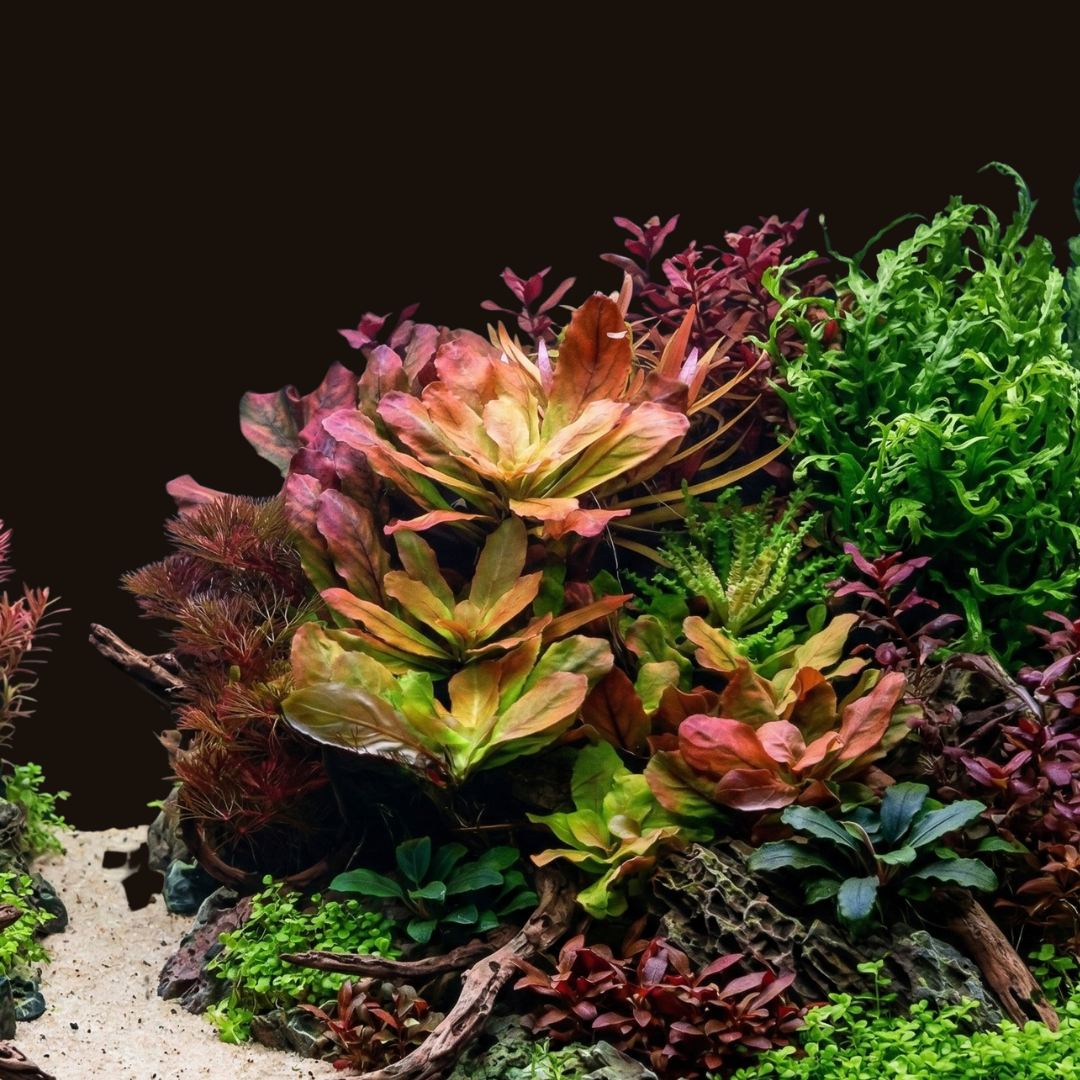
ルドウィジア・スファエロカルパは、北米原産のアカバナ科に属する水生植物です。野生下では1メートルにも達する緑色の地味な湿地植物ですが、アクアリウムの水中環境下ではその姿を劇的に変貌させます。強い光とCO2供給によって、節間が極端に短くなり、まるでロゼット状の塊のような密な葉を展開します。その色彩は、息を呑むようなオレンジブラウンから深い赤色へと染まり、這うように成長する独特の性質と相まって、水景の前景から中景を彩る強力なフォーカルポイントとなります。Ludwigia sphaerocarpa is an aquatic plant native to North America belonging to the Onagraceae family. While it is an inconspicuous green wetland plant reaching up to 1 meter in the wild, it undergoes a dramatic transformation in aquarium conditions. Under high light and CO2, its internodes shorten significantly, forming dense rosette-like foliage. The colors shift to striking orange-brown or deep red tones, and combined with its creeping growth habit, it functions as a powerful focal point in the foreground to midground of aquascapes.
弱酸性〜中性、軟水(pH 5.0 – 7.5)Slightly acidic to neutral, soft water (pH 5.0 – 7.5)
底床 / Substrate
栄養系ソイル(根からの養分吸収が非常に多いため)Nutrient-rich soil (due to heavy root feeding)
レイアウト / Layout
配置 / Positioning
前景〜中景(60cm規格水槽や90cm規格水槽でのアクセントに最適)Foreground to Midground (Ideal as an accent in 60cm or 90cm standard tanks)
注意点 / Precautions
背が低く横に広がるため、周囲の植物による遮光に注意してください。Ensure no shading from surrounding plants as it grows low and spreads horizontally.
増やし方(トリミング) / Propagation & Trimming
増やし方 / Propagation
差し戻し(カットした頂芽をソイルに植え直すことで容易に発根します)Cuttings (Replanting cut tips into the substrate facilitates easy rooting)
トリミング / Trimming
成長が遅いため頻繁な作業は不要ですが、切り戻しにより分岐が促進されます。Requires infrequent trimming due to slow growth, but pruning encourages ramification.
病気と対策(コケなど) / Pests & Algae
かかりやすい病気 / Common Issues
成長が緩やかなため、古い葉に斑点状の藻類(コケ)が付着しやすいです。Due to slow growth, older leaves are prone to spot algae.
対策と予防 / Prevention
CO2添加量の維持と、ヤマトヌマエビなどのお掃除役の魚・エビによる管理が有効です。Maintaining CO2 levels and introducing utility grazers like Amano shrimp is effective.
雑学と豆知識 / Trivia and Fun Facts
1. 「絶滅した親」を持つミステリアスな出自 / 1. Mysterious Origin with Extinct Parents
スファエロカルパは遺伝学的に「異質倍数体」という複雑な背景を持っています。研究によれば、古代に2つの異なる種が自然交雑して誕生したとされていますが、その親となった種の一方、あるいは両方がすでに絶滅している可能性が高いという、ロマンあふれる「遺伝的な遺物」なのです。Sphaerocarpa has a complex genetic background as an allopolyploid. Research suggests it originated from a natural cross between two different species in ancient times, but it is highly likely that one or both parent species are now extinct, making it a romantic “genetic relic.”
2. 160年ぶりの「消失と再発見」の物語 / 2. A 160-Year Story of Disappearance and Rediscovery
イリノイ州では、1800年代半ばに最初の記録がされて以来、実に160年以上もの間、本種の生息情報が途絶えていました。しかし2019年、植物学者の熱心な調査によって州南部で劇的な再発見がなされました。このエピソードは、本種がいかに特定の環境でひっそりと命を繋いできたかを示しています。In Illinois, there were no records of this species for over 160 years since its first documentation in the mid-1800s. However, in 2019, it was dramatically rediscovered in the southern part of the state by dedicated botanists. This episode highlights how the species quietly maintains its life in specific niches.
3. 「ルドウィジア・ピロサ」との混同の歴史 / 3. History of Confusion with Ludwigia pilosa
かつてアクアリウム市場では「ルドウィジア・ピロサ」という誤った名称で流通していた時期がありました。これは両者が外見上非常に似ているだけでなく、自生地において両種の自然交雑種が存在することも混乱に拍車をかけました。現在では、水中での特徴的なロゼット形状によって区別が明確化されています。For a long time, it circulated in the aquarium market under the misapplied name “Ludwigia pilosa.” This was due to their physical similarity and the existence of natural hybrids in the wild. Today, the distinct submerged rosette shape has helped clarify the identification.
4. 希少な突然変異株「ミニ」の存在 / 4. Existence of the Rare “Mini” Mutant
通常種よりもさらに小型で葉が密集する「ミニ(Mini)」タイプが存在します。この系統は育成条件によって通常のサイズに戻ってしまう「先祖返り」を起こしやすい気まぐれな性質を持っており、その安定した美しさを維持し続けることは、熟練アクアリストにとっても一つのステータスとなっています。A “Mini” type exists, which is smaller and has denser foliage than the standard species. This strain is temperamental and prone to “morphing back” to the standard size depending on conditions, making the maintenance of its stable beauty a status symbol for experienced aquarists.
まとめ / Conclusion
ルドウィジア・スファエロカルパは、その学術的な希少性と、水中での圧倒的な美しさを兼ね備えた、まさにアクアリウムの宝石と呼ぶにふさわしい水草です。育成には強い光と十分なCO2、そして栄養豊富な底床という「三種の神器」が欠かせませんが、それに応えてくれるだけの価値がこの植物にはあります。Ludwigia sphaerocarpa is a true gem of the aquarium world, combining academic rarity with overwhelming submersed beauty. While it requires the “three sacred treasures” of high light, ample CO2, and nutrient-rich substrate, the plant rewards the effort with its stunning appearance.
一方で、高い繁殖力を持つ外来植物としての側面も忘れず、トリミングした茎を野外へ流出させないよう、責任ある管理を徹底しましょう。歴史と進化の神秘を、ぜひあなたの水槽の中で再現してみてください。At the same time, we must remember its potential as a hardy non-native plant and ensure responsible management, such as not letting trimmed stems escape into the wild. We hope you will recreate the mystery of history and evolution right within your own aquarium.



 ポチップ
ポチップ



コメント