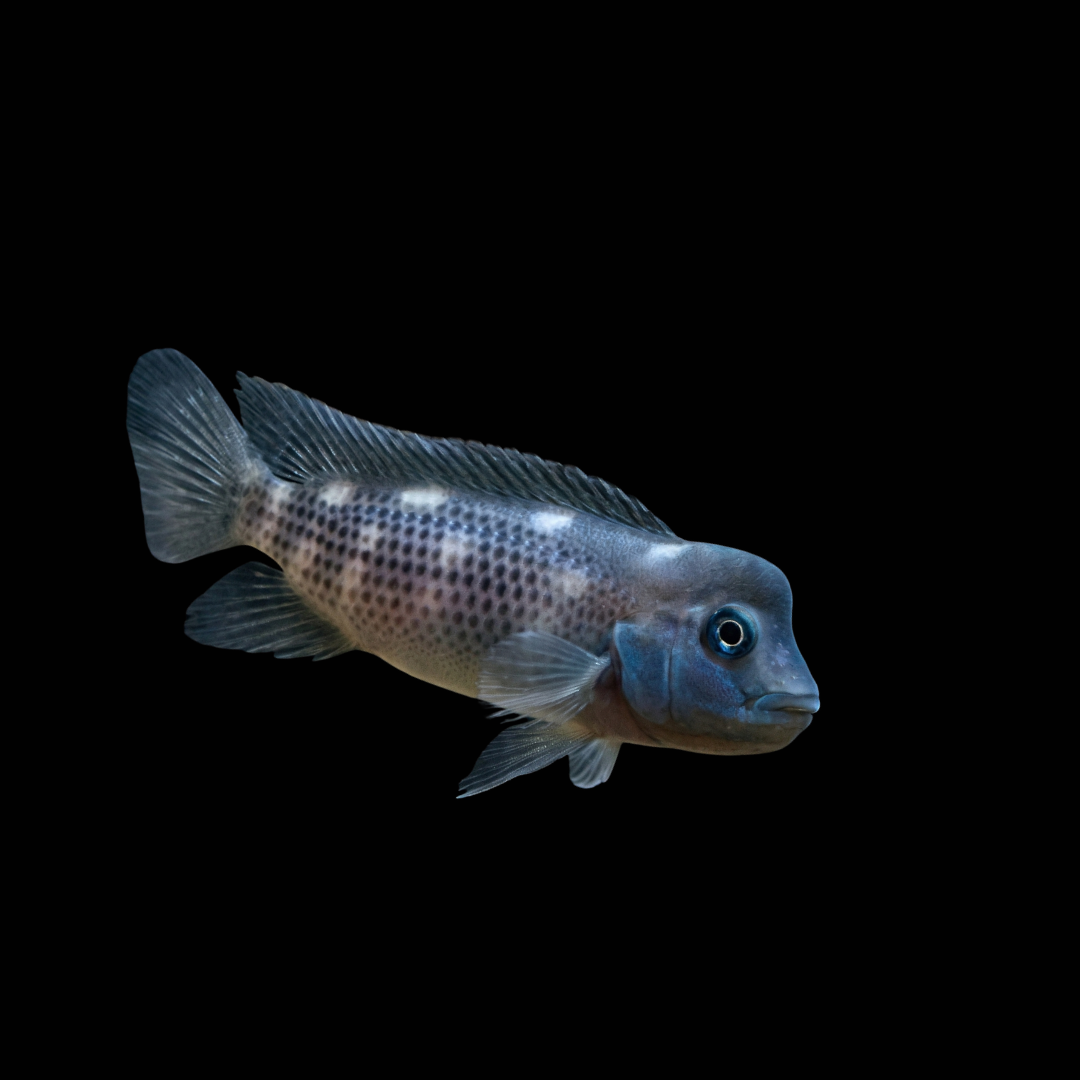
ライオンヘッドシクリッドは、アフリカのコンゴ川下流域にある極めて過酷な急流帯に適応した、非常に個性的なシクリッドです。最大の特徴は、成熟したオスの頭部に発達する巨大な脂肪のコブ(脂肪瘤)で、その姿がライオンのたてがみやバッファローの角を連想させることからその名がつきました。激流に逆らわず川底に留まるため、浮袋を退化させて負の浮力を獲得するという、魚類としては極めて珍しい進化を遂げています。川底を這うように跳ねるコミカルな動きとは裏腹に、非常に高い知性と社会性を持ち、ペアで協力して献身的に子育てを行う姿は、多くのアクアリストを魅了して止みません。The Lionhead Cichlid is a highly distinctive cichlid adapted to the extremely harsh rapids of the lower Congo River in Africa. Its most striking feature is the massive fatty hump (nuchal hump) that develops on the heads of mature males, earning it names reminiscent of a lion’s mane or a buffalo’s horns. In a rare evolutionary feat, it has reduced its swim bladder to achieve negative buoyancy, allowing it to stay anchored to the riverbed without fighting the current. Despite its comical “hopping” movement along the bottom, it possesses high intelligence and social complexity, with pairs exhibiting devoted cooperative parental care that continues to fascinate aquarists worldwide.
アフリカ:コンゴ川下流域(コンゴ共和国、コンゴ民主共和国)Africa: Lower Congo River basin (Republic of the Congo and Democratic Republic of the Congo)
最大体長 / Max Size
約10センチメートルから12センチメートル(メスは一回り小さい)Approximately 10 to 12 cm (females are slightly smaller)
寿命 / Lifespan
約5年から8年程度Approximately 5 to 8 years
飼育環境 / Aquarium Environment
水槽サイズ / Tank Size
60センチメートル規格水槽(約60リットル)以上を推奨60cm standard tank (approx. 60L) or larger recommended
水温 / Temperature
24度から28度24 to 28 degrees Celsius
水質 / Water Quality
pH 6.0から8.0(弱酸性から弱アルカリ性まで幅広く適応)、軟水から中硬水pH 6.0 to 8.0 (highly adaptable), soft to medium-hard water
レイアウト / Layout
細かい砂の底床、岩組や流木で作った複数のシェルター(隠れ家)、パワーヘッドによる適切な水流Fine sand substrate, multiple shelters made of rocks or driftwood, and appropriate flow created by a powerhead
注意点 / Precautions
強い水流を好みますが、常に晒されると疲弊するため、必ず水流の当たらない休息場所を作ってください。While they enjoy strong currents, constant exposure can cause exhaustion; ensure there are calm resting spots within the tank.
餌と給餌 / Feeding
餌の種類 / Diet
沈下性の人工飼料(シクリッド用)、冷凍アカムシ、ブラインシュリンプ、茹でた野菜(ほうれん草など)Sinking pellets (for cichlids), frozen bloodworms, brine shrimp, and boiled vegetables (such as spinach)
給餌のポイント / Feeding Tips
高脂肪な餌(イトメなど)の与えすぎは重篤な腸の病気を引き起こすため厳禁です。植物質を含むバランスの良いメニューを心がけてください。Overfeeding high-fat foods (like Tubifex) is strictly prohibited as it causes severe intestinal diseases. Ensure a balanced diet including vegetable matter.
性格と混泳 / Temperament and Tank Mates
性格 / Temperament
比較的温和ですが、縄張り意識があり、特に繁殖期は非常に攻撃的になります。Relatively peaceful but territorial, becoming highly aggressive especially during the breeding season.
混泳の相性 / Compatibility
中層や上層を泳ぐコンゴテトラなどとは良好です。底生魚(他のシクリッドやナマズ)とは争うため広いスペースが必要です。Good with mid-to-upper layer fish like Congo Tetras. Conflicts may occur with other bottom-dwellers, requiring ample space.
病気と対策 / Diseases and Prevention
かかりやすい病気 / Common Diseases
腹水病(ドロップジー)、腸管疾患(マクロビオシス等)、白点病Bloat (Dropsy), intestinal disorders, and Ich (White spot disease)
対策と予防 / Prevention
不適切な給餌による消化不良が最大の死因となります。低脂肪な食事と定期的な換水で、常に清潔な環境を維持してください。Indigestion from improper feeding is the leading cause of death. Maintain a clean environment with low-fat meals and regular water changes.
増やし方(繁殖) / Breeding
雌雄の判別 / Sexing
オスは頭部の脂肪瘤が大きく発達し、体も大きくなります。メスはコブが小さく、体型が丸みを帯びます。Males develop a prominent nuchal hump and grow larger. Females have a much smaller hump and a rounder body shape.
繁殖形態 / Reproduction
一雌一雄(モノガミー)のペアを形成し、岩陰などに産卵する洞窟産卵型です。They form monogamous pairs and are cave spawners, laying eggs in hidden crevices or rock caves.
繁殖のポイント / Breeding Tips
一度組んだペアの絆は非常に強固です。親が餌を細かく砕いて稚魚に与える「咀嚼給餌」という驚きの行動が見られます。The bond between pairs is extremely strong. They exhibit remarkable “mastication” feeding, where parents crush food to feed their fry.
雑学と豆知識 / Trivia and Fun Facts
1. 飛べない鳥「ヒクイドリ」から授かった名前1. Named After the Flightless Cassowary
種小名の「casuarius」は、オーストラリアなどに生息する大型の鳥、ヒクイドリ(Cassowary)に由来します。ヒクイドリの頭部には「カスク」と呼ばれる兜のような突起があり、この魚の立派な脂肪瘤がそれに似ていることから、1939年に魚類学者マックス・ポールによって命名されました。名前の由来からも、この魚の頭部がいかに印象的であるかが伺えます。The species name “casuarius” is derived from the Cassowary, a large bird native to regions like Australia. The bird possesses a helmet-like protrusion called a “casque,” which the Belgian ichthyologist Max Poll found similar to this fish’s nuchal hump when naming it in 1939. This etymology highlights just how striking the fish’s head structure is.
2. 泳ぎを捨てて「歩く」ことを選んだ進化2. Evolution: Choosing to “Walk” Over Swimming
彼らが住むコンゴ川の急流は、並の魚では一瞬で流されてしまうほど激しい場所です。そこで彼らは、浮力をもたらす「浮袋」をあえて退化させるという道を選びました。体が重いおかげで激流の川底に留まることができますが、代わりに中層を泳ぐことはできなくなりました。移動する際は、胸鰭を使ってピョンピョンと跳ねるように進みます。この姿がハゼに似ているため「ハゼ型シクリッド」とも呼ばれます。The Congo River rapids where they live are so fierce that ordinary fish would be swept away instantly. In response, they evolved by reducing their swim bladder, which provides buoyancy. This heavy body allows them to stay anchored to the riverbed, though it means they can no longer swim in mid-water. Instead, they move by “hopping” with their pectoral fins, a trait that has earned them the nickname “Goby-like Cichlid.”
ライオンヘッドシクリッドの子育てには、他の魚にはほとんど見られない驚くべき行動があります。親魚は、自分が食べた餌を口の中で細かくすり潰し(咀嚼)、それを稚魚の群れに向かって吹き出して与えるのです。まるで人間が赤ちゃんに離乳食を与えるようなこの行動は、激流で餌が流されやすい環境において、稚魚が確実に栄養を摂取できるように発達した、深い愛情の証といえるでしょう。Lionhead Cichlids exhibit a remarkable parenting behavior rarely seen in other fish. The parents crush food in their mouths (mastication) and spit it out toward their school of fry. This behavior, much like a human providing baby food, evolved so that fry could reliably receive nutrition in an environment where food is easily swept away by the current, serving as a testament to their profound parental care.
4. 水中の宝石?幻の「ゴールド」個体4. Jewels of the Water? The Elusive “Gold” Variant
本来、暗褐色の地味な体色を持つ彼らですが、稀に全身が黄金色に輝く「ザンソリズム(黄変種)」が生まれることがあります。野生下では天敵に見つかりやすく生き残ることは困難ですが、近年ヨーロッパの愛好家の間で「ゴールドバリアント」として系統維持が試みられています。もし日本で目にすることがあれば、それは進化のいたずらが生んだ極めて希少な出会いかもしれません。While naturally possessing a somber dark brown color, a rare “Xanthorism” variant with a shimmering golden body occasionally appears. Though these individuals struggle to survive in the wild due to predators, European enthusiasts have recently begun breeding this “Gold Variant.” Seeing one in Japan would be a truly rare encounter with a beautiful quirk of evolution.
まとめ / Conclusion
ライオンヘッドシクリッドは、そのユニークな外見だけでなく、過酷な環境を生き抜くための驚くべき適応能力と、人間味あふれる深い知性を持った素晴らしい魚です。一度ペアが成立すれば、水槽という限られた空間の中でも、野生の息吹を感じさせるダイナミックな子育てのドラマを見せてくれることでしょう。The Lionhead Cichlid is a wonderful fish that offers not only a unique appearance but also amazing adaptability to harsh environments and a surprisingly human-like intelligence. Once a pair is established, they will provide a dynamic drama of parental care that brings the breath of the African wilderness into the limited space of your aquarium.
彼らを長生きさせるコツは、何よりも「消化に優しい食事」と「安心できる隠れ家」を用意してあげることです。手間をかければかけるほど、オスのコブは立派に成長し、あなたに対して信頼の眼差しを向けてくれるようになるはずです。この不思議な「水中のライオン」との生活を、ぜひ楽しんでみてください。The key to their longevity lies in providing a “digestive-friendly diet” and “secure hiding spots.” The more care you provide, the more magnificent the male’s hump will grow, and the more they will look upon you with trust. We hope you truly enjoy your life with these mysterious “Lions of the Water.”
【学術記載・原記載】Poll, M. (1939). Les poissons du Stanley-Pool. Annales du Musée du Congo Belge.ライオンヘッドシクリッド(Steatocranus casuarius)の初記載およびコンゴ川下流域の魚類相調査資料。
【分類学・系統学】Dunz, A. R., & Schliewen, U. K. (2013). Molecular phylogeny and diversification of the Steatocranini.分子系統学的解析に基づくステアトクラヌス属の分類および急流帯における適応放散の研究。
【地質学・進化生態学】Markert, J. A., et al. (2010). Molecular systematics of the cichlid genus Steatocranus from the lower Congo River.コンゴ川下流域の形成史と水理学的障壁による微小異所的種分化のメカニズムに関する解析。
【行動学・心理学】Budaev, S. V., Zworykin, D. D., & Mochek, A. D. (1999). Individual differences in behaviour of the cichlid fish Steatocranus casuarius.本種の成長に伴う行動の一貫性(パーソナリティ)およびストレス対処戦略に関する実験データ。
【流通・変異個体情報】Aquarium Glaser GmbH. (2020). Steatocranus casuarius “Gold” / Stocklist and Species Archive.ヨーロッパ市場におけるザンソリズム(黄変種)の流通記録および野生個体とブリード個体の管理コード資料。
【総合データベース】FishBase. Species Summary: Steatocranus casuarius.生息域の水質データ(pH、硬度)、最大体長、および分布に関する基礎データ。



 ポチップ
ポチップ



コメント