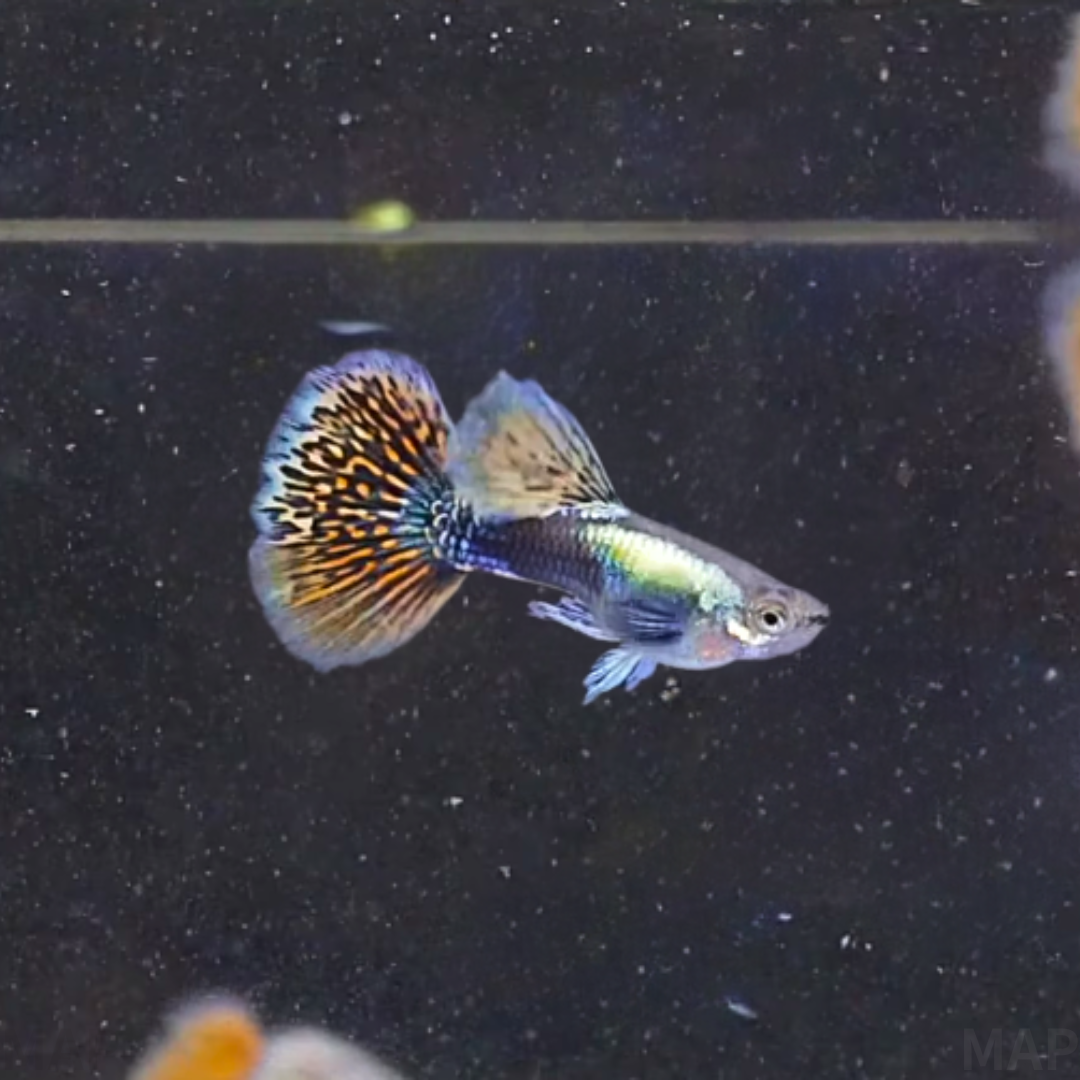
プラチナモザイクダンボグッピーは、アクアリウムの世界において「世界的な芸術作品」と称されるほど、卓越した美しさを持つ卵胎生メダカの改良品種です。この魚の最大の特徴は、金属的な輝きを放つプラチナの体色、幾何学的で複雑な模様を描くモザイクのヒレ、そして象の耳のように肥大化した巨大な胸鰭(ダンボ)という、3つの異なる遺伝形質が完璧な調和を持って一つの個体に統合されている点にあります。これらはドイツ、アジア、そしてタイのブリーダーたちの情熱と数世代にわたる選択交配の結晶であり、観賞魚の枠を超えた生命の神秘を感じさせてくれます。The Platinum Mosaic Dumbo Guppy is a highly prized ornamental variety of livebearer, often described as a living masterpiece in the aquarium world. Its most striking feature is the perfect integration of three distinct genetic traits: the metallic platinum body luster, the intricate geometric mosaic pattern on the fins, and the oversized pectoral fins reminiscent of elephant ears (Dumbo). These characteristics are the culmination of generations of selective breeding by enthusiasts in Germany, Asia, and Thailand, representing a harmonious blend of global breeding expertise that transcends the boundaries of standard ornamental fish.
基本情報 / Basic Information
学名 / Scientific Name
Poecilia reticulata var.
通称 / Common Name
プラチナモザイクダンボグッピー / Platinum Mosaic Dumbo Guppy
分類 / Family
カダヤシ科 / Poeciliidae
英名 / English Name
Platinum Mosaic Dumbo Guppy
分布 / Distribution
改良品種(原種はベネズエラ、トリニダード・トバゴなど南米北東部) / Captive Bred (Original species from Northeastern South America such as Venezuela and Trinidad and Tobago)
45cm規格水槽(約40L)以上を推奨。ペア飼育なら30cmキューブ水槽でも可能です。 / 45cm standard tank (approx. 40L) or larger recommended. A 30cm cube tank is acceptable for a single pair.
水温 / Temperature
23~28℃ / 23-28°C (74-82°F)
水質 / Water Quality
中性~弱アルカリ性の硬水(pH 7.0~8.5)。日本の軟水すぎる地域ではサンゴ砂の使用が有効です。 / Neutral to slightly alkaline hard water (pH 7.0-8.5). Using coral sand is effective in areas with very soft water.
レイアウト / Layout
流木や水草(ウォータースプライト、ジャバモスなど)を配置し、低乱流の休息ゾーンを設けてください。 / Provide resting zones with driftwood and aquatic plants like Water Sprite or Java Moss to create low-turbulence areas.
注意点 / Precautions
巨大な胸鰭が流体力学的な抵抗となるため、強い水流は厳禁です。ヒレを傷つける鋭い装飾も避けてください。 / Avoid strong water currents as the large pectoral fins create significant drag. Do not use sharp decorations that could damage the fins.
餌と給餌 / Feeding
餌の種類 / Diet
高品質なフレーク、小粒のペレット、冷凍ブラインシュリンプなど。 / High-quality flakes, small pellets, and frozen brine shrimp.
給餌のポイント / Feeding Tips
1日2~3回、2分程度で食べ切れる量を与えます。食べ過ぎによる浮袋障害に注意が必要です。 / Feed 2-3 times daily in amounts they can finish within 2 minutes. Avoid overfeeding to prevent swim bladder disorders.
性格と混泳 / Temperament and Tank Mates
性格 / Temperament
非常に温和です。オスは求愛行動(シグモイド・ディスプレイ)を熱心に行います。 / Very peaceful. Males are active and perform enthusiastic courtship displays (sigmoid displays).
混泳の相性 / Compatibility
同種や小型の温和な魚との混泳が適しています。ヒレをかじる魚(スマトラ等)は絶対に避けてください。 / Compatible with own species and other small, peaceful fish. Never keep with fin-nipping fish like Tiger Barbs.
病気と対策 / Diseases and Prevention
かかりやすい病気 / Common Diseases
尾腐れ病(ヒレの損傷から)、白点病、ベルベット病、松かさ病など。 / Fin rot (from fin damage), Ich (White spot disease), Velvet, and Dropsy.
対策と予防 / Prevention
週に一度の定期的な水換えと、ヒレを傷つけないレイアウト。導入時の水合わせは慎重に行ってください。 / Perform regular weekly water changes and use a fin-safe layout. Be very careful with water acclimation when introducing new fish.
増やし方(繁殖) / Breeding
繁殖形態 / Reproduction
卵胎生(体内で受精・孵化し、稚魚の状態で出産)。 / Ovoviviparous (internal fertilization and hatching, giving birth to live fry).
繁殖のポイント / Breeding Tips
稚魚の親による捕食を防ぐため、隠れ家を多く作るか隔離ケースを使用します。初期飼料はブラインシュリンプの幼生が最適です。 / Provide plenty of hiding places or use a breeding box to prevent fry predation by parents. Baby brine shrimp are the best first food for fry.
雑学と豆知識 / Trivia and Fun Facts
1. 「ダンボ」という愛称の由来 / 1. Origin of the Name “Dumbo”
この品種の最大の特徴である巨大な胸鰭は、ディズニーキャラクターの空飛ぶ象「ダンボ」の耳を連想させることから名付けられました。海外では「エレファントイヤー(象の耳)」とも呼ばれ、学術的な名称よりもこの愛称が世界中のアクアリストに親しまれる大きな要因となりました。The massive pectoral fins, the hallmark of this variety, were named after Disney’s “Dumbo” because they resemble the character’s large ears. Also known globally as “Elephant Ear,” this intuitive and charming nickname has contributed significantly to the variety’s popularity among aquarists worldwide.
2. 胸鰭を大きくする「カリマ遺伝子」の秘密 / 2. The Mystery of the Kalymma Gene
ダンボの形質を決定づけるのは「カリマ遺伝子(Kal)」という常染色体優性遺伝子です。しかし、これが発現するには「抑制遺伝子」が劣性ホモ接合(sup/sup)である必要があります。つまり、この巨大なヒレは、特定の遺伝的スイッチがオフになった時にのみ現れる、極めて繊細なバランスの上に成り立つ奇跡の表現型なのです。The Dumbo trait is determined by the “Kalymma (Kal) gene,” an autosomal dominant gene. However, its expression is contingent upon the absence of a “Suppressor gene” (it must be recessive homozygous, sup/sup). This means these giant fins are a miraculous phenotype that appears only when a specific genetic switch is turned off, requiring precise genetic balance.
3. 美しさと引き換えにした遊泳力(進化のトレードオフ) / 3. Beauty vs. Swimming Ability (Evolutionary Trade-off)
大きな胸鰭は求愛行動での視覚的アピールを飛躍的に高めますが、同時に大きな水の抵抗(ドラッグ)となります。野生環境では天敵から逃げられず淘汰されてしまうこの形態は、人間の保護下にある水槽という「天敵のいない聖域」でのみ存続が許された、進化のトレードオフの極致と言える存在です。While the massive pectoral fins dramatically increase visual appeal during courtship displays, they also create significant hydrodynamic drag. In the wild, this would make them easy prey, leading to extinction. This form is a prime example of an evolutionary trade-off, allowed to exist only within the “predator-free sanctuary” of a human-maintained aquarium.
4. 日本国内の流通と「国産」の価値 / 4. Distribution and the Value of Domestic Breeding in Japan
日本国内では東南アジアからの輸入個体と、国内ブリーダーによる「国産」個体が流通しています。大量生産される外国産に比べ、日本の水道水に順応し、厳格な選抜淘汰(カリング)を経て育成された国産個体は、非常に堅牢で表現型のクオリティも高く、系統維持を目的とする上級者から高く評価されています。In Japan, both imported individuals from Southeast Asia and “domestic” individuals bred by local specialists are available. Compared to mass-produced imports, domestic fish are adapted to Japanese water quality and undergo strict culling, resulting in higher robustness and phenotype quality, making them highly valued by serious enthusiasts focusing on lineage maintenance.
まとめ / Conclusion
プラチナモザイクダンボグッピーは、世界中のブリーダーの英知が結集した、アクアリウムにおける至高の改良品種の一つです。その美しさを維持するためには、巨大なヒレの負担を軽減する低乱流の環境づくりや、中性〜弱アルカリ性の安定した水質管理が欠かせません。The Platinum Mosaic Dumbo Guppy is one of the pinnacle achievements in selective breeding, uniting the expertise of breeders worldwide. Maintaining its beauty requires a low-turbulence environment to reduce the physical burden on its massive fins, along with stable, neutral to slightly alkaline water quality management.
繊細な遺伝的バランスを持つこの魚は、単なるペットという枠を超え、生命の多様性と人間の情熱が作り上げた「泳ぐ芸術品」として、飼育者に深い感動と知的な悦びを与えてくれることでしょう。With its delicate genetic balance, this fish transcends being a mere pet. As a “swimming work of art” forged by biological diversity and human passion, it offers keepers deep emotional resonance and intellectual fulfillment.


 ポチップ
ポチップ



コメント