

 ポチップ
ポチップ
解説 / Description
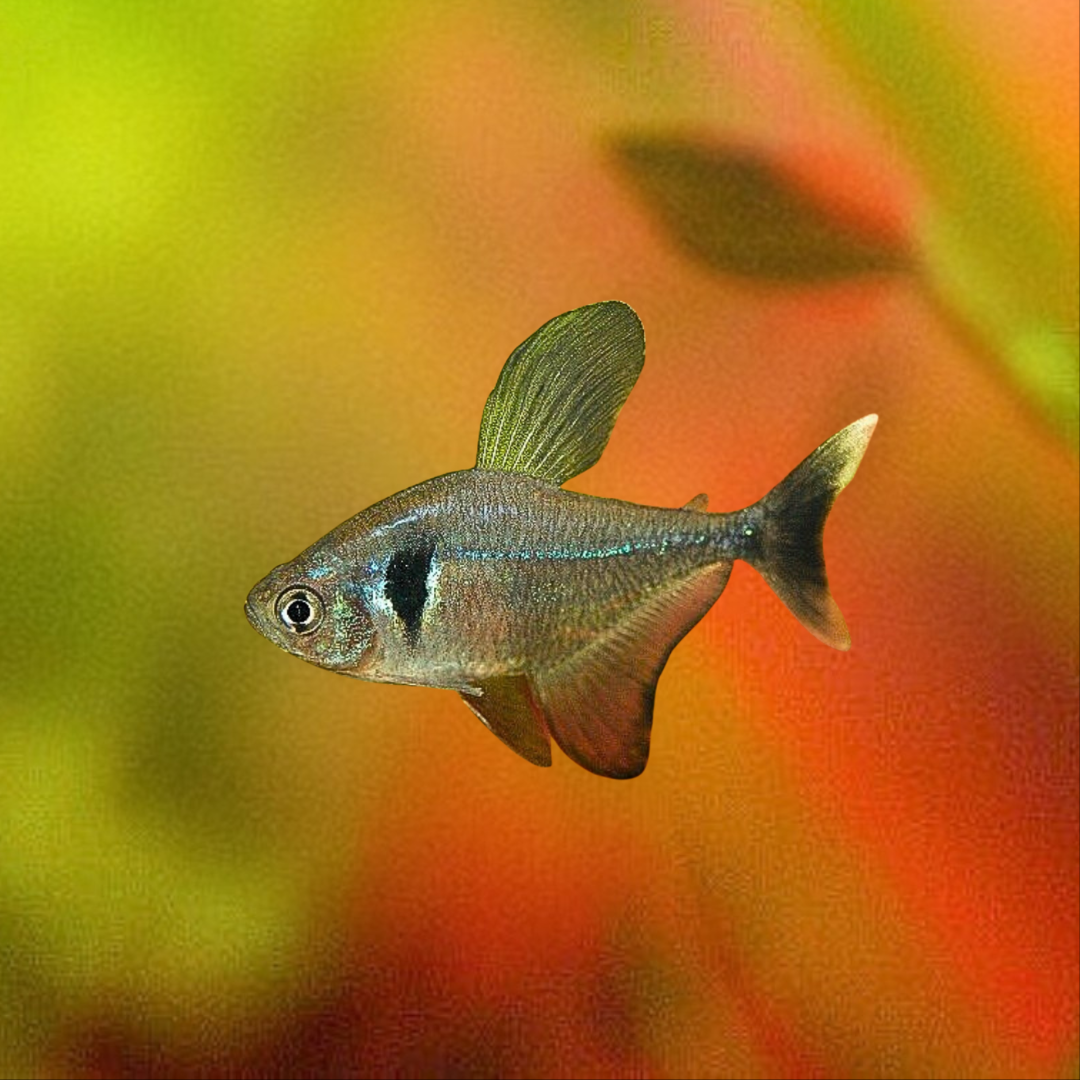
ブラックファントムテトラは、その名の通り「黒い幻影(ファントム)」のような幻想的な美しさを持つ、南米原産の小型カラシンです。透明感のある銀灰色の体を基調に、エラの後ろにある大きな黒い斑紋が青白く縁取られ、光の加減で神秘的に見え隠れします。
最大の特徴は、成熟したオスが見せる立派な背ビレと、漆黒に染まる体色です。これに対し、メスは脂ビレや腹ビレが鮮やかなルビーレッドに染まり、モノトーンのオスとは対照的な美しさを見せます。古くから「入門種」として親しまれていますが、水草レイアウトの中を群泳する姿や、オス同士がヒレを広げて競い合う「フィンスプレッディング」の荘厳さは、ベテランのアクアリストをも魅了してやみません。
As its name suggests, the Black Phantom Tetra is a small characin from South America possessing a fantastic beauty like a “black phantom.” Based on a transparent silvery-gray body, a large black spot behind the gill is bordered in pale blue, mysteriously appearing and disappearing depending on the light.
The most distinctive feature is the magnificent dorsal fin and jet-black body color shown by mature males. In contrast, females have adipose and pelvic fins dyed in vivid ruby red, showing a beauty that contrasts with the monotone males. Long loved as a “beginner species,” their schooling in planted tanks and the majesty of “fin spreading” where males compete with extended fins continue to fascinate veteran aquarists.
基本情報 / Basic Information
| 学名 / Scientific Name |
Megalamphodus megalopterus (または Hyphessobrycon megalopterus) |
|---|---|
| 通称 / Common Name | ブラックファントムテトラBlack Phantom Tetra |
| 分類 / Family | アケストロラムフス科(旧カラシン科) メガランフォダス亜科Acestrorhamphidae, Megalamphodinae |
| 英名 / English Name | Black Phantom Tetra |
| 分布 / Distribution | 南米:グアポレ川、パラグアイ川上流域、パンタナル湿原(ボリビア、ブラジル)South America: Rio Guaporé, Upper Rio Paraguay, Pantanal wetlands (Bolivia, Brazil) |
| 最大体長 / Max Size | 約 4.5cm ~ 5.0cmApprox. 4.5cm – 5.0cm |
| 寿命 / Lifespan | 3年 ~ 5年(適切な環境下では5年以上生きることも)3 – 5 years (Can live over 5 years in appropriate environments) |
飼育環境 / Aquarium Environment
| 水槽サイズ / Tank Size | 推奨:60cm規格水槽(約60L)以上 最小:30cmキューブ水槽(約25L)Recommended: 60cm standard tank (approx. 60L) or larger Minimum: 30cm cube tank (approx. 25L) |
|---|---|
| 水温 / Temperature | 23 – 26℃ |
| 水質 / Water Quality | pH 6.0 – 7.0(弱酸性~中性)、軟水pH 6.0 – 7.0 (Slightly acidic to Neutral), Soft water |
| レイアウト / Layout | 水草が密生し、流木が複雑に入り組んだ環境を好みます。隠れ家を用意することで落ち着き、発色が良くなります。底床はソイルの使用が適しています。Prefers environments with dense aquatic plants and complex driftwood arrangements. Providing hiding places calms them and improves coloration. Soil is suitable for the substrate. |
| 注意点 / Precautions | 強い水流は苦手とするため、フィルターの排水口を壁に向けるなどして水流を弱めてください。They dislike strong currents, so weaken the flow by directing the filter outlet toward the wall. |
餌と給餌 / Feeding
| 餌の種類 / Diet | 人工飼料(フレークや小粒の顆粒)、冷凍赤虫、冷凍ブラインシュリンプなど。Artificial feed (flakes or small pellets), frozen bloodworms, frozen brine shrimp, etc. |
|---|---|
| 給餌のポイント / Feeding Tips | 口が小さいため、粒の大きい餌は食べられません。ゆっくり沈むタイプの餌が適しています。色揚げや繁殖を狙う場合は、冷凍飼料や生きたミジンコをおやつとして与えると効果的です。Since their mouths are small, they cannot eat large grains. Slowly sinking food is suitable. For color enhancement or breeding, giving frozen food or live daphnia as treats is effective. |
性格と混泳 / Temperament and Tank Mates
| 性格 / Temperament | 温和で他魚を攻撃することは稀です。同種間では緩やかな群れ(ショーリング)を作ります。オス同士は「フィンスプレッディング」と呼ばれる儀式的な争いをしますが、傷つけ合うことはほとんどありません。Peaceful and rarely attacks other fish. They form loose shoals among their own kind. Males engage in ritualistic fights called “fin spreading,” but rarely injure each other. |
|---|---|
| 混泳の相性 / Compatibility | ネオンテトラやラスボラなど、同じくらいのサイズの温和な魚との混泳に最適です。エビ類との混泳も問題ありませんが、稚エビは食べられる可能性があります。Ideal for tank mates with peaceful fish of similar size, such as Neon Tetras and Rasboras. Coexistence with shrimp is fine, but baby shrimp may be eaten. |
病気と対策 / Diseases and Prevention
| かかりやすい病気 / Common Diseases | 白点病、尾腐れ病。特に購入直後や水温変化が激しい時期にかかりやすい傾向があります。Ich (White Spot Disease), Fin Rot. They tend to be susceptible especially right after purchase or during periods of drastic temperature changes. |
|---|---|
| 対策と予防 / Prevention | 導入時の慎重な水合わせとトリートメントが重要です。マジックリーフなどを使用してブラックウォーター(薄い茶色の水)を作ると、殺菌効果により病気を予防し、魚のストレスを軽減できます。Careful acclimatization and treatment upon introduction are important. Creating black water using magic leaves can prevent diseases through bactericidal effects and reduce fish stress. |
増やし方(繁殖) / Breeding
| 繁殖形態 / Reproduction | ばら撒き型。水草の茂みなどに卵を産み落とします。親魚は卵を守らず、食べてしまうことがあるため、繁殖には隔離が必要です。Egg-scattering. They lay eggs in dense aquatic plants. Parents do not protect eggs and may eat them, so isolation is necessary for breeding. |
|---|---|
| 繁殖のポイント / Breeding Tips | 最大の難関は稚魚の初期飼料です。孵化直後の稚魚は非常に小さく、ブラインシュリンプを食べられません。「インフゾリア(ゾウリムシなどの微生物)」を事前に用意しておくことが成功の鍵となります。The biggest hurdle is the initial food for fry. Newly hatched fry are very small and cannot eat brine shrimp. Preparing “Infusoria” (microorganisms like Paramecium) in advance is the key to success. |
雑学と豆知識 / Trivia and Fun Facts
| 1. 学名が語る「巨大なヒレ」 / 1. “Huge Fin” in the Name | 本種の種小名 megalopterus は、古代ギリシャ語で「巨大な(megas)」+「ヒレ(pteron)」を意味します。これは、成熟したオスが帆船の帆のように背ビレを高く掲げる姿を完璧に描写しています。一方、属名の Megalamphodus は「広い道」を意味し、頭蓋骨の形状に由来しています。The specific epithet megalopterus means “huge” (megas) + “fin” (pteron) in Ancient Greek. This perfectly describes the mature male raising its dorsal fin like a sail. Meanwhile, the genus name Megalamphodus means “wide road,” derived from the shape of its skull. |
|---|---|
| 2. 2024年の分類革命 / 2. The Taxonomy Revolution of 2024 | 長らく Hyphessobrycon(ハイフェソブリコン)属として知られてきましたが、2024年の最新研究により、かつての Megalamphodus(メガランフォダス)属が復活しました。さらに、これらは「アケストロラムフス科」という新しい科に分類されることになりました。これは、分類学のゴミ箱とも呼ばれた複雑なグループ整理の一環であり、本種はその歴史的な転換点に立つ魚といえます。Long known as genus Hyphessobrycon, the genus Megalamphodus was resurrected by the latest research in 2024. Furthermore, they are now classified in the new family “Acestrorhamphidae.” This is part of organizing complex groups, and this species stands at a historical turning point. |
| 3. 第一次世界大戦と新種記載 / 3. WWI and New Species Description | この魚がカール・アイゲンマン博士によって正式に記載されたのは1915年。世界が第一次世界大戦の渦中にあった時代です。困難な時代背景の中、南米の奥地から標本がもたらされ、科学の光が当てられたという事実は、この小さな魚に歴史的な深みを与えています。This fish was formally described by Dr. Carl Eigenmann in 1915, when the world was in the midst of World War I. The fact that specimens were brought from the depths of South America and scientifically illuminated during such difficult times gives this small fish historical depth. |
| 4. 黒と赤の対比の美学 / 4. Aesthetics of Black and Red | ブラックファントムテトラは、オスとメスで全く異なる魅力を持つ「性的二型」の代表例です。オスの「漆黒」は威厳と強さを、メスのヒレに入る「ルビーのような赤」は華やかさを象徴しています。群れで飼育することで、このモノトーンと赤のコントラストが水槽内で踊るような視覚的効果を生み出します。The Black Phantom Tetra is a prime example of “sexual dimorphism,” where males and females have completely different charms. The male’s “jet black” symbolizes dignity and strength, while the “ruby-like red” in the female’s fins symbolizes glamour. Keeping them in a school creates a visual effect where this contrast of monotone and red dances in the aquarium. |
まとめ / Conclusion
ブラックファントムテトラは、入門種としての飼いやすさと、マニアを唸らせる生物学的な奥深さを兼ね備えた、まさに「生きた教科書」のような存在です。日本の水道水(軟水)との相性も抜群で、特別な調整なしでも十分に飼育を楽しむことができます。 The Black Phantom Tetra is like a “living textbook,” combining ease of care as a beginner species with biological depth that impresses enthusiasts. It has excellent compatibility with Japan’s tap water (soft water), allowing for full enjoyment without special adjustments.
水草が茂る水槽の中で、オスたちがヒレを広げて舞う「フィンスプレッディング」の光景は、飼育者だけが見ることのできる特権です。ぜひ、この「黒い幻影」をあなたの水槽に迎え入れ、その神秘的な美しさを間近で観察してみてください。 The sight of males spreading their fins and dancing in a planted tank, known as “fin spreading,” is a privilege reserved for the keeper. Please welcome this “black phantom” into your aquarium and observe its mysterious beauty up close.

 ポチップ
ポチップ
▶ 記事の生体をAMAZONで買う ▶ 記事の生体をYahooで買う
コメント