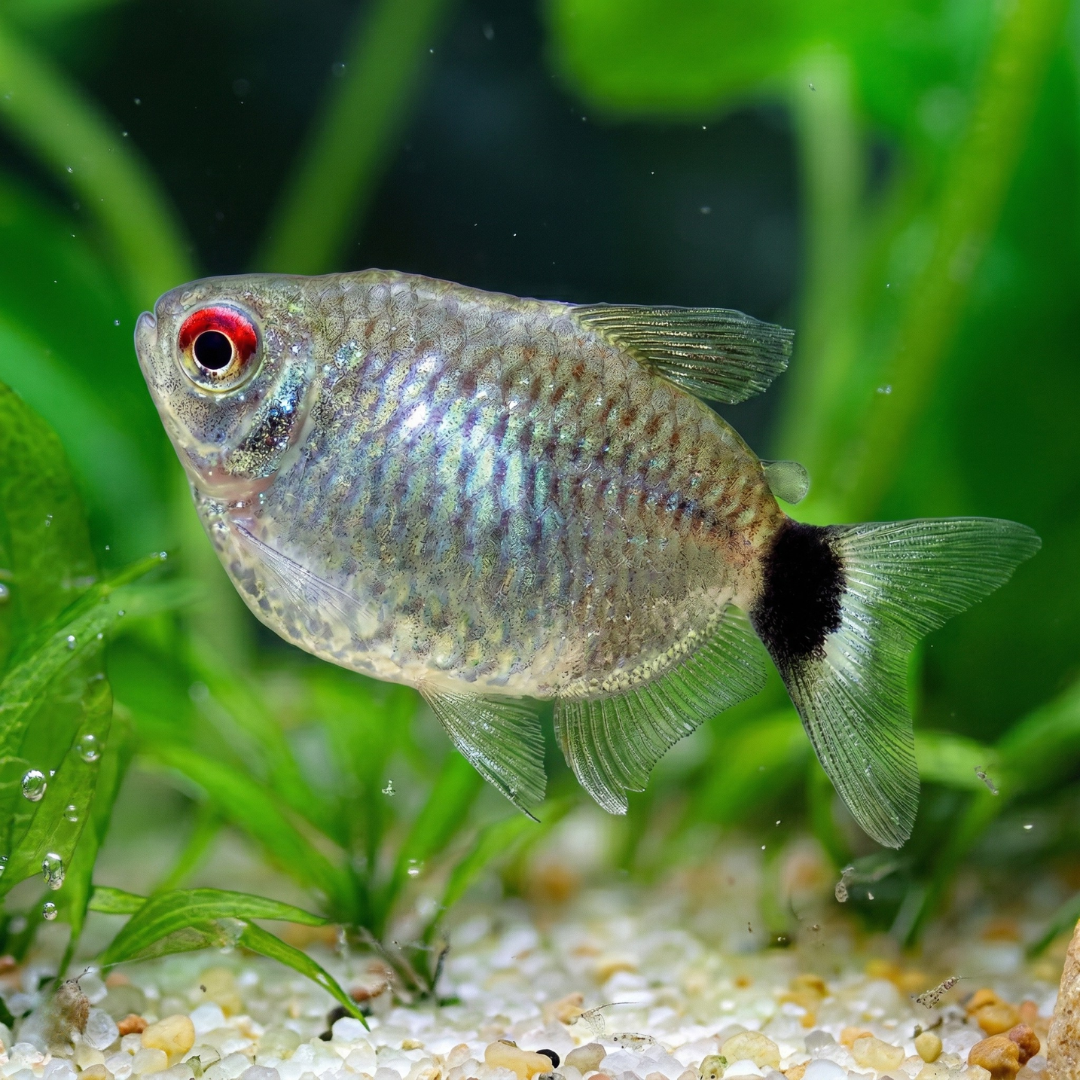
バルーンモンクホーシャは、南米原産の強健なカラシン「モンクホーシャ」を、東南アジアのブリーダーたちが長い年月をかけて改良し、体形を丸く短縮させた品種です。銀色に輝く体、尾びれの付け根にある鮮やかな黄色と黒のバンド、そして何よりも眼球の上部を縁取る燃えるような赤色が特徴です。その愛らしい「バルーン(風船)」のようなフォルムと、一生懸命に体を振って泳ぐ不器用な姿は、日本のアクアリストの間で根強い人気を誇ります。原種譲りの類まれなる生命力を持ち、初心者の方でも非常に飼育しやすい熱帯魚の一つです。The Balloon Moenkhausia is a selectively bred variety of the hardy South American characin, Moenkhausia sanctaefilomenae. Developed over many years by breeders in Southeast Asia, this variety features a distinctive rounded and shortened “balloon” body shape. It retains the striking features of the original species: a shimmering silver body, vivid yellow and black bands at the base of the tail, and fiery red coloration on the upper part of the eye. Its adorable appearance and unique, waddling swimming style have made it a favorite among aquarists. Inheriting the remarkable resilience of its ancestors, it is an exceptionally easy tropical fish for beginners to keep.
Balloon Red Eye Tetra, Balloon Yellow-banded Moenkhausia
分布 / Distribution
改良品種(原種はブラジル、パラグアイ、ボリビアなどのアマゾン川・パラナ川流域)Captive-bred variety (Ancestors native to Amazon and Parana River basins in Brazil, Paraguay, Bolivia, etc.)
最大体長 / Max Size
約6cmApproximately 6 cm (2.4 inches)
寿命 / Lifespan
3年〜5年程度(環境次第でそれ以上の長寿も可能)3 to 5 years (can live longer with optimal care)
飼育環境 / Aquarium Environment
水槽サイズ / Tank Size
幅45cm規格水槽(約35L)以上推奨(少数なら30cm規格水槽、約12L以上でも可能ですが群泳には60cm規格水槽、約60Lが理想です)Recommended 45 cm standard tank (approx. 35L) or larger. While a few can be kept in a 30 cm tank (12L), a 60 cm tank (60L) is ideal for schooling.
水温 / Temperature
22℃ 〜 28℃(理想は24℃〜26℃)22°C to 28°C (Ideal: 24°C to 26°C)
水質 / Water Quality
弱酸性 〜 弱アルカリ性(pH 6.0 〜 8.0)、軟水 〜 中硬水Slightly acidic to slightly alkaline (pH 6.0 – 8.0), soft to medium-hard water.
レイアウト / Layout
流木や石を組み合わせた落ち着いた環境。水流は弱めに設定し、休息場所を作ってください。A calm environment with driftwood and rocks. Keep water flow slow to moderate and provide resting areas.
注意点 / Precautions
遊泳力が低いため強い水流は厳禁です。また、植物質を好むため柔らかな水草は食害される恐れがあります。Strong currents must be avoided due to their limited swimming ability. They may also nibble on soft aquatic plants.
何でもよく食べますが、消化器官が圧迫されているため、少量を1日2〜3回に分けて与えるのが健康維持のコツです。They are eager eaters. Due to their compressed body, feeding small amounts 2-3 times a day is best for their digestion.
性格と混泳 / Temperament and Tank Mates
性格 / Temperament
やや気が強く、同種間で小競り合いをすることがあります。6匹以上の群れで飼育すると攻撃性が分散されます。Somewhat semi-aggressive; may squabble with their own kind. Keeping them in a group of 6 or more helps disperse this behavior.
混泳の相性 / Compatibility
コリドラスなど低層を泳ぐ魚とは好相性。泳ぎの速すぎる魚や、逆にヒレの長い繊細な魚との混泳には注意が必要です。Excellent with bottom-dwellers like Corydoras. Use caution when keeping them with extremely fast swimmers or long-finned, delicate species.
病気と対策 / Diseases and Prevention
かかりやすい病気 / Common Diseases
白点病、尾腐れ病、転覆病(内臓の圧迫によるもの)Ich (White Spot Disease), Fin Rot, and Swim Bladder Disorder (due to body shape).
対策と予防 / Prevention
急激な水温変化を避け、週1回程度の定期的な換水で清潔な水質を維持してください。転覆予防には餌の与えすぎに注意します。Avoid sudden temperature changes and maintain clean water through weekly water changes. Prevent bloating by avoiding overfeeding.
増やし方(繁殖) / Breeding
雌雄の判別 / Sexing
成熟するとメスの方が腹部が大きく丸みを帯び、オスよりも一回り大きくなります。Mature females are noticeably rounder and larger in the abdominal area than males.
繁殖形態 / Reproduction
卵生。水草の茂みなどに卵をばらまくタイプです。Egg scatterer. They typically scatter eggs among fine-leaved plants.
繁殖のポイント / Breeding Tips
親魚が卵を食べてしまうため、産卵後は速やかに親を隔離します。稚魚にはインフゾリアなどの微小な餌が必要です。Remove parents immediately after spawning to prevent egg-eating. Fry require infusoria or other microscopic foods initially.
雑学と豆知識 / Trivia and Fun Facts
1. 名前に込められた物語:日本と欧米の命名文化 / 1. A Tale of Two Names: Naming Cultures
この魚の呼び名には、地域の文化が色濃く反映されています。欧米ではその特徴的な赤い目から「レッドアイ・テトラ」と呼ばれますが、日本では学名の属名である「モンクホーシャ」という響きが定着しました。ちなみにこの「モンクホーシャ」という名は、アメリカの生物学者ウィリアム・J・モンクハウス氏への敬意を込めて名付けられたものです。The names for this fish reflect regional cultures. In the West, it is commonly known as the “Red Eye Tetra” due to its distinctive eyes. In Japan, however, the name “Moenkhausia,” derived from its scientific genus, has become established. This genus name was chosen to honor the American biologist William J. Moenkhaus.
2. 野生で磨かれた視覚シグナル / 2. Visual Signals Honed in the Wild
原種のモンクホーシャは、アマゾン川の濁った水域に生息しています。視界の悪い場所で仲間とはぐれないよう、彼らは進化の過程で「光る銀色の体」や「尾筒のコントラスト」を獲得しました。特に眼球の赤色は、群れ全体が同調して動くための強力なビジュアル・マーカーとして機能していると考えられています。The wild Moenkhausia inhabits murky waters in the Amazon. To avoid losing their school in low visibility, they evolved shimmering silver bodies and contrasting tail bands. It is believed that the brilliant red in their eyes serves as a powerful visual marker, allowing the entire school to move in synchronization.
3. 「可愛い」を追求したアジアの美意識 / 3. Asian Aesthetics: The Pursuit of “Kawaii”
欧米ではバルーン体形を「人為的な変異」として厳しく見る意見もありますが、日本では金魚やダルマメダカのように、丸みを帯びた姿を愛でる豊かな文化があります。この不器用な泳ぎ方を「愛嬌」として捉える日本の感性が、東南アジアのブリーダーたちにこの品種を固定化させる大きな力となったのです。While some Western aquarists view the balloon shape critically as an artificial mutation, Japan has a long-standing culture of admiring rounded forms, such as Ranchu goldfish. The Japanese aesthetic that finds charm in their clumsy swimming style has been a major driving force for breeders in Southeast Asia to stabilize this variety.
4. 水草水槽の「美食家」たち / 4. “Gourmets” of the Planted Tank
モンクホーシャの仲間は、熱帯魚の中でも特に植物質の餌を好むことで知られています。これは彼らが健康を維持するためにビタミンを本能的に求めている証拠でもあります。美しい水草レイアウトを維持したい場合は、アヌビアスやミクロソリウムといった「硬い葉」を持つ種類を選ぶのが、彼らと共存するための知恵と言えるでしょう。Moenkhausia species are known among tropical fish for their strong preference for plant matter. This is evidence of their instinctive need for vitamins to maintain health. When keeping them in a planted tank, choosing “hard-leaved” species like Anubias or Microsorum is a wise strategy for coexistence.
まとめ / Conclusion
バルーンモンクホーシャは、そのユニークな体形と鮮やかな色彩で、水槽の中に笑顔を運んでくれるような存在です。野生種譲りの強健さを持ちながら、改良品種特有のゆったりとした動きを併せ持つ彼らは、慌ただしい日常の中でふと足を止めたくなるような癒やしを与えてくれます。With its unique body shape and vibrant colors, the Balloon Moenkhausia brings a sense of joy to any aquarium. Combining the hardiness of its wild ancestors with the leisurely movements of a captive-bred variety, these fish offer a moment of tranquility that encourages us to pause in our busy daily lives.
飼育の際は、彼らの社会性を尊重して十分な数で泳がせてあげてください。そして、時には植物質の餌をご褒美に与えながら、この愛らしい「動く宝石」との暮らしを末永く楽しんでいただければ幸いです。When keeping them, please respect their social nature by allowing them to swim in a sufficiently large group. We hope you will enjoy a long and happy life with these adorable “living gems,” perhaps rewarding them with a bit of vegetable-based food from time to time.
Steindachner, F. (1907). Über einige neue Tierformen aus Brasilien. Anzeiger der Kaiserlichen Akademie der Wissenschaften, Wien, Mathematisch-Naturwissenschaftliche Klasse. (原種Moenkhausia sanctaefilomenaeの原記載論文)


 ポチップ
ポチップ



コメント