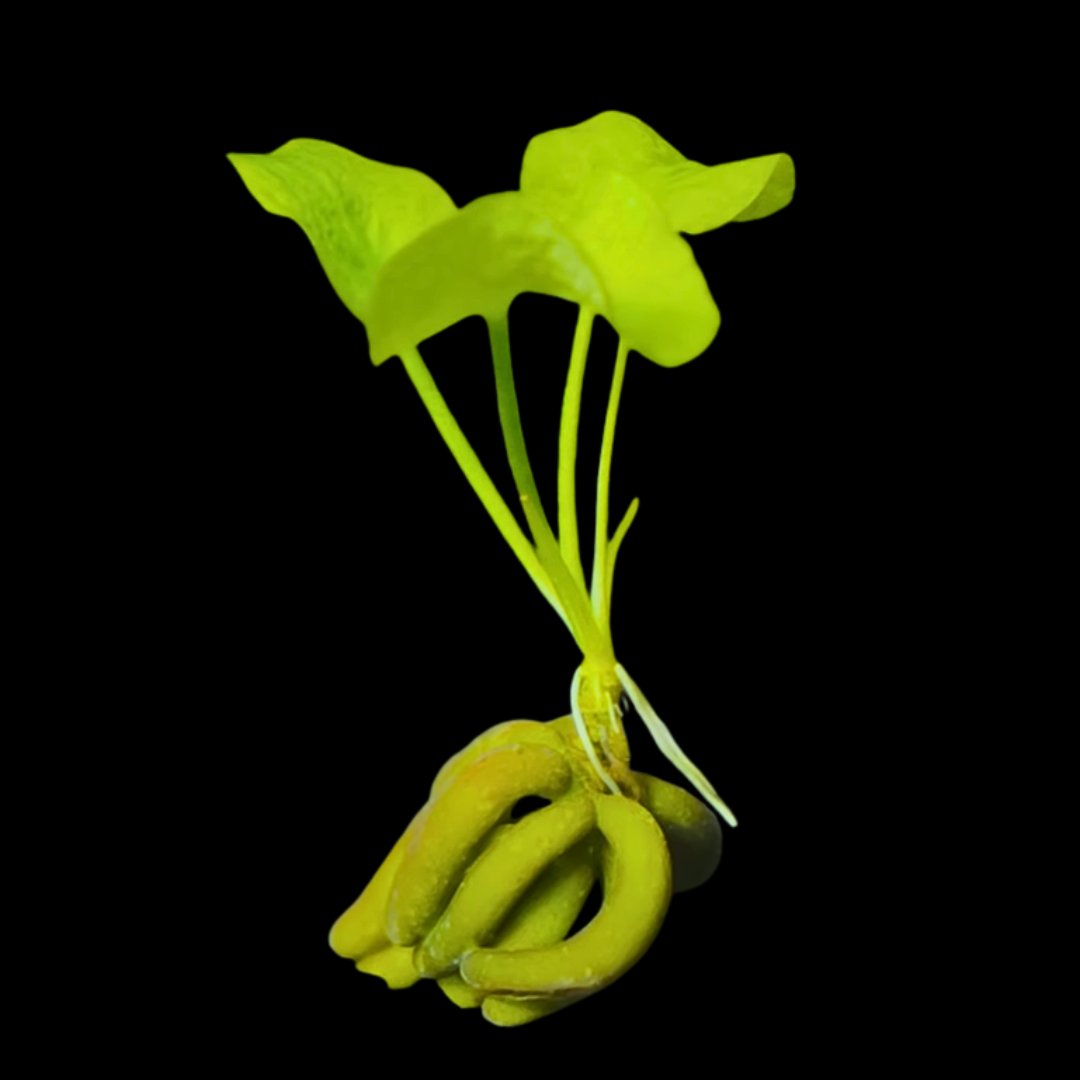
バナナプラントは、その名の通り根元に「バナナ」の房のようなユニークな貯蔵器官を持つ、北米原産の非常に個性的な水生植物です。この奇抜な外見は、貧栄養な環境を生き抜くための高度な進化の形であり、アクアリウムにおいては前景から中景のワンポイントとして絶大な人気を誇ります。育成は比較的容易で、水中葉の素朴な美しさと、水面に浮かぶスイレンのような浮き葉の両方を楽しむことができます。特にベタなどの魚が浮き葉の上で休息する姿は、多くのアクアリストを魅了して止みません。The Banana Plant is a uniquely characteristic aquatic plant native to North America, known for its banana-like clusters of storage organs at its base. This eccentric appearance is an advanced evolutionary adaptation for surviving in nutrient-poor environments. In the aquarium hobby, it is highly popular as a focal point for the foreground to midground. Cultivation is relatively easy, allowing enthusiasts to enjoy both the simple beauty of its submerged leaves and the lily-like floating leaves. The sight of fish like Bettas resting on these floating leaves continues to captivate many aquarists.
基本情報 / Basic Information
学名 / Scientific Name
Nymphoides aquatica
通称 / Common Name
バナナプラント、ハナガガブタBanana Plant, Banana Lily
分類 / Family
ミツガシワ科アサザ属Menyanthaceae, Nymphoides
分布 / Distribution
北米大陸南東部(フロリダ州、テキサス州など)Southeastern United States (Florida, Texas, etc.)
育成難易度 / Difficulty
容易(初心者の方にもおすすめ)Easy (Recommended for beginners)
育成環境 / Cultivation Environment
光量 / Light
中〜高光量(60cm規格水槽でLED照明2灯以上が理想的)Moderate to High (Ideally 2 or more LED lights for a standard 60cm tank)
CO2添加 / CO2 Injection
無くても育成可能(添加すると成長が速まり、花が咲きやすくなる)Not mandatory, but injection promotes faster growth and flowering
水質 / Water Quality
弱酸性〜中性(pH 6.0〜7.5)、軟水〜中硬水、水温 20〜28℃Slightly acidic to neutral (pH 6.0-7.5), soft to medium hard water, temp 20-28°C
底床 / Substrate
ソイル、大磯砂、砂など(肥料分を含んだソイルが最適)Soil, gravel, or sand (Nutrient-rich soil is best)
レイアウト / Layout
配置 / Positioning
前景〜中景(ワンポイントのアクセントとして最適)Foreground to Midground (Perfect as a focal accent)
注意点 / Precautions
「バナナ」の部分を底床に深く埋めないこと。腐敗を防ぐため、1/3程度を軽く置くように植栽します。Do not bury the “banana” portion deeply in the substrate. To prevent rot, plant it lightly, burying only about 1/3 of it.
増やし方(トリミング) / Propagation & Trimming
増やし方 / Propagation
浮き葉を茎とともに切り取り、水面に浮かせておくと数週間で新芽と根が出てきます(葉挿し)。Cut a floating leaf with its stem and let it float on the water surface; new shoots and roots will appear in a few weeks (leaf cutting).
トリミング / Trimming
浮き葉が他の植物を遮光しすぎる場合は、長い茎を根元からカットして管理します。If floating leaves block too much light for other plants, trim the long stems from the base.
病気と対策(コケなど) / Pests & Algae
かかりやすい病気 / Common Issues
バナナ部分の腐敗。また、光量不足による茎の徒長(ひょろひょろと伸びること)。Rotting of the banana portion and leggy growth due to insufficient light.
対策と予防 / Prevention
植栽時に埋めすぎないこと。エビなどの「お掃除役の魚」や甲殻類を入れ、コケを防ぎます。Avoid over-burying during planting. Introduce shrimp or algae-eating fish to prevent algae growth.
雑学と豆知識 / Trivia and Fun Facts
1. バナナの正体は「エネルギーの貯蔵庫」1. The “Bananas” are Energy Reservoirs
あのバナナのような房は、実はデンプンを蓄えた特殊な根(塊根・殖芽)です。自生地で冬を越したり、栄養の少ない環境で生き抜いたりするための予備バッテリーの役割を果たしています。水槽内で自立した根が十分に張ると、このバナナは役目を終えて徐々に小さくなり、消失(自己消化)することがありますが、これは植物が元気に育っている証拠ですので心配いりません。Those banana-like clusters are actually specialized roots (tubers) that store starch. They function as a backup battery for surviving winters or nutrient-poor conditions in their natural habitat. Once the plant establishes normal roots in an aquarium, these bananas may shrink or disappear through self-digestion, which is a sign of healthy growth.
2. 日本の「お掃除役」との深い関係2. Deep Relation with Japan’s “Clean-up Crew”
日本のアクアリウム市場では、ヤマトヌマエビなどの小型甲殻類が非常に大切にされています。これらのエビは農薬に極めて弱いため、国内で流通するバナナプラントの多くは「無農薬」であることが強く求められます。販売時に「無農薬」タグが付いていることは、日本のアクアリストにとって信頼と安全の証なのです。In the Japanese aquarium market, small crustaceans like Yamato Shrimps are highly valued. Since these shrimps are extremely sensitive to pesticides, there is a strong demand for “pesticide-free” Banana Plants. The “pesticide-free” tag is a mark of trust and safety for Japanese aquarists.
3. 野生では絶滅の危機にある地域も3. Regions Where it is Endangered in the Wild
北米に広く分布するバナナプラントですが、北限にあたるメリーランド州などでは、環境破壊や生息地の変化により絶滅危惧種に指定されています。私たちが水槽で楽しんでいる株は商業的に栽培されたものですが、その背景には貴重な野生の生態系があることを知ると、より愛着が湧いてくるのではないでしょうか。Although widely distributed in North America, the Banana Plant is designated as an endangered species in Maryland, its northern limit, due to habitat loss. While the plants we enjoy in tanks are commercially cultivated, knowing they represent a precious wild ecosystem adds a deeper sense of appreciation.
4. スイレンではないけれど「スイレンに似た」名前4. Not a Water Lily, but Named “Lily-like”
属名の Nymphoides は「スイレン(Nymphaea)に似た」という意味です。確かに浮き葉の形はよく似ていますが、実際にはミツガシワ科という全く別のグループに属しています。分類学的な歴史を紐解くと、かつては別の名前で呼ばれていた時期もあり、科学者たちもその正体を突き止めるのに試行錯誤した歴史があります。The genus name Nymphoides means “resembling Nymphaea (water lily).” While the floating leaves look very similar, it actually belongs to a completely different group, the Menyanthaceae family. Its taxonomic history shows that it was once known by other names, reflecting the trial and error scientists went through to identify it.
まとめ / Conclusion
バナナプラントは、その奇妙で愛らしい姿から、水槽の中に「驚き」と「癒やし」をもたらしてくれる素晴らしい水草です。初心者の方でも、植える深さ(1/3ルール)さえ守れば、失敗することなくその独特な成長過程を楽しむことができます。The Banana Plant is a wonderful aquatic plant that brings both surprise and comfort to an aquarium with its strange yet adorable appearance. Even for beginners, as long as the planting depth (1/3 rule) is observed, one can enjoy its unique growth process without failure.
水中葉から浮き葉、そして運が良ければ可憐な白い花まで、一つの株で多様な表情を見せてくれるこの植物は、まさに生きたインテリアと言えるでしょう。ぜひ、あなたの水槽にもこの小さな「バナナ」を招いて、自然の神秘を感じてみてください。From submerged leaves to floating leaves, and even lovely white flowers if you’re lucky, this plant shows various expressions from a single stalk, making it a true piece of “living interior.” Invite this little “banana” into your tank and feel the mystery of nature.
・Flora of North America Editorial Committee, eds. 1993+. Flora of North America North of Mexico. 22+ vols. New York and Oxford. Vol. 14 (Menyanthaceae).
・Maryland Department of Natural Resources. (2021). Rare, Threatened, and Endangered Plants of Maryland. Maryland Natural Heritage Program.
・Gmelin, J. F. (1791). Caroli a Linné systema naturae per regna tria naturae. Tomus II. Editio decima tertia, ad editionem duodecimam reformatam.
・Kuntze, O. (1891). Revisio Generum Plantarum: secundum leges nomenclaturae internationales cum enumeratione plantarum exoticarum. Pars II.


 ポチップ
ポチップ



コメント