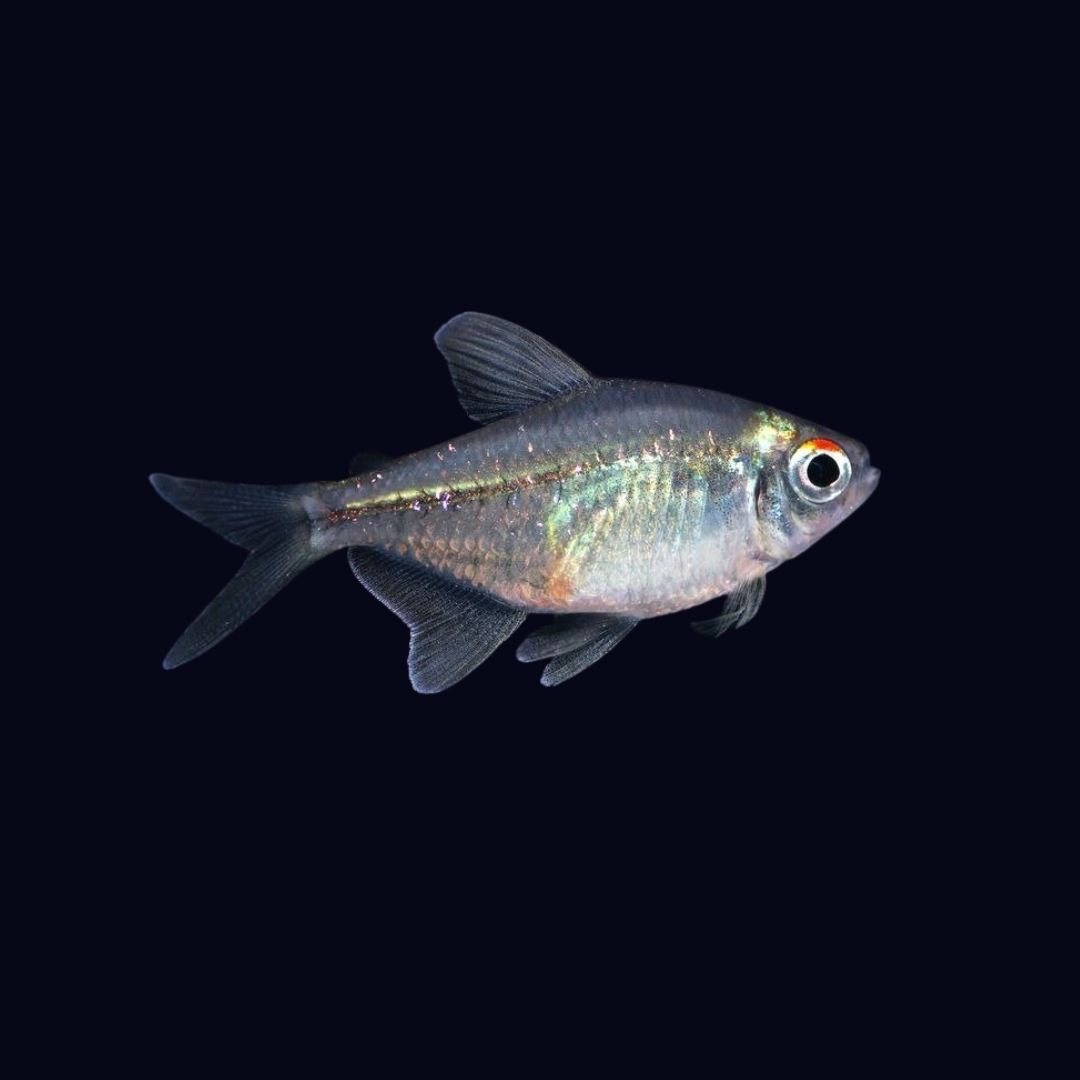
南米ベネズエラのバレンシア湖を故郷とするダイヤモンドテトラは、その名の通り宝石のような輝きを放つカラシン科の熱帯魚です。成長した雄の個体は、体側の鱗が光を反射してダイヤモンドのように煌めき、背鰭(せびれ)が優雅に伸長して鎌状の美しいシルエットを描きます。赤からオレンジ色に染まる眼の上部が、銀色の体色と鮮やかなコントラストを生み出し、水草レイアウト水槽によく映えます。古くからアクアリストに愛されてきたポピュラーな種ですが、原産地では環境破壊により絶滅の危機に瀕しており、私たちが水槽で目にする姿は、生物学的にも非常に貴重な存在です。Native to Lake Valencia in Venezuela, the Diamond Tetra is a characin species that truly lives up to its name, emitting a jewel-like brilliance. Mature males develop scales that reflect light like sparkling diamonds, and their dorsal fins extend gracefully into a sickle-like silhouette. The upper part of their eyes, tinged with red to orange, creates a vivid contrast against their silver bodies, making them stand out beautifully in planted aquariums. While they have long been popular among aquarists, they are endangered in their natural habitat due to environmental destruction, making the specimens we see in aquariums biologically precious.
ベネズエラ(バレンシア湖固有種)Venezuela (Endemic to Lake Valencia)
最大体長 / Max Size
約 6.0 cmApprox. 6.0 cm
寿命 / Lifespan
3 〜 5 年(適切な飼育下では5年以上の生存例あり)3 – 5 years (Can exceed 5 years under optimal care)
飼育環境 / Aquarium Environment
水槽サイズ / Tank Size
60cm規格水槽(約60リットル)以上推奨。活発に泳ぎ、群れを作るため、遊泳スペースを確保してください。Standard 60cm tank (approx. 60 liters) or larger is recommended. Provide ample swimming space as they are active swimmers and schooling fish.
水温 / Temperature
24 〜 28 ℃
水質 / Water Quality
弱酸性〜中性(pH 6.0〜7.5)、軟水〜中硬水(GH 3-10)。Slightly acidic to neutral (pH 6.0-7.5), Soft to medium hard water (GH 3-10).
レイアウト / Layout
水草を密植したエリアと、広々とした遊泳エリアの両方を設けると落ち着きます。底床に大磯砂やソイルなどの暗色系を用いると、体表の輝きが際立ちます。Providing both densely planted areas and open swimming spaces helps them feel secure. Using dark substrates like dark gravel or soil will enhance their shimmering coloration.
注意点 / Precautions
硬度が高すぎる(ミネラル分が多い)水では、カラムナリス病などの細菌感染症への感受性が高まる可能性があるため、極端な硬水は避けてください。Avoid extremely hard water, as high hardness (rich in minerals) may increase susceptibility to bacterial infections like Columnaris disease.
餌と給餌 / Feeding
餌の種類 / Diet
雑食性。小型カラシン用の人工飼料(フレークや顆粒)をよく食べます。副食として冷凍アカムシや冷凍ブラインシュリンプなどを与えると、発色と体型維持に効果的です。Omnivorous. They readily accept artificial food for small characins (flakes or granules). Supplementing with frozen bloodworms or brine shrimp is effective for coloration and body condition.
給餌のポイント / Feeding Tips
活発に餌を追いますが、一度に与えすぎて食べ残しが出ないよう注意してください。動物性タンパク質を適度に補給することで、繁殖に向けた体作りができます。They pursue food actively, but be careful not to overfeed. Moderate supplementation of animal protein helps prepare them for breeding.
性格と混泳 / Temperament and Tank Mates
性格 / Temperament
基本的に温和ですが、雄同士はフィンスプレッディング(ヒレを広げて威嚇し合う行動)を行います。これは致命的な争いにはなりにくく、むしろ本種の美しさを堪能できる瞬間です。Generally peaceful, but males will engage in fin spreading (displaying fins to intimidate rivals). This rarely leads to serious injury and is actually a moment when their beauty is most displayed.
混泳の相性 / Compatibility
ネオンテトラやコリドラスなど、多くの小型魚と混泳可能です。ただし、稚エビなどの小さな生き物は捕食対象となるため、エビ類との混泳には十分な隠れ家が必要です。Compatible with many small fish like Neon Tetras and Corydoras. However, small creatures like baby shrimp may be eaten, so ample hiding spots are necessary if keeping them with shrimp.
病気と対策 / Diseases and Prevention
かかりやすい病気 / Common Diseases
カラムナリス病(尾ぐされ病・口ぐされ病)や白点病にかかることがあります。特に硬度が高い環境ではカラムナリス菌が付着しやすくなるという報告があるため注意が必要です。Susceptible to Columnaris (fin rot/mouth rot) and Ich. Be particularly careful in hard water environments, as there are reports that Columnaris bacteria adhere more easily in such conditions.
対策と予防 / Prevention
適切な水換えを行い、水質を清潔に保つことが最善の予防です。サンゴ砂や石組みで意図せず硬度が上がっていないか確認しましょう。発症した場合は、早めに抗菌剤等による薬浴を行います。Maintaining clean water through regular water changes is the best prevention. Check if coral sand or rocks are unintentionally raising the hardness. If disease occurs, treat promptly with appropriate medication.
増やし方(繁殖) / Breeding
繁殖形態 / Reproduction
ばら撒き型(Egg scatterer)。粘着性のある卵を水草や産卵床に産み付けます。親魚は卵を食べてしまう習性があるため、隔離が必要です。Egg scatterer. They lay adhesive eggs on aquatic plants or spawning mops. Parents have a habit of eating their eggs, so isolation is necessary.
繁殖のポイント / Breeding Tips
親魚に栄養価の高い餌を与えて抱卵を促します。稚魚は非常に小さく、孵化後ヨークサックを吸収して泳ぎ出した直後は、インフゾリア(ゾウリムシなど)等の極小の餌が必要です。Condition parents with high-quality food to encourage spawning. The fry are tiny; once they absorb their yolk sacs and start swimming, they require microscopic food like infusoria.
雑学と豆知識 / Trivia and Fun Facts
1. 学名「マクナイマ」と創造神話 / 1. The Name “Makunaima” and Creation Myth
長らくMoenkhausia属とされてきましたが、近年の研究でMakunaima属への移行が提唱されています。「マクナイマ」とは、アマゾンの先住民族の神話に登場する「生命の大樹」を創った創造神の名。南米の豊かな自然を象徴する神の名が、この美しい魚に与えられようとしています。Long classified in the genus Moenkhausia, recent studies propose moving them to the genus Makunaima. “Makunaima” is the name of a creator god in Amazonian indigenous mythology who created the “Tree of Life.” The name of a god symbolizing South America’s rich nature is being bestowed upon this beautiful fish.
2. 輝きの秘密は「構造色」 / 2. The Secret of the Shimmer: Structural Color
ダイヤモンドのような輝きは、色素ではなく物理的な「構造色」によるものです。鱗の中で「グアニン」という結晶が多層膜を形成し、光を複雑に反射・干渉させることで、あの独特のスパークリング効果が生まれます。稚魚のうちは輝きが鈍く、成魚になり結晶構造が完成することで初めて本来の美しさが発揮されます。Their diamond-like sparkle is not due to pigment but physical “structural color.” Guanine crystals within their scales form multilayered structures that reflect and interfere with light, creating that unique sparkling effect. Juveniles are duller; the true beauty is only revealed as they mature and the crystal structures are completed.
3. 失われゆく故郷と保全への希望 / 3. A Lost Home and Hope for Conservation
原産地のバレンシア湖は、環境破壊と水質汚染により深刻な危機に瀕しており、本種はIUCNレッドリストで絶滅危惧種(Endangered)に指定されています。現在、Ivan Mikolji氏らによる「再導入プロジェクト」が進行中で、繁殖させた個体をかつての生息地である川の上流へ戻す試みが行われています。私たちが飼育する個体も、遠い故郷の危機を伝えるメッセンジャーと言えるかもしれません。Their native Lake Valencia is in crisis due to environmental destruction and pollution, listing them as Endangered on the IUCN Red List. Currently, a “Reintroduction Project” led by Ivan Mikolji and others is underway to return bred individuals to the upper reaches of their ancestral rivers. The fish we keep may be considered messengers conveying the crisis of their distant homeland.
まとめ / Conclusion
ダイヤモンドテトラは、成長するにつれて増していく輝きと、伸長するヒレの優雅さで、飼育者を飽きさせない魅力を持っています。日本の水道水(軟水)にも適応しやすく、初心者からベテランまで楽しめる魚ですが、硬度の上がりすぎには注意が必要です。With brilliance that increases with age and gracefully extending fins, the Diamond Tetra offers an enduring charm for aquarists. They adapt well to Japanese tap water (soft water) and are suitable for everyone from beginners to experts, though care must be taken to avoid excessive water hardness.
水槽の中で輝くその姿を愛でるとき、彼らの故郷であるベネズエラの自然や、種の保全に尽力する人々の物語にも思いを馳せてみてはいかがでしょうか。大切に育て上げることで、その「生きた宝石」は最高のアクアリウム・ライフを演出してくれるはずです。When admiring their shimmering forms in your tank, why not also reflect on the nature of their Venezuelan homeland and the stories of those dedicated to their conservation? Raising them with care, these “living jewels” will surely provide a magnificent aquarium experience.


 ポチップ
ポチップ


コメント