
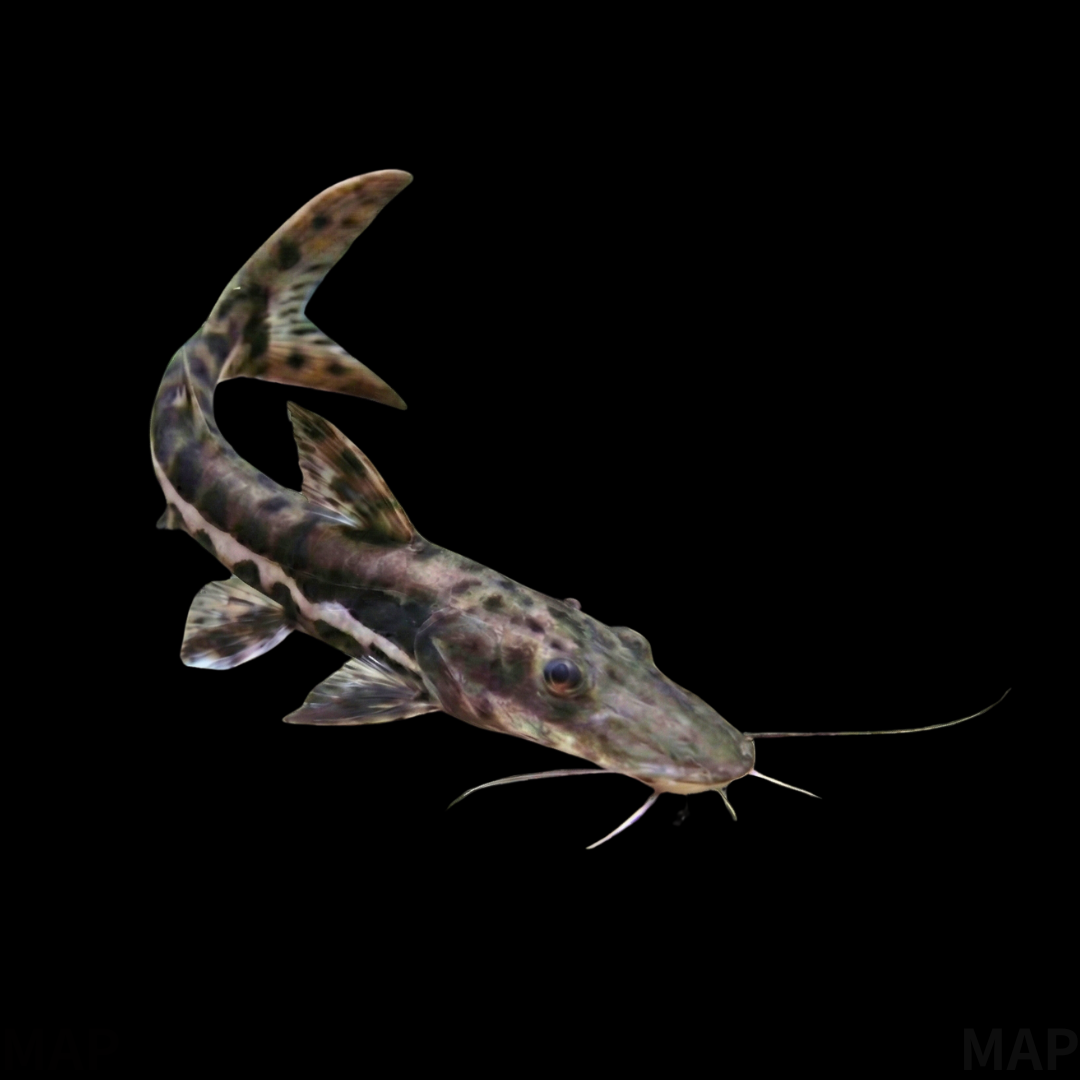

解説 / Description
タイガーショベルノーズキャットは、その名の通り「シャベルのように扁平した長い口先」と「虎のような美しい縞模様」を持つ、南米アマゾンを代表する大型ナマズです。最大で1メートル前後に達する巨体と優雅な泳ぎ姿から、世界中の愛好家にとって憧れの存在であり続けています。日本国内では古くから親しまれていますが、その飼育は決して容易ではありません。終生飼育には超大型水槽と専用の設備、そして何より飼育者の強い覚悟が必要です。古代魚の風格と愛嬌のある仕草を併せ持つ、特別なパートナーとなり得る魚です。 The Tiger Shovelnose Catfish is one of the most iconic large catfish of the Amazon, characterized by its shovel-like flat snout and beautiful tiger-like stripes. With a massive body reaching around one meter and graceful swimming style, it remains a coveted species for enthusiasts worldwide. While popular in Japan, keeping them is not an easy task. Lifelong care requires an extra-large tank, specialized equipment, and above all, a strong commitment from the owner. It is a special partner that combines the dignity of an ancient fish with charming behaviors.
基本情報 / Basic Information
| 学名 / Scientific Name | Pseudoplatystoma punctifer (流通名: Pseudoplatystoma fasciatum) ※日本流通個体は本種である可能性が高いとされますが、交雑種なども含め同定には課題が残ります。 |
|---|---|
| 通称 / Common Name | タイガーショベルノーズキャット、タイガーシャベルTiger Shovelnose Catfish |
| 分類 / Family | ナマズ目 ピメロドゥス科 (Pimelodidae)Siluriformes, Pimelodidae |
| 英名 / English Name | Tiger Shovelnose Catfish |
| 分布 / Distribution | 南米 アマゾン川流域全域(ブラジル、ペルー、コロンビアなど)South America: Amazon River basin (Brazil, Peru, Colombia, etc.) |
| 最大体長 / Max Size | 約100cm(野外最大記録等は諸説あり)Approx. 100cm (Wild records vary) |
| 寿命 / Lifespan | 約15〜20年(長期飼育記録あり)Approx. 15-20 years (Long-term captivity records exist) |
飼育環境 / Aquarium Environment
| 水槽サイズ / Tank Size | 最終的に幅180cm×奥行90cm以上の大型水槽必須。 (一般的な90cmや120cm規格水槽では終生飼育不可)Ultimately requires a tank at least 180cm wide x 90cm deep. (Standard 90cm or 120cm tanks are insufficient for lifelong care) |
|---|---|
| 水温 / Temperature | 24℃ 〜 28℃ |
| 水質 / Water Quality | pH 6.0 〜 7.5(弱酸性〜中性)pH 6.0 – 7.5 (Slightly acidic to neutral) |
| レイアウト / Layout | 遊泳スペースを最優先し、障害物は最小限に。底砂は薄く敷くかベアタンク推奨。Prioritize swimming space; keep obstacles to a minimum. Bare bottom or thin substrate is recommended. |
| 注意点 / Precautions | 飛び出し防止の蓋と重石が必須。水槽総重量が1トンを超えるため、床の耐荷重について建築の専門家への相談を強く推奨。吻(鼻先)をぶつけて怪我をしやすいため十分な奥行きが必要。A secure lid with weights is essential. As the total weight exceeds 1 ton, consulting a building expert regarding floor load capacity is strongly recommended. Sufficient tank depth is needed to prevent snout injuries. |
餌と給餌 / Feeding
| 餌の種類 / Diet | 人工飼料(沈下性肉食魚用)、魚の切り身(アジ、ワカサギ等)、金魚など。Sinking pellets for carnivores, fish fillets (horse mackerel, smelt, etc.), feeder goldfish. |
|---|---|
| 給餌のポイント / Feeding Tips | 幼魚期は毎日与えて成長を促し、成魚になったら週1〜2回に減らして肥満を防ぎます。単食は避け、ビタミン剤などで栄養バランスを整えてください。Feed daily during the juvenile stage for growth, then reduce to 1-2 times a week for adults to prevent obesity. Avoid a single diet and supplement with vitamins. |
性格と混泳 / Temperament and Tank Mates
| 性格 / Temperament | 比較的温和ですが、夜行性で捕食本能は強いです。口に入るサイズの魚はすべて食べられてしまいます。Relatively peaceful but nocturnal with strong predatory instincts. Any fish small enough to fit in its mouth will be eaten. |
|---|---|
| 混泳の相性 / Compatibility | アロワナ、パクー、同サイズの大型ナマズなどとは混泳可能です。ただし、水槽サイズに十分な余裕があることが前提です。Compatible with Arowanas, Pacus, and other large catfish of similar size, provided the tank is sufficiently large. |
病気と対策 / Diseases and Prevention
| かかりやすい病気 / Common Diseases | 白点病、水カビ病、pHショックによる肌荒れ。Ich (White Spot Disease), Saprolegniasis (Water Mold), skin issues due to pH shock. |
|---|---|
| 対策と予防 / Prevention | ナマズは鱗がないため魚病薬に非常に敏感です。愛好家の経験則として、使用する際は規定量の1/2〜1/3程度に薄めて慎重に行う手法が知られていますが、可能であれば専門家の判断を仰ぐことが望ましいです。水質悪化を防ぐことが最大の予防です。Catfish are scaleless and very sensitive to medications. Experienced keepers often use 1/2 to 1/3 of the standard dose cautiously, but professional advice is preferred. Maintaining water quality is the best prevention. |
増やし方(繁殖) / Breeding
| 繁殖形態 / Reproduction | 卵生。自然界では雨季に氾濫原へ回遊して産卵します。Oviparous. In nature, they migrate to floodplains during the rainy season to spawn. |
|---|---|
| 繁殖のポイント / Breeding Tips | 広大なスペースと環境変化が必要なため、一般家庭の水槽内での自然繁殖は極めて困難です。流通しているブリード個体はホルモン剤等を用いて養殖されています。Natural breeding in home aquariums is extremely difficult due to the need for vast space and environmental changes. Commercial individuals are bred using hormones. |
雑学と豆知識 / Trivia and Fun Facts
| 1. 学名のミステリー:2007年の分類再編 / 1. Taxonomic Mystery: The 2007 Revision | 長年、日本のショップで「タイガーショベル」として売られている魚の学名は Pseudoplatystoma fasciatum とされてきました。しかし、2007年の研究により、本属は少なくとも8種以上に再定義されました。これに伴い、現在日本で流通するアマゾン産個体の多くは Pseudoplatystoma punctifer という種である可能性が高いとされています。ただし、外見だけで確実な同定を行うことは難しく、流通名と学術名の乖離は依然として課題となっています。For years, the Tiger Shovelnose sold in shops was labeled as Pseudoplatystoma fasciatum. However, a 2007 study redefined the genus into at least 8 species. Consequently, most Amazonian specimens in Japan are likely Pseudoplatystoma punctifer. However, precise identification by appearance alone is difficult, and the gap between trade names and scientific names remains an issue. |
|---|---|
| 2. 暗闇の「センサー」 / 2. Sensors in the Dark | 彼らのトレードマークである長い口ひげは、単なる飾りではありません。視界の悪いアマゾンの濁った水中でも獲物を見つけるための、優れた感覚器官です。ナマズ目一般に言えることですが、ヒゲや体表には化学物質を感じ取る受容体が発達しており、泥の中の獲物を感知することができます。水槽の前を通るとヒゲを動かすのは、周囲の状況を探ろうとする彼らなりの情報収集活動なのかもしれません。Their trademark long barbels are not just decoration. They are excellent sensory organs for finding prey in the murky Amazon waters. As is common with catfish, they have developed receptors on their whiskers and body to detect chemical signals, allowing them to sense prey in the mud. Moving their whiskers when you pass by might be their way of gathering information. |
| 3. 住宅事情と「1.5トンの覚悟」 / 3. Housing Issues and a 1.5-Ton Commitment | この魚を飼うことは、魚を飼うというより「設備を導入する」ことに近いです。終生飼育に必要な180cm水槽セットの総重量は、水と機材を含めると1.5トンを超える場合があります。これは一般的な住宅の床設計荷重の目安(約180kg/平米程度)を大きく上回るため、床の補強工事や設置場所について、建築士や工務店等の専門家への相談が事実上必須となります。安価な幼魚が売られていますが、その飼育は日本の住宅事情に対する大きな挑戦と言えます。Keeping this fish is less about having a pet and more about installing facility equipment. A 180cm tank setup can weigh over 1.5 tons, far exceeding the standard floor load capacity of typical homes (approx. 180kg/sqm). Therefore, consulting with architects or builders regarding floor reinforcement is virtually mandatory. While juveniles are cheap, keeping them is a major challenge to Japanese housing infrastructure. |
| 4. 現地では美味しい食材「スルビム」 / 4. A Delicious Delicacy: “Surubim” | 日本では鑑賞魚として大切にされていますが、原産地の南米では「スルビム(Surubim)」と呼ばれ、非常にポピュラーな高級食用魚として扱われています。白身で脂が乗っており、市場では切り身になって売られています。現地の食卓を支える重要な資源でもある彼らのたくましさを知ると、水槽の中の姿もまた違って見えてくるかもしれません。While cherished as ornamental fish in Japan, in South America they are known as “Surubim” and are a popular high-quality food fish. Sold as fatty white meat fillets in markets, they are a vital resource. Knowing their role in local cuisine might give you a different perspective on the fish in your tank. |
| 5. ブリード個体の正体:安さの秘密と遺伝子の迷宮 / 5. The Mystery of Farm-Bred Individuals | 東南アジアから輸入される安価で丈夫な「ブリード個体」。彼らは入門魚として最適ですが、その出自には複雑な歴史があります。かつて分類が曖昧だった時代、養殖場では異なる産地の個体が同じ池で飼われ、意図せず交雑が進んだ「ファーム・ハイブリッド」である可能性が高いと推測されています。つまり、彼らは特定の純血種(P. punctifer等)の遺伝子をベースにしつつも、人間の営みの中で独自の進化を遂げた存在と言えるでしょう。学術的な純粋さとは異なりますが、その強健さと成長力は、彼らが「ペットフィッシュ」として特化した証なのです。The affordable and hardy “farm-bred” individuals from Southeast Asia are perfect for beginners, but their origins are complex. In the past, when classification was vague, fish from different regions were likely kept together, leading to speculation that they are unintentional “farm hybrids.” They possess genetics based on species like P. punctifer but have evolved uniquely within human industry. While lacking scientific purity, their robustness is proof of their specialization as “pet fish.” |
まとめ / Conclusion
タイガーショベルノーズキャットは、その圧倒的な存在感と美しさで、アクアリストを魅了し続ける特別な魚です。しかし、その飼育は生半可な気持ちでは成立しません。適切な設備投資と、長期間を共に生きる責任感が求められます。 The Tiger Shovelnose Catfish is a special fish that continues to captivate aquarists with its overwhelming presence and beauty. However, keeping them requires more than half-hearted interest. It demands appropriate facility investment and the responsibility to live together for a long time.
彼らが狭い水槽で鼻を潰すことなく、その美しい虎模様と立派なヒゲをなびかせて悠々と泳ぐ姿は、正しい知識と愛情を持って飼育した人だけが見られる最高の光景です。この「アマゾンの虎」との暮らしは、あなたの人生において忘れられない経験となるでしょう。 Seeing them swim majestically with their beautiful tiger stripes and long whiskers, without injuring their snouts in a cramped tank, is a supreme sight reserved for those who care for them with proper knowledge and love. Living with this “Amazonian Tiger” will be an unforgettable experience in your life.

 ポチップ
ポチップ
 ポチップ
ポチップ
 ポチップ
ポチップ
 ポチップ
ポチップ
 ポチップ
ポチップ
▶ 記事の生体をYahooで買う
コメント