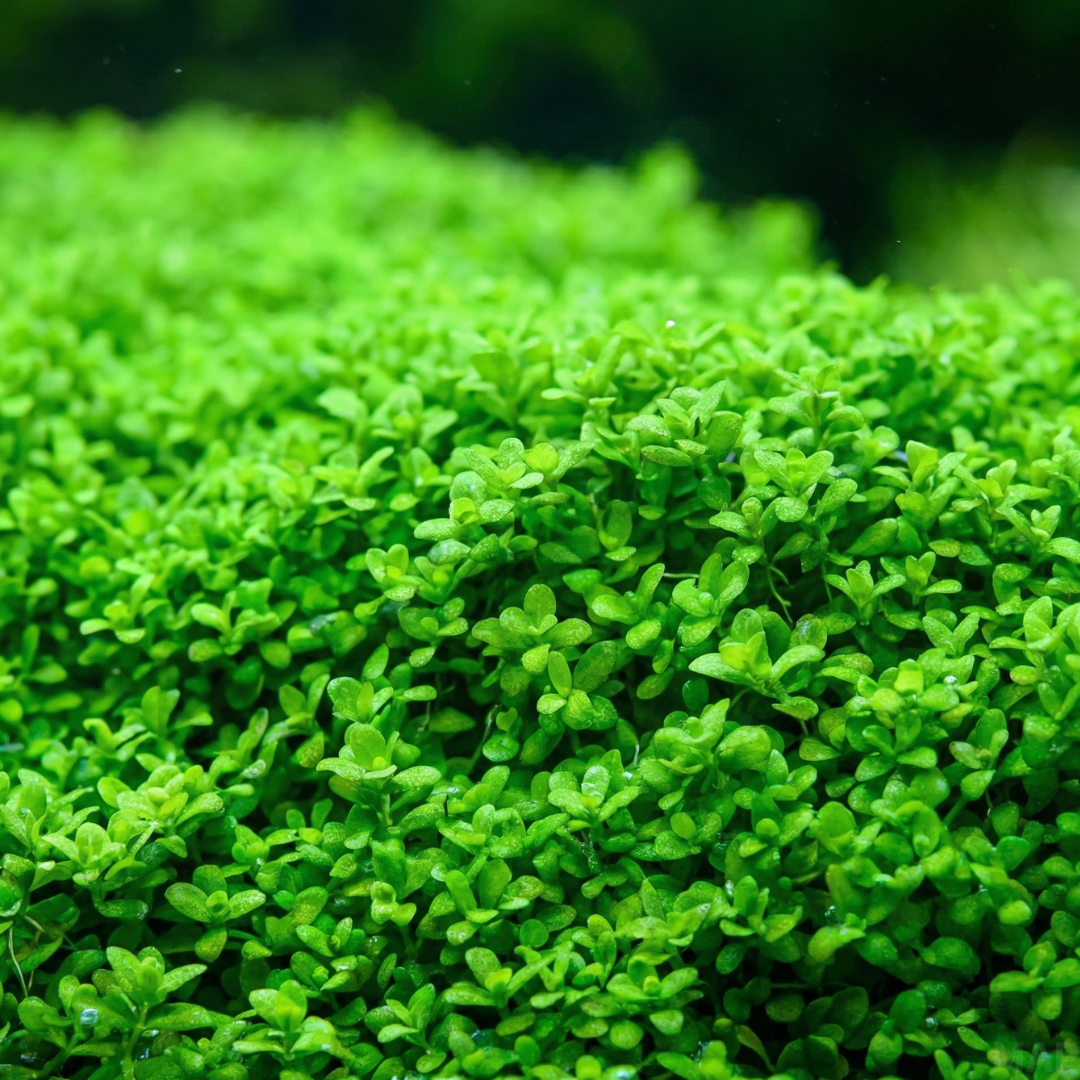
キューバパールグラスは、直径わずか3ミリメートルほどの極小の葉を持つ、世界最小クラスの水草です。2000年代初頭にアクアリウムの世界に登場して以来、その繊細で緻密な美しさから「緑の絨毯」を作るための最高峰として君臨し続けています。特に、限られたスペースで壮大な景色を描く「小型水槽(ナノ・アクアリウム)」や、石組みを中心とした「岩組(Iwagumi)」スタイルにおいて、この水草が作り出す遠近感は他の追随を許しません。育成には強い光と二酸化炭素(CO2)が必須となるため、初心者にとっては高い壁を感じることもありますが、条件が整った時に葉全体に真珠のような気泡をまとう姿は、その苦労を補って余りある感動を与えてくれます。Hemianthus callitrichoides ‘Cuba’, often referred to as “HC Cuba” or simply “Cuba Pearl Grass” in Japan, is one of the world’s smallest aquatic plants with leaves barely 3mm in diameter. Since its introduction in the early 2000s, it has reigned supreme as the ultimate choice for creating a lush “green carpet” in aquascaping. It is particularly valued in nano aquariums and “Iwagumi” styles, where its tiny leaves create an illusion of vast scale and depth that no other plant can match. While it poses a challenge for beginners due to its high demand for strong light and CO2, the sight of the plant covered in pearl-like oxygen bubbles makes every effort worthwhile.
非常に強い光が必要です。60cm規格水槽であれば、3000〜4500ルーメンクラスのLED照明が推奨されます。光が弱いと上に伸びてしまい、綺麗な絨毯になりません。Very high light is required. For a standard 60cm tank, LED lighting with 3000-4500 lumens is recommended. Insufficient light causes the plant to grow vertically instead of carpeting.
CO2添加 / CO2 Injection
必須です。1秒に1滴〜3滴程度、ドロップチェッカーが黄色〜黄緑色を示すレベルで多めに添加することで、健全な成長と美しい気泡が見られます。Mandatory. Injection of 1-3 bubbles per second is needed. Maintaining a CO2 level where the drop checker turns yellow to yellow-green ensures healthy growth and pearling.
水質 / Water Quality
水温は20〜26℃が適温で、28℃を超えると白化しやすくなるため、夏場はクーラーが必須です。pHは5.5〜7.5の弱酸性から中性を好みます。多くの水草と異なり、ある程度の硬度(GH 3-10)がある水を好むため、石組みレイアウトとの相性が抜群です。Temperature should be 20-26°C; a chiller is essential in summer as temperatures over 28°C can cause melting. It prefers slightly acidic to neutral pH (5.5-7.5). Unlike many aquatic plants, it favors moderately hard water (GH 3-10), making it perfect for layouts with stones (Iwagumi).
底床 / Substrate
栄養系ソイルが必須です。特に根が非常に短く抜けやすいため、表面には粒の細かい「パウダータイプ」や「スーパーパウダータイプ」のソイルを敷くことが成功の鍵です。Nutrient-rich aquarium soil is mandatory. Since the roots are very short and delicate, using “Powder Type” or “Super Powder Type” soil on the surface is key to preventing the plant from floating away.
レイアウト / Layout
配置 / Positioning
前景草として使用します。その極小の葉は、小さな石や流木さえも大きく見せる効果(ジオラマ効果)があり、空間を広く見せることに長けています。Foreground. Its tiny leaves create a sense of scale (diorama effect), making rocks and driftwood appear larger and the space more expansive.
注意点 / Precautions
初期の植栽時に非常に抜けやすいため、ピンセットで深く植え込むか、後述する「ミスト式」での立ち上げが推奨されます。成長が早いため、他の水草の影にならないよう注意が必要です。It floats very easily when first planted. Deep planting with tweezers or using the “Dry Start Method” is recommended. Ensure it is not shaded by other plants.
増やし方(トリミング) / Propagation & Trimming
増やし方 / Propagation
底床を這うようにランナー(匍匐茎)を伸ばして増殖します。日本で現在主流となっている「ミスト式(ドライスタート)」は、水を張らずに湿ったソイルの上で数週間育成し、根付いてから注水する方法で、浮き上がりを防ぎ爆発的に増やすことができる最良のメソッドです。It propagates by sending out runners across the substrate. The “Dry Start Method” (Mist Method), where plants are grown on moist soil without flooding for several weeks, is currently the mainstream technique in Japan to establish strong roots and prevent floating.
トリミング / Trimming
絨毯の厚みが3cmを超えてくると、下の層に光が当たらず枯れてしまい、浮力でマットごと剥がれてしまうことがあります。そうなる前に、ハサミを寝かせて底床ギリギリのラインで思い切って刈り込むことが長期維持のコツです。If the carpet gets thicker than 3cm, the lower layers will die from lack of light, causing the entire mat to lift off. Trim aggressively close to the substrate before this happens to maintain it long-term.
病気と対策(コケなど) / Pests & Algae
かかりやすい病気 / Common Issues
葉が細かいため、一度アオミドロなどの糸状ゴケが絡まると除去が困難です。また、鉄分不足による葉の白化(クロロシス)も起こりやすい症状です。Fine leaves make it difficult to remove filamentous algae once infested. Chlorosis (whitening of leaves) due to iron deficiency is also a common issue.
対策と予防 / Prevention
コケ対策にはヤマトヌマエビが有効ですが、根付く前に投入すると抜かれてしまうため注意が必要です。白化には液肥による鉄分の添加が効果的です。Amano shrimp (Yamato Numa Ebi) are effective against algae, but introduce them only after plants are firmly rooted. Iron supplements can cure chlorosis.
雑学と豆知識 / Trivia and Fun Facts
1. 発見の物語:乾季のキューバにて / 1. The Discovery: In the Dry Season of Cuba
この水草が世界に知られるようになったのは比較的最近のことです。2000年代初頭、デンマークの水草ファーム「トロピカ社」の創設者ホルガー・ヴィンデロフ氏がキューバ遠征を行った際、ハバナ東部の岩場の多い川で発見しました。発見当時、現地は「乾季」であり、この水草は水の中ではなく、水位が下がった川岸の岩や砂利の上で、青々とした群落を作っていたといいます。この「本来は水上でも旺盛に育つ」という性質が、後の育成技術に大きなヒントを与えました。This plant is a relatively recent addition to the hobby. In the early 2000s, Holger Windeløv, founder of Tropica, discovered it in a rocky river east of Havana, Cuba. It was the dry season, and the plants were thriving not underwater, but on rocks and gravel along the riverbanks. This semi-aquatic nature provided a crucial hint for future cultivation techniques.
2. なぜ「ミスト式」が最適解なのか? / 2. Why is the “Dry Start Method” the Best Solution?
キューバパールグラスの育成において、水を張らずに育てる「ミスト式」が推奨される理由は、前述の自生地の環境にあります。彼らは本来、雨季には水没し、乾季には水上で過ごす両生植物です。空気中では水中よりもはるかに効率的にCO2を取り込めるため、成長スピードが格段に上がります。さらに、水がないため「浮力」が働かず、その間に根を深く張ることができるのです。自然界の乾季の状態を水槽内で再現することで、最も難しい「初期の根張り」をクリアする、理にかなった手法と言えます。The reason the “Dry Start Method” is recommended lies in its native environment. Being amphibious plants that live underwater in the wet season and emersed in the dry season, they photosynthesize much more efficiently in air. Additionally, the lack of water buoyancy allows them to anchor their roots firmly without floating away. This method essentially replicates the Cuban dry season to overcome the difficult establishment phase.
まとめ / Conclusion
キューバパールグラスは、その育成の難しさから「高嶺の花」とされることもありましたが、組織培養などのクリーンな苗の普及や、ミスト式という画期的な育成法の確立により、現在では多くの人が楽しめる水草となりました。適切な環境下で無数の気泡をつけて輝く姿は、まさに水中の宝石です。ぜひこの小さな真珠たちが織りなす、極上の緑の絨毯に挑戦してみてください。While once considered a difficult “holy grail” plant, the availability of clean tissue culture cups and the establishment of the Dry Start Method have made Cuba Pearl Grass accessible to many. Seeing it glisten with countless oxygen bubbles under the right conditions is truly like watching underwater jewels. We encourage you to try creating your own exquisite green carpet with these tiny pearls.


 ポチップ
ポチップ


コメント