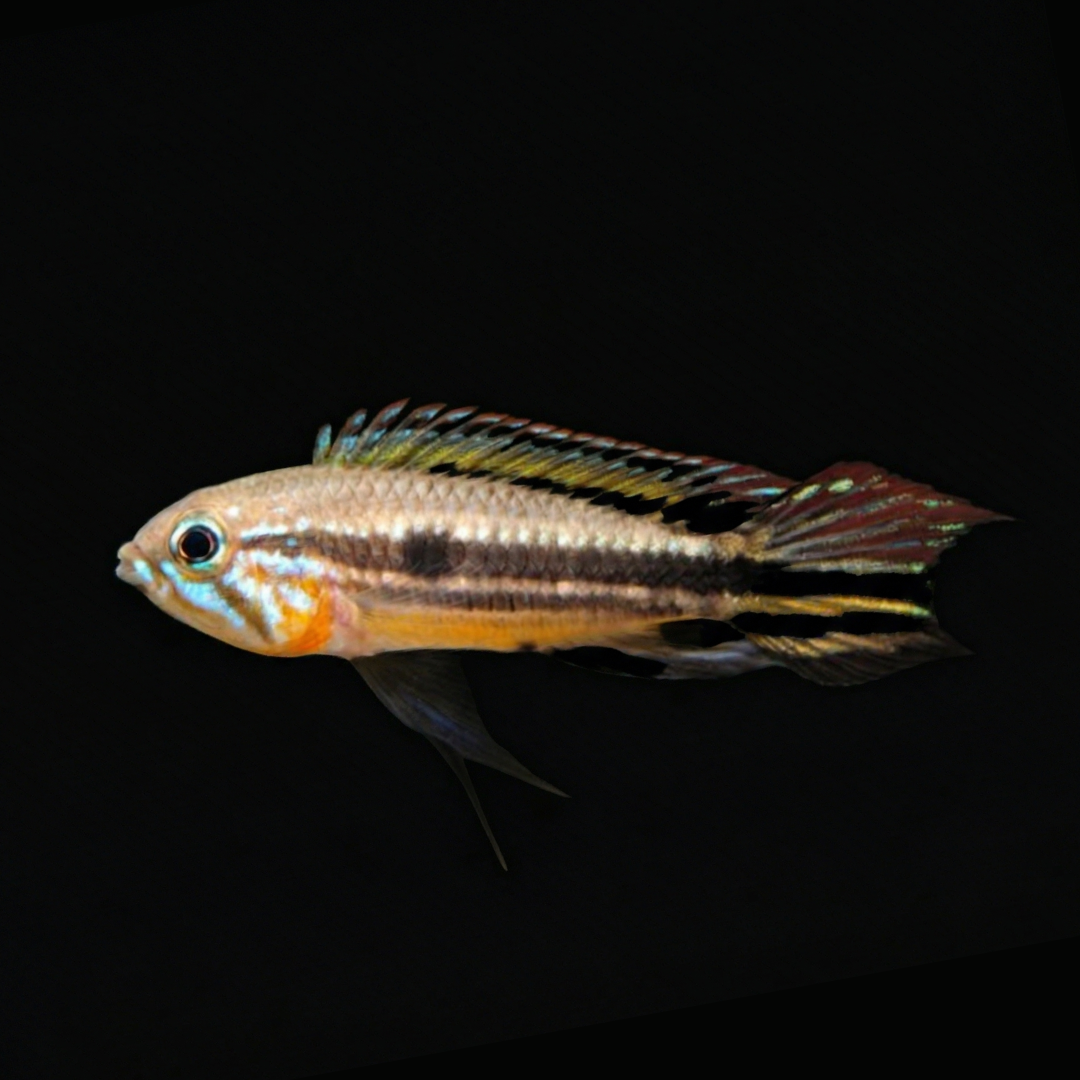
アピストグラマ・メンデジーは、南米アマゾンのネグロ川水系に生息する小型シクリッドの傑作です。その魅力は何といっても、野生味溢れる細身のシルエットと、オスが成魚になった際に上下に長く伸びる優雅なライヤーテール(リラ状の尾鰭)にあります。他の派手な改良品種とは一線を画す繊細な美しさを持ち、産地によって腹部が鮮やかなオレンジ色に染まる個体群が存在するなど、収集家を飽きさせない多様性も備えています。アピストグラマ属の中でも中・上級者向けのプレミアムな存在として、日本のアクアリストの間でも古くから愛され続けている特別な一種です。Apistogramma mendezi is a masterpiece of small cichlids inhabiting the Negro River system in the South American Amazon. Its primary appeal lies in its wild, slender silhouette and the elegant lyretail (lyre-shaped caudal fin) that develops in mature males. Distinct from flashy fancy varieties, it possesses a delicate beauty and offers diversity that keeps collectors engaged, such as populations with vibrant orange abdominal coloration depending on the locality. As a premium species within the genus Apistogramma, it has long been cherished by Japanese aquarists as a special fish for intermediate and advanced keepers.
基本情報 / Basic Information
学名 / Scientific Name
Apistogramma mendezi
通称 / Common Name
アピストグラマ・メンデジーApistogramma mendezi
分類 / Family
シクリッド科 ゲオファーグス亜科Cichlidae, Geophaginae
英名 / English Name
Mendez’s Dwarf Cichlid
分布 / Distribution
ブラジル、ネグロ川下流〜中流域(バルセロス、サンタイザベル、サンガブリエル等)Lower to middle Rio Negro basin, Brazil (Barcelos, Santa Isabel, São Gabriel, etc.)
最大体長 / Max Size
オス:約5〜6cm、メス:約4cmMales: approx. 5-6 cm, Females: approx. 4 cm
寿命 / Lifespan
約3〜5年Approximately 3 to 5 years
飼育環境 / Aquarium Environment
水槽サイズ / Tank Size
45cm規格水槽(約30リットル)以上推奨(1ペアの場合)Recommended 45cm standard tank (approx. 30 liters) or larger for one pair.
水温 / Temperature
23〜28度23 to 28 degrees Celsius
水質 / Water Quality
弱酸性〜強酸性(pH 4.5〜6.5)、超軟水(GH 0〜3)Slightly acidic to strongly acidic (pH 4.5 to 6.5), ultra-soft water (GH 0 to 3).
レイアウト / Layout
流木や落ち葉を配置し、細砂を敷いたブラックウォーター環境。シェルター(産卵ドーム)を複数用意。A blackwater environment with driftwood, leaf litter, and fine sand. Provide multiple shelters or spawning caves.
注意点 / Precautions
水質の急変に敏感です。特に導入時は慎重な水合わせを行い、清浄な水を維持してください。Sensitive to sudden water quality changes. Perform careful acclimation during introduction and maintain clean water.
本来は底生生物を捕食する肉食性です。栄養価の高い生餌を主体に与えることで、オスの発色とメスの抱卵を促進できます。Inherently carnivorous, preying on benthic organisms. Mainlining high-nutrition live foods promotes male coloration and female egg development.
性格と混泳 / Temperament and Tank Mates
性格 / Temperament
やや臆病ですが、同種間やペア内では縄張り意識を持ちます。Somewhat shy, but exhibits territorial behavior toward conspecifics and within the pair.
混泳の相性 / Compatibility
小型のカラシンやペンシルフィッシュ、お掃除役のコリドラスなどと混泳可能です。ただし、繁殖期は攻撃性が高まるため注意。Can be kept with small tetras, pencilfish, or bottom-cleaning Corydoras. However, be cautious as aggression increases during breeding.
病気と対策 / Diseases and Prevention
かかりやすい病気 / Common Diseases
エロモナス病、水カビ病、腹水病Aeromonas infection, water mold, and dropsy.
対策と予防 / Prevention
低pH環境では病原菌の繁殖が抑えられやすいですが、硝酸塩の蓄積には注意が必要です。定期的な少量の水換えが予防の基本です。Pathogen growth is inhibited in low pH environments, but nitrate accumulation must be monitored. Regular small water changes are essential for prevention.
増やし方(繁殖) / Breeding
雌雄の判別 / Sexing
オスは大きくヒレが伸長し色彩豊かです。メスは小ぶりで、繁殖期には全身が鮮やかな黄色に染まります。Males are larger with elongated fins and rich colors. Females are smaller and turn bright yellow during the breeding season.
繁殖形態 / Reproduction
基質産卵型。流木やシェルターの天井など、隠れた場所に卵を産み付けます。Substrate spawner. They lay eggs in hidden locations such as driftwood or the ceiling of a cave.
繁殖のポイント / Breeding Tips
pHを5.0付近まで下げ、導電率を低く保つことが産卵と孵化のトリガーになります。メスが稚魚を保護する間、オスを隔離するのが安全です。Lowering the pH to around 5.0 and maintaining low conductivity triggers spawning and hatching. It is safer to isolate the male while the female protects the fry.
雑学と豆知識 / Trivia and Fun Facts
1. 学名に刻まれた英雄「チコ・メンデス」の物語 / 1. The Story of the Hero “Chico Mendes” Carved in the Scientific Name
メンデジーという名前は、アマゾンの熱帯雨林保護に命を捧げたブラジルの環境保護活動家、フランシスコ・アウヴェス・チコ・メンデス氏への献名です。彼は乱開発から森を守るために戦い、1988年に凶弾に倒れました。この魚の学名は、彼の功績を永遠に記憶に留めるための科学者たちからの敬意の証なのです。The name mendezi is an eponym dedicated to Francisco Alves “Chico” Mendes, a Brazilian environmental activist who gave his life to protect the Amazon rainforest. He fought against deforestation and was assassinated in 1988. The scientific name of this fish is a testament of respect from scientists to keep his achievements in memory forever.
2. 国際ルールが生んだ綴りのパラドックス / 2. The Spelling Paradox Created by International Rules
実は本種の学名には面白い逸話があります。本来はポルトガル語の綴りに基づき「mendesi」とされるはずでしたが、原記載論文の校正ミスで「mendezi」と印刷されてしまいました。国際動物命名規約(ICZN)の厳格なルールにより、一度発表された綴りは修正が認められなかったため、現在もこの「誤った綴り」が正式な学名として使われ続けています。There is an interesting anecdote regarding the scientific name. Originally, it should have been “mendesi” based on Portuguese spelling, but it was printed as “mendezi” due to a proofreading error in the original description. Due to the strict rules of the ICZN, corrections to published spellings are often not permitted, so this “incorrect spelling” continues to be used as the official scientific name.
3. 聖地「サンタイザベル」と色彩の魔術 / 3. The Holy Land “Santa Isabel” and the Magic of Colors
日本のアクアリウム市場で最も注目されるのが、産地ごとの変異です。特に「サンタイザベル産」の個体群は、腹部やヒレに強烈なオレンジ色が発色する個体が多く、極めて高い人気を誇ります。バルセロス産の直線的なラインタイプに対し、サンタイザベル産はその鮮烈な色彩と迫力あるライヤーテールで、多くの愛好家を虜にしています。Locality variations are a major focus in the Japanese aquarium market. Populations from “Santa Isabel” are particularly popular due to individuals exhibiting intense orange coloration on their abdomens and fins. Compared to the linear line types from Barcelos, the Santa Isabel types captivate hobbyists with their vivid colors and powerful lyretails.
4. ネグロ川の極限環境に適応した生命力 / 4. Vitality Adapted to the Extreme Environment of the Negro River
生息地のネグロ川は、pHが4.0を下回ることもある「ブラックウォーター」の代表格です。水は紅茶のように濃い茶褐色で、ミネラルがほとんど含まれない超軟水です。このような極限環境で生き抜くために、メンデジーは独自の浸透圧調節能力や、酸性環境での繁殖戦略を身につけてきました。飼育下でその真の美しさを引き出すには、この野生の環境を再現することが鍵となります。Their habitat, the Negro River, is a prime example of “blackwater” where pH can drop below 4.0. The water is a dark brownish tea color and is ultra-soft with almost no minerals. To survive in such extreme environments, mendezi has developed unique osmoregulation abilities and reproductive strategies for acidic conditions. Recreating this wild environment is the key to bringing out their true beauty in captivity.
まとめ / Conclusion
アピストグラマ・メンデジーは、その洗練された姿と、背景にある重厚な歴史が相まって、飼育者に知的な喜びと視覚的な感動を与えてくれる魚です。ネグロ川の過酷な環境が生み出したこの美しさを水槽内で再現するためには、丁寧な水質管理と深い観察が必要ですが、それこそがアピストグラマ飼育の醍醐味とも言えるでしょう。Apistogramma mendezi is a fish that provides keepers with both intellectual joy and visual inspiration, thanks to its refined appearance and the profound history behind it. Recreating the beauty born from the harsh environment of the Negro River within an aquarium requires careful water quality management and deep observation, which is the true essence of keeping Apistogramma.
産地による細かな違いや、ペアが育む稚魚の成長過程など、一度飼育を始めればその奥深さに魅了されること間違いありません。ぜひ、あなたもこのネグロ川の至宝とともに、素晴らしいアクアリウムライフを歩んでみてください。With the subtle differences between localities and the rewarding process of watching fry grow under the care of a pair, there is no doubt you will be captivated by its depth once you begin keeping them. We hope you enjoy a wonderful aquarium life with this jewel of the Negro River.
Römer, U.(1994).
Apistogramma mendezi nov. sp. (Teleostei: Perciformes; Cichlidae): a new dwarf cichlid from the Rio Negro system, Amazonas state, Brazil.aqua, Journal of Ichthyology and Aquatic Biology, Vol. 1, No. 1, pp. 1-12.
※本種の原記載論文。
International Commission on Zoological Nomenclature (ICZN).(1999).
International Code of Zoological Nomenclature (4th Edition). Article 32.5 (Incorrect original spellings).※学名の綴りの修正(mendesiからmendeziへの不当な訂正の禁止)に関する法的根拠。
Römer, U.(2006).
Cichlid Atlas Vol. 2: Natural History of South American Dwarf Cichlids.
Mergus Verlag GmbH, Germany.
※生態、生息地の水質データ、地域変異に関する広範な記述。
2. 飼育・流通資料(Husbandry & Trade Resources)
Don Kinyon.“Breeding Apistogramma mendezi“.
Potomac Valley Aquarium Society (PVAS) / The Cichlid Room Companion.
※強酸性環境下における繁殖成功事例の記録。
Aqua Fauna / 有限会社アクア・フェアマ.ブラジル・アマゾン川流域における生体採集および輸入記録(バルセロス、サンタイザベル産等).※日本国内市場における産地別の流通インボイスおよび品質管理知見。



 ポチップ
ポチップ




コメント