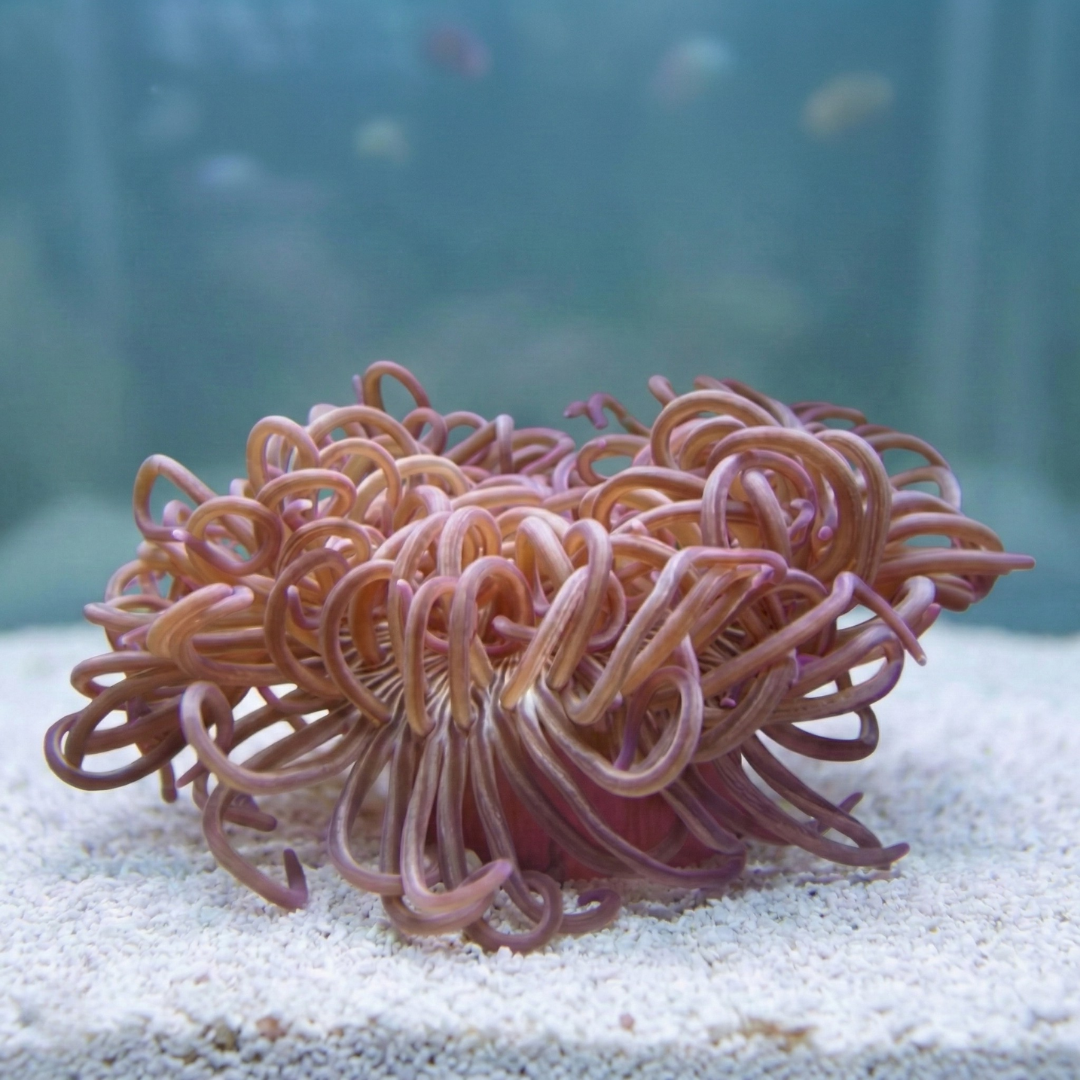
ロングテンタクルアネモネ(通称LTA)は、サンゴ礁周辺の砂泥底に深く身を潜めて暮らす、大型で優美な共生イソギンチャクです。その名の通り長くうねるような触手が特徴で、時折見せる螺旋状のねじれからコルクスクリューアネモネとも呼ばれます。彼らの最大の魅力は、砂中に隠された鮮やかな赤色の足盤と、クマノミ類との密接な共生関係にあります。岩礁を好む他の種とは異なり、砂地を生活圏とすることで独自のエコシステムを形成しており、観賞魚水槽においてもその独特な存在感は群を抜いています。The Long Tentacle Anemone (commonly known as LTA) is a large, elegant symbiotic anemone that lives deeply buried in the muddy sand bottoms surrounding coral reefs. As the name suggests, it is characterized by long, undulating tentacles, also known as the Corkscrew Anemone due to the occasional spiral twisting. Their greatest charm lies in the brilliant red pedal disc hidden beneath the sand and their close symbiotic relationship with anemonefish. Unlike other species that prefer rocky reefs, they form a unique ecosystem by inhabiting sandy areas, and their distinct presence in aquariums is unparalleled.
厚さ10cm~15cm以上のパウダー状サンゴ砂(底砂)が必須At least 10cm to 15cm of fine coral sand bed is essential
注意点 / Precautions
底砂が薄いと活着せず放浪し、水流ポンプに吸い込まれる事故が多発します。ガードを装着してください。If the sand is thin, it will wander without settling, often leading to accidents where it’s sucked into powerheads. Use guards.
週に2~3回、スポイトを用いて口元へ直接優しく与えます。魚による横取りに注意してください。Gently spot-feed using a dropper 2–3 times a week. Watch out for fish stealing the food.
性格と混泳 / Temperament and Tank Mates
性格 / Temperament
非常に好戦的。他のサンゴを毒で攻撃するため、周囲には広いスペースを確保します。Highly aggressive. They will sting other corals, so ensure ample space around them.
混泳の相性 / Compatibility
トウアカクマノミやハナビラクマノミ等のクマノミ類と最高の相性を見せます。Best compatibility with anemonefish such as Saddleback or Pink Skunk Clownfish.
病気と対策 / Diseases and Prevention
かかりやすい病気 / Common Diseases
細菌感染症、自家中毒(輸送ストレスによる)、高温による白化現象Bacterial infections, self-poisoning (due to shipping stress), bleaching from high temperatures
対策と予防 / Prevention
導入前の入念なトリートメントと、クーラーによる水温管理、定期的な換水が不可欠です。Thorough treatment before introduction, water temperature control with a chiller, and regular water changes are essential.
増やし方(繁殖) / Breeding
繁殖形態 / Reproduction
雌雄異体による放卵放精(有性生殖)Broadcast spawning via separate sexes (sexual reproduction)
繁殖のポイント / Breeding Tips
飼育下での無性分裂は行いません。水槽内での産卵は水質悪化を招くため、速やかな換水が必要です。They do not undergo asexual fission in captivity. Spawning in tanks causes water degradation, requiring immediate water changes.
雑学と豆知識 / Trivia and Fun Facts
1. 歴史的発見の舞台となったドレ湾 / 1. Dore Bay: The Stage of Discovery
このイソギンチャクの学名に含まれるドレエンシスという言葉は、19世紀のフランス探検船アストロラーベ号が、現在のインドネシア西パプア州にあるドレ湾で本種を初めて採集したことに由来しています。当時の剥製や図版にはわずか21本の触手しか描かれておらず、発見された当初は実際の姿よりもずっと控えめな存在だと思われていたという面白い歴史があります。The term doreensis in its scientific name originates from Dore Bay in present-day West Papua, Indonesia, where it was first collected by the 19th-century French expedition ship L’Astrolabe. Interestingly, original illustrations depicted it with only 21 tentacles, leading early scientists to believe it was much smaller and simpler than the mature specimens we know today.
2. なぜ見えない場所が赤いのか?足盤のミステリー / 2. Why the Hidden Red? The Pedal Disc Mystery
LTAを特徴づける鮮やかなオレンジから赤色の足盤ですが、実は自然界でも飼育下でも、この部分は完全に砂の中に埋まっており、外からは見ることができません。日光も届かない地中の部位にこれほど強烈な色素を持つ理由は、未だに完全な解明はされていませんが、泥の中に潜む有害な細菌から身を守るための化学的な防御反応の結果ではないかという説が有力視されています。The vibrant orange-to-red pedal disc is a hallmark of the LTA, yet in nature and captivity, this part is entirely buried in sand and invisible from the outside. The reason for such intense pigmentation in a subterranean area remains a mystery, but a leading theory suggests it may be a chemical defense against harmful bacteria residing in the sediment.
3. 砂泥底のオアシスとクマノミの共生戦略 / 3. An Oasis in the Mud: Symbiotic Strategies
見通しの良い砂泥底は、小魚にとって身を隠す場所が極めて少ない過酷な場所です。そこに根を下ろすLTAは、周囲のクマノミ類にとって唯一のシェルターであり、砂漠のオアシスのような役割を果たします。特にトウアカクマノミなどは、LTAのすぐそばに貝殻を運び込み、そこを産卵床にするという、砂泥底ならではの高度な共生行動を見せてくれます。Visible muddy bottoms offer very few hiding spots for small fish. An LTA rooted there acts as a vital shelter, resembling an oasis in a desert. Species like the Saddleback Clownfish exhibit advanced symbiotic behaviors, such as bringing seashells near the LTA to use as nesting sites, a strategy unique to these sandy habitats.
4. ウンバチイソギンチャクとの意外な共通点 / 4. Surprising Links to the Hell’s Fire Anemone
LTAは人間に対しても明確な毒性を持っており、素手で触れると皮膚の薄い部分ではピリピリとした痛みや発疹を引き起こします。近年の研究では、本種の持つ刺胞の構造が、人間を死に至らしめることもある強毒種ウンバチイソギンチャクと一部酷似していることが判明しています。そのため、メンテナンス時には必ず厚手のグローブを着用することが、プロのアクアリストの間では鉄則となっています。LTAs possess distinct toxicity to humans, causing stinging and rashes on sensitive skin. Recent studies show that their nematocyst structures share similarities with the highly venomous Hell’s Fire Anemone (Dofleinia armata). Therefore, wearing thick gloves during maintenance is an ironclad rule among professional aquarists.
まとめ / Conclusion
ロングテンタクルアネモネは、その美しさだけでなく、砂泥底という特異な環境に適応した驚くべき進化の歴史を秘めた生き物です。彼らを健やかに育てるための鍵は、何よりもその生態を尊重し、10cmを超える厚い砂底という安息の地を提供することに尽きます。適切な環境を整えれば、情熱的な赤い足盤を砂の深くに固定し、長く優美な触手をなびかせて水槽を彩ってくれるでしょう。The Long Tentacle Anemone is not only beautiful but also holds an amazing evolutionary history adapted to the unique environment of muddy sand bottoms. The key to raising them healthily lies above all in respecting their ecology and providing a sanctuary of thick sand bed exceeding 10cm. With the right environment, they will anchor their passionate red pedal disc deep in the sand and grace your tank with their long, elegant tentacles.
野生採取個体に100%依存しているLTAは、私たちアクアリストにとって、海の豊かさを象徴する貴重な存在です。彼らが見せてくれるクマノミとの絆や、日々の成長を通じて、海洋生態系の奥深さをより深く感じていただければ幸いです。一歩進んだ環境づくりを通じて、ぜひこの神秘的なイソギンチャクとの素晴らしい共生体験を楽しんでください。As LTAs depend 100% on wild collection, they are precious symbols of marine abundance for us aquarists. We hope that through their bond with clownfish and their daily growth, you will feel the profound depth of the marine ecosystem. Enjoy the wonderful symbiotic experience with this mysterious anemone by creating an advanced environment.

 ポチップ
ポチップ



コメント