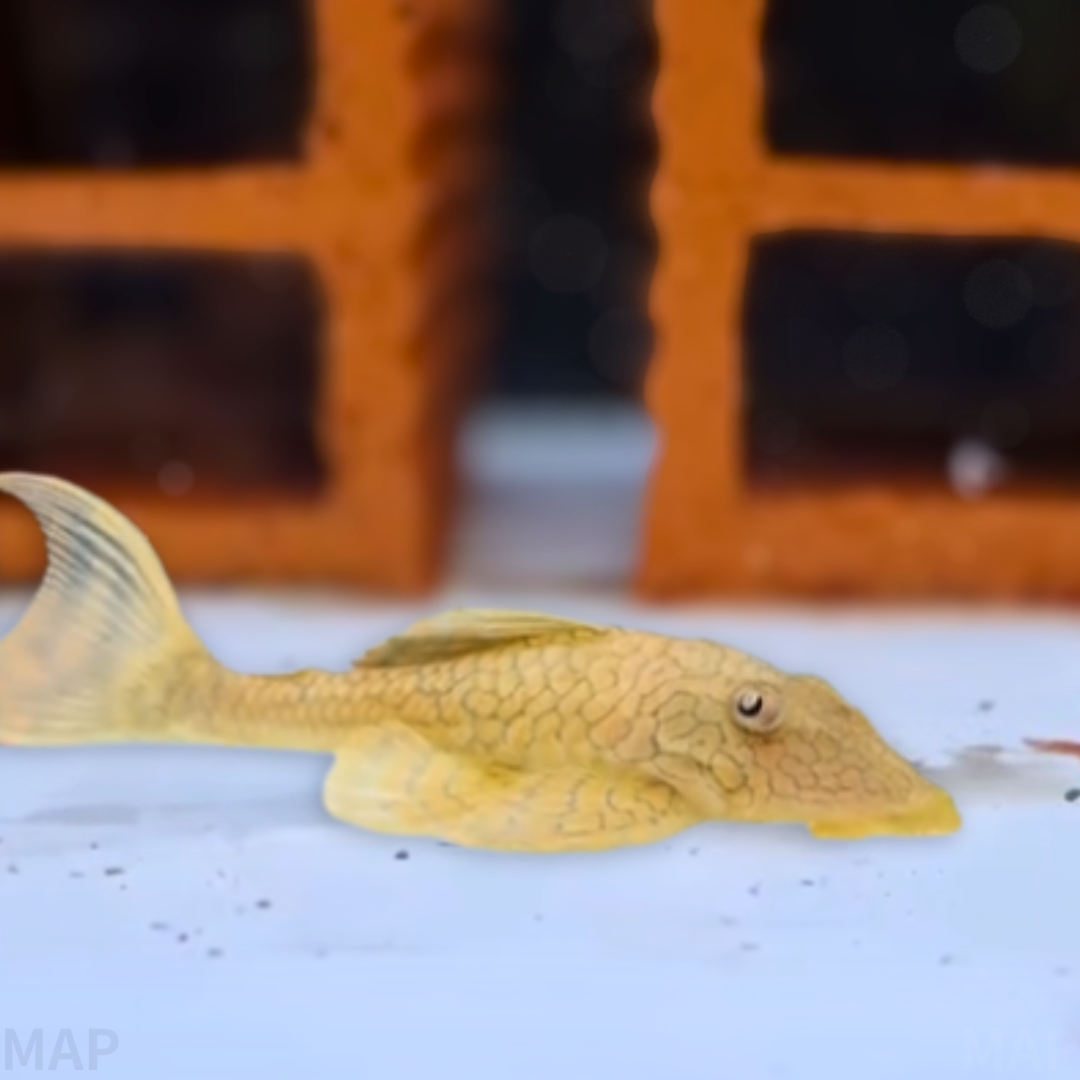
スネークスキンプレコ(L-037)は、ブラジルのトカンチンス川やシングー川を原産とする、芸術的な網目模様が特徴の大型プレコです。全身を覆う暗色のネットワーク模様が爬虫類の鱗(スネークスキン)を連想させることからこの名で親しまれています。ヒポストムス属の中でも特に美しく、観賞価値が高い一方で、過酷な低酸素環境でも「胃」を使って空気呼吸を行うことができるという驚異的な生理機能を持っています。幼魚のうちは10cm前後で流通しますが、成魚では30cmを超える堂々たる体格に成長し、大型水槽の主役や、大型肉食魚のタンクメイトとして根強い人気を誇ります。The Snakeskin Pleco (L-037) is a large Loricariid catfish native to the Tocantins and Xingu rivers in Brazil, characterized by its artistic reticulated pattern. Its name comes from the dark, intricate network covering its body, which resembles reptilian scales. While highly valued for its ornamental beauty within the Hypostomus genus, it also possesses the remarkable physiological ability to breathe air using its stomach in low-oxygen environments. Though often sold as 10cm juveniles, they can grow to over 30cm, making them impressive centerpieces or tank mates for large carnivorous fish in substantial aquaria.
10年 ~ 15年以上(適切な環境下では非常に長寿です)10 – 15 years or more (Very long-lived under proper care)
飼育環境 / Aquarium Environment
水槽サイズ / Tank Size
160リットル以上(90cm規格水槽)を推奨。成魚には200リットル以上(120cmワイド水槽)が理想的。Minimum 160 liters (90cm standard tank) recommended. 200 liters or more (120cm wide tank) is ideal for adults.
水温 / Temperature
22℃ ~ 28℃(活性と消化を助けるため26℃前後を維持するのが望ましい)22°C – 28°C (Maintaining around 26°C is preferred for optimal activity and digestion)
水質 / Water Quality
pH 6.5 ~ 7.7(弱酸性から弱アルカリ性まで幅広く適応しますが、急激な変化は避けてください)pH 6.5 – 7.7 (Adaptable from slightly acidic to slightly alkaline, but avoid sudden fluctuations)
レイアウト / Layout
複数の流木と岩を組み合わせ、十分な隠れ家を作ってください。底砂は細かな砂や角のない小石が適しています。Provide ample hiding spots using a combination of driftwood and rocks. Fine sand or smooth gravel is suitable for the substrate.
注意点 / Precautions
排泄量が多いため、強力な濾過システムと定期的な換水が不可欠です。また、飛び出し防止のために確実なフタを設置してください。Due to heavy waste production, powerful filtration and regular water changes are essential. Ensure a secure lid is in place to prevent jumping.
餌と給餌 / Feeding
餌の種類 / Diet
植物質を中心とした雑食性。沈下性のプレコ用人工飼料を主食とし、ズッキーニや茹でたほうれん草などの野菜も好みます。Omnivorous with a preference for plant matter. Sinking algae wafers should be the staple, supplemented with vegetables like zucchini or boiled spinach.
給餌のポイント / Feeding Tips
消灯後に活動が活発になるため、夜間の給餌が効果的です。消化を助けるために、常に齧ることができる流木を水槽内に用意してください。Since they are more active after lights out, nighttime feeding is effective. Always provide driftwood in the tank as they rasp on it to aid digestion.
性格と混泳 / Temperament and Tank Mates
性格 / Temperament
基本的には温和ですが、隠れ家を巡って同種や他の底生魚に対してテリトリー意識を主張することがあります。Generally peaceful, but can be territorial towards conspecifics or other bottom-dwellers over hiding spots.
混泳の相性 / Compatibility
中層を泳ぐカラシンや大型シクリッド、ポリプテルスなどと好相性です。底生魚を複数入れる場合は、個体数以上の隠れ家を用意してください。Compatible with mid-water characins, large cichlids, and Polypterus. When housing multiple bottom-dwellers, provide more hiding spots than the number of fish.
病気と対策 / Diseases and Prevention
かかりやすい病気 / Common Diseases
白点病、エロモナス感染症(腹水病)、導入直後の拒食による衰弱などが挙げられます。Common issues include Ich (white spot disease), Aeromonas infections (dropsy), and weakness due to anorexia during initial acclimatization.
対策と予防 / Prevention
導入時の丁寧な水合わせと、高水温・高酸素状態の維持が予防に繋がります。拒食を防ぐため、入荷直後の個体は慎重にトリートメントしてください。Careful acclimatization during introduction and maintaining high temperature and high oxygen levels help prevention. Treat new arrivals carefully to avoid stress-induced anorexia.
増やし方(繁殖) / Breeding
繁殖形態 / Reproduction
基質産卵型。自然界では河川の土手などにオスが掘った深い巣穴の中に産卵し、オスが卵や稚魚を保護します。Substrate spawner. In the wild, they spawn in deep burrows excavated by males in riverbanks, where the male guards the eggs and fry.
繁殖のポイント / Breeding Tips
水槽内での繁殖は極めて難易度が高いです。圧倒的な底面積を持つ大型水槽を用意し、雨季を再現するための大量の換水がトリガーとなります。Breeding in aquaria is extremely difficult. It requires a very large tank with significant floor space, and massive water changes to simulate the rainy season act as a trigger.
雑学と豆知識 / Trivia and Fun Facts
1. 胃を「肺」のように使う驚異の空気呼吸 / 1. Remarkable Air-Breathing via the Stomach
アマゾン川の乾季は、水位が下がり酸素が極端に不足する過酷な環境に変わります。スネークスキンプレコはこのピンチを乗り切るため、なんと「胃」を呼吸器官として進化させました。彼らの胃壁は非常に薄く、毛細血管が肺のように張り巡らされています。水面の空気を飲み込み、胃でガス交換を行うこの能力により、他の魚が死に絶えるような酸欠状態でも生き延びることができるのです。During the Amazon’s dry season, water levels drop, creating severe oxygen depletion. To survive, the Snakeskin Pleco evolved its stomach into a respiratory organ. The stomach wall is extremely thin and densely packed with capillaries, functioning much like a lung. By swallowing air from the surface and exchanging gases in the stomach, they can survive in hypoxic conditions that would be fatal to most other fish.
2. 染色体から見える「生きた化石」の一面 / 2. A Glimpse of a “Living Fossil” in Chromosomes
近年の遺伝学的研究により、スネークスキンプレコはヒポストムス属の中でも比較的原始的な特徴を残していることが分かりました。多くの近縁種が進化の過程で複雑に染色体を変化させているのに対し、本種は祖先的な特徴を色濃く保持しています。その幾何学的な模様の裏側には、アマゾン水系の悠久の歴史が刻まれているのです。Recent genetic studies reveal that the Snakeskin Pleco retains relatively primitive characteristics within the Hypostomus genus. While many related species have undergone complex chromosomal changes during evolution, this species maintains many ancestral traits. Beneath its geometric patterns lies the long, enduring history of the Amazon river system.
3. 「泥の巣穴」を再現する繁殖の夢 / 3. The Dream of Breeding: Replicating the Mud Burrow
本種の繁殖が難しい最大の理由は、オスが粘土質の岸辺に深い穴を掘るという習性にあります。水槽というガラスの箱の中でこの「泥の巣穴」を再現するのは至難の業ですが、海外では2メートル級の超大型水槽で200匹以上の稚魚を得た成功例もあります。そのブリーダーは、雨季の増水を模した大規模な換水によって、プレコたちの野生の本能を呼び覚ましました。The main reason breeding is so difficult is the male’s habit of digging deep burrows in clay riverbanks. Replicating this “mud burrow” in a glass box is a monumental task, yet there are successful reports from abroad involving massive 2-meter tanks resulting in over 200 fry. The breeder triggered their wild instincts by performing massive water changes that mimicked the rising waters of the rainy season.
まとめ / Conclusion
スネークスキンプレコは、その美しい網目模様だけでなく、過酷な自然環境に適応した驚くべき生命力を持つ魚です。30cmを超える大型種であるため、終生飼育には相応の設備と覚悟が必要ですが、それに見合うだけの圧倒的な存在感と、観察の楽しさを与えてくれます。The Snakeskin Pleco is a fish of remarkable resilience, adapted to harsh natural environments, and possesses a stunning reticulated beauty. As a large species exceeding 30cm, long-term care requires appropriate equipment and commitment, but in return, it offers an overwhelming presence and immense joy in observation.
また、彼らの持つ高い生存能力は、一度日本の河川に放流されると在来の生態系を脅かす脅威にもなり得ます。アクアリストとしての誇りを持ち、このアマゾンの宝石を最後まで責任を持って慈しむことが、素晴らしいアクアリウム文化を未来へ繋ぐことに他なりません。Furthermore, their high survival capability means they could threaten native ecosystems if released into Japanese rivers. Being a responsible aquarist and cherishing this Amazonian gem until the very end is essential to preserving a wonderful aquarium culture for the future.
Seidel, I. (2008). Back to Nature Guide to L-catfishes. (Lナンバーおよび飼育環境に関する基礎資料)
Armbruster, J. W. (1998). “Phylogenetic relationships of the suckermouth armoured catfishes (Loricariidae) with emphasis on the Hypostominae and the Ancistrinae”. (ヒポストムス亜科の系統と生理機能に関する研究)
Silva, E. B., et al. (2014). “Cytogenetic analysis of Hypostomus faveolus”. (染色体および遺伝学的特徴に関する知見)
Nelson, J. S. (2006). Fishes of the World. (ナマズ目ロリカリア科の分類および呼吸生理に関する一般知見)



 ポチップ
ポチップ



コメント