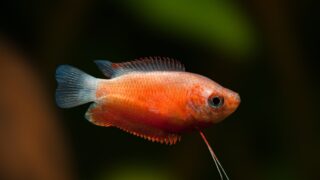
ファイヤーレッドレインボー(学名:シュードムギル・ルミナタス)は、2011年頃に観賞魚市場に登場し、瞬く間に世界中のアクアリストを虜にした超小型の美魚です。その名の通り、燃え盛るような赤からオレンジ色の鮮やかな体色が最大の特徴で、背中には宝石のネオンブルーを思わせる輝かしいラインが走ります。パプアニューギニアの限られた地域にのみ生息する希少な存在であり、水草の緑に映えるその姿は、まさに水槽内の主役を飾るにふさわしい輝きを放ちます。かつては正体不明の美魚として注目を集めましたが、現在は独立した新種として、その生態や飼育法が広く研究されています。The Fire Red Rainbowfish (Scientific name: Pseudomugil luminatus) is a stunningly small fish that appeared in the market around 2011 and instantly captivated aquarists worldwide. As its name suggests, its most distinctive feature is its fiery red to orange body, accented by a brilliant neon blue line along the back. Found only in limited areas of Papua New Guinea, its presence stands out beautifully against green aquatic plants, making it a perfect centerpiece for any tank. Once a mysterious beauty, it is now recognized as a distinct new species, with its ecology and care requirements well-studied.
基本情報 / Basic Information
学名 / Scientific Name
Pseudomugil luminatus
通称 / Common Name
ファイヤーレッドレインボー、ティミカレインボー、シュードムギル・ルミナタスFire Red Rainbowfish, Timika Rainbow, Pseudomugil luminatus
分類 / Family
トウゴロウイワシ目シュードムギル科Atheriniformes, Pseudomugilidae
英名 / English Name
Red Neon Blue-eye
分布 / Distribution
インドネシア(パプア州ティミカ近郊)Vicinity of Timika, Papua Province, Indonesia
最大体長 / Max Size
2.5cm~3.8cm2.5cm – 3.8cm (Approx. 1 – 1.5 inches)
寿命 / Lifespan
1年~2年程度Approx. 1 – 2 years
飼育環境 / Aquarium Environment
水槽サイズ / Tank Size
45cm規格水槽(約30L)以上。群れで泳がせる場合は60cm規格水槽がおすすめです。45cm standard tank (approx. 30L) or larger. A 60cm tank is recommended for group housing.
水温 / Temperature
23℃~28℃(四季を通じてヒーターによる温度管理が必要です)23°C – 28°C (Heater control is necessary year-round)
水質 / Water Quality
pH 6.0~7.5(弱酸性から中性のブラックウォーター環境が理想です)pH 6.0 – 7.5 (Ideally a blackwater environment)
レイアウト / Layout
水草が密生した茂みや、水面に根が垂れ下がる浮き草を配置すると落ち着きやすくなります。Dense plants and floating plants with dangling roots help provide a calm environment.
注意点 / Precautions
非常にデリケートなため、水合わせは点滴法などで時間をかけて慎重に行いましょう。They are very delicate; acclimation should be done slowly using the drip method.
餌と給餌 / Feeding
餌の種類 / Diet
人工飼料(極小粒)、ブラインシュリンプ、ミジンコなど。Micro pellets, Brine shrimp, Daphnia, etc.
給餌のポイント / Feeding Tips
口が小さいため、細かな餌を選んでください。色揚げ成分を含む餌は自慢の赤色を美しく保ちます。Choose fine food due to their small mouths. Color-enhancing food helps maintain their vibrant red.
性格と混泳 / Temperament and Tank Mates
性格 / Temperament
温和で争いを好みません。オス同士は鰭を広げて美しさを競いますが、深刻な喧嘩には至りません。Peaceful and non-aggressive. Males display to each other but rarely cause harm.
混泳の相性 / Compatibility
同じサイズの小型テトラや、底層で生活する大人しいお掃除役の魚との相性が抜群です。Great compatibility with small tetras and peaceful bottom-dwelling utility fish.
病気と対策 / Diseases and Prevention
かかりやすい病気 / Common Diseases
白点病、尾腐れ病(水質悪化や導入時のストレスが引き金となります)Ich (White spot disease), Tail rot (Triggered by poor water quality or stress)
対策と予防 / Prevention
水換えを定期的かつ少量ずつ行い、環境の急変を避けることが最大の予防策です。Regular, small water changes to avoid sudden environmental shifts are the best prevention.
増やし方(繁殖) / Breeding
繁殖形態 / Reproduction
卵生。毎日数個ずつの卵をウィローモスなどの細かな水草に産み付けます。Egg-layer. Lays a few eggs daily on fine plants like Java moss.
繁殖のポイント / Breeding Tips
食卵性が非常に高いため、繁殖を狙うなら産卵床を毎日チェックし、卵を隔離して孵化させるのが近道です。Due to high egg predation, check spawning mops daily and isolate eggs for hatching.
雑学と豆知識 / Trivia and Fun Facts
1. 「ティミカ」という名のブランド / 1. The “Timika” Brand Name
ファイヤーレッドレインボーは、別名「ティミカ」とも呼ばれます。これはインドネシアのティミカという限られた採取地に由来しています。学名が正式に決まる前から、この産地名が品質と美しさの象徴として愛好家の間で定着しました。現在でも、こだわりのあるショップでは産地への敬意を込めてこの名称が使われています。This species is often called “Timika,” named after its specific collection site in Timika, Indonesia. Before its scientific name was finalized, this location name became a symbol of quality and beauty among enthusiasts. Even today, specialized shops use this name as a mark of respect for its origins.
2. ネオンブルーの閃光が持つ意味 / 2. The Meaning of the Neon Blue Flash
暗めのブラックウォーターの中を泳ぐファイヤーレッドレインボーを観察すると、背中の青いラインがまるで発光しているかのように見えます。これは「ルミナタス(光り輝く)」という名の通り、生息地の薄暗い水中で仲間を識別したり、外敵から身を守るための進化の結果かもしれません。When observing them in dark blackwater, the blue line along their back appears to glow. As the name “luminatus” suggests, this may be an evolutionary adaptation to help identify mates or deter predators in their dim natural habitats.
3. ブリーダーを悩ませる「卵食い」の癖 / 3. The Challenge of Egg Predation
本種は、自分の卵や稚魚を積極的に食べてしまう「食卵性」が特に強いことで知られています。この困った癖があるため、水槽内で自然に数が増えることは稀です。しかし、その分、飼育者が卵をピッキングして丁寧に育て上げた時の喜びは、他では味わえない格別のものになります。Known for their strong egg predation, they often eat their own spawn. Because of this habit, natural population growth within a tank is rare. However, the joy of hand-raising fry from collected eggs is uniquely rewarding for dedicated breeders.
4. 水温がオスとメスの比率を決める? / 4. Does Water Temperature Decide Gender?
「購入した個体がすべてオスだった」という経験はありませんか?ファイヤーレッドレインボーには温度依存性性決定(TSD)の傾向があり、高水温で育てるとオスが生まれやすくなると考えられています。メスを狙って産み分けるには、孵化期の水温管理が鍵を握るという、科学的な挑戦が楽しめます。Ever wondered why all your fish turned out to be male? This species exhibits Temperature-dependent Sex Determination (TSD), where high temperatures often lead to a male-dominated population. Controlling temperature during incubation is the key to achieving a balanced gender ratio.
5. 水槽の中のサンクチュアリ / 5. A Sanctuary in Your Aquarium
原産地の環境が危機に瀕している今、私たちがファイヤーレッドレインボーを大切に飼育することは、単なる趣味以上の意味を持ちます。養殖技術を発展させ、この美しい種を絶やさないように努めることは、言わばアクアリストが作る「種の避難所」であり、自然界へのささやかな貢献でもあるのです。With their natural habitats under threat, keeping these fish responsibly carries deep meaning. Developing breeding techniques to ensure the survival of this beautiful species creates a “sanctuary” within the hobby and serves as a small contribution to global conservation.
まとめ / Conclusion
ファイヤーレッドレインボーは、その衝撃的な美しさでアクアリウム界に旋風を巻き起こした、類まれなる小型魚です。燃えるような赤と、それを引き立てるネオンブルーの閃光は、一度目にすれば決して忘れることはできません。The Fire Red Rainbowfish is an extraordinary small fish that took the aquarium world by storm with its shocking beauty. Once you witness its fiery red hues and contrasting neon blue flashes, you will never forget them.
デリケートな一面もありますが、その分だけ飼育者の情熱にしっかりと応えてくれる魚でもあります。ティミカの湿地に思いを馳せながら、この「光を灯す」小さな命を、あなたの水槽で大切に育んでみませんか。While they have a delicate side, they reward the passion of their keepers tenfold. Why not bring this “illuminating” life into your tank while reflecting on the wetlands of Timika and cherish them for years to come?
・Allen, G. R., Unmack, P. J., & Hadiaty, R. K. (2016). Pseudomugil luminatus, A New Species of Blue-eye (Teleostei: Pseudomugilidae) From Southern New Guinea, With Notes on P. gertrudae. Fishes of Sahul.
・Campanella, D., et al. (2015). Temperature-dependent sex determination in the Pejerrey Odontesthes bonariensis. (トウゴロウイワシ目における温度依存性性決定の基礎研究)
・IUCN Red List of Threatened Species (シュードムギル科の保全状況および評価データ)



 ポチップ
ポチップ



コメント