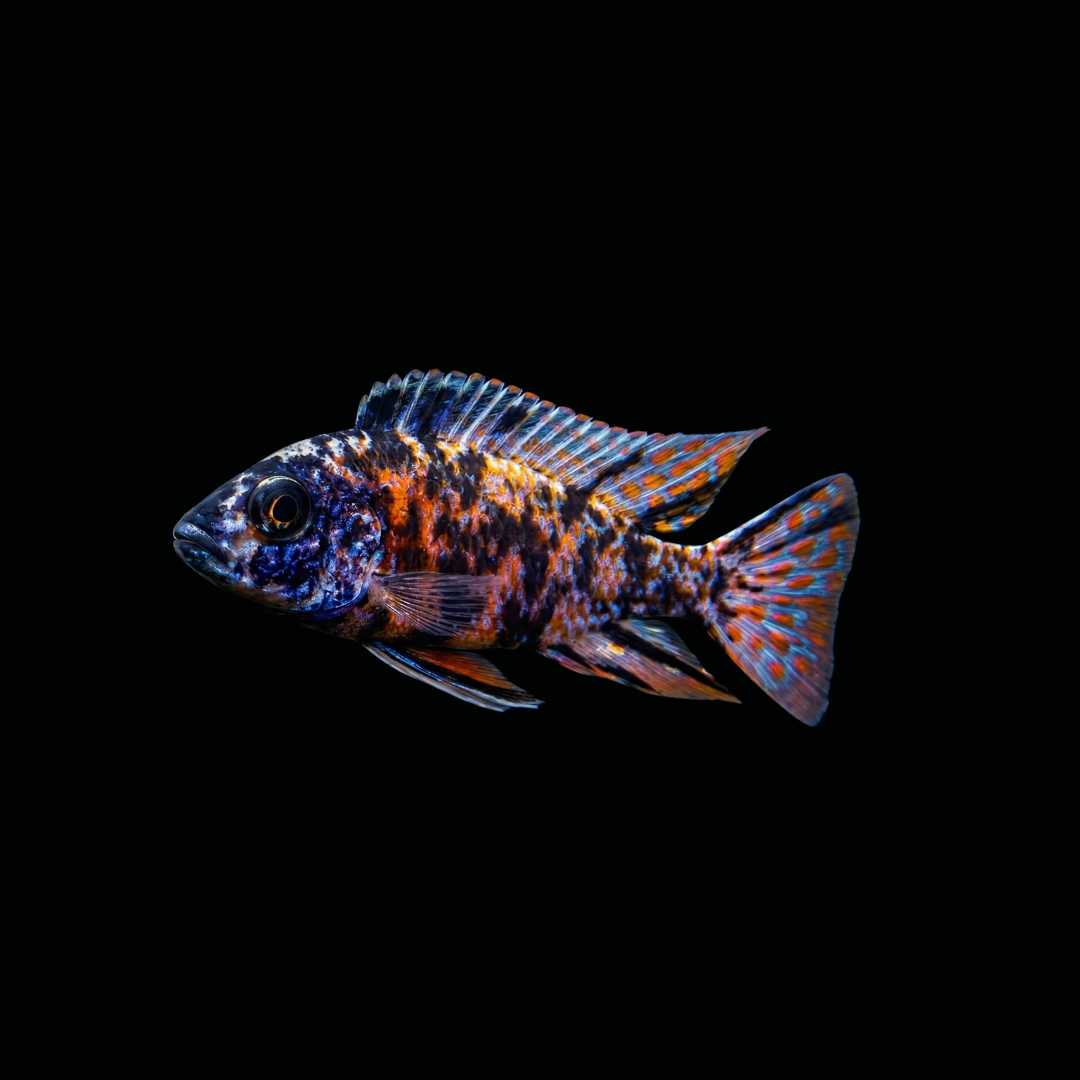
トリカラーピーコックシクリッドは、アフリカ・マラウイ湖産のシクリッドをベースに人工的に作出されたハイブリッド系統です。最大の特徴は「OB(オレンジ・ブロッチ)」と呼ばれる不規則な斑紋で、シルバーや淡いブルーの体色を背景に、鮮烈なレッドやブラックが混じり合うその姿は「三色(トリカラー)」の名に相応しい美しさを誇ります。ピーコックシクリッド(アウロノカラ属)の優雅なフォルムを維持しながら、岩礁性に生息するムブナ系統の力強い色彩遺伝子を取り入れており、観賞価値が極めて高いことから世界中のアクアリストに愛されています。The Tricolor Peacock Cichlid is an artificial hybrid strain based on cichlids from Lake Malawi, Africa. Its most striking feature is the irregular pattern known as “OB” (Orange Blotch), where vivid reds and blacks mix against a background of silver or pale blue, living up to its “Tricolor” name. While maintaining the elegant form of the Peacock Cichlids (Aulonocara genus), it incorporates the powerful color genes of the rock-dwelling Mbuna lineage, making it a highly prized species for aquarists worldwide due to its exceptional ornamental value.
基本情報 / Basic Information
学名 / Scientific Name
Aulonocara sp. “OB” (Hybrid)
通称 / Common Name
トリカラーピーコック、OBピーコックTricolor Peacock, OB Peacock
分類 / Family
シクリッド科アウロノカラ属(人工交雑種)Cichlidae, Genus Aulonocara (Hybrid)
英名 / English Name
OB Peacock Cichlid, Marmalade Cat
分布 / Distribution
改良品種(原種はアフリカ・マラウイ湖)Captive bred (Ancestors from Lake Malawi, Africa)
最大体長 / Max Size
約12cm 〜 15cmApprox. 12cm – 15cm (4 – 6 inches)
寿命 / Lifespan
約5年 〜 8年Approx. 5 – 8 years
飼育環境 / Aquarium Environment
水槽サイズ / Tank Size
90cm規格水槽(約200L)以上推奨。混泳させる場合は120cmワイド水槽(約280L以上)が理想的です。Recommended 90cm standard tank (approx. 200L) or larger. For community tanks, a 120cm wide tank (approx. 280L) is ideal.
水温 / Temperature
24℃ 〜 28℃24°C – 28°C (75°F – 82°F)
水質 / Water Quality
pH 7.8 〜 8.6(弱アルカリ性の硬水)。アラゴナイトサンドなどの使用が有効です。pH 7.8 – 8.6 (Alkaline hard water). Use of aragonite sand is effective.
レイアウト / Layout
滑らかな岩を積み上げた洞窟や、底砂(細かな砂)を配置した「中間帯」の再現。Reproduction of “intermediate zones” with smooth rock caves and fine sand substrate.
注意点 / Precautions
急激な水質変化(特に酸性化)は粘膜保護機能を低下させるため、定期的な換水とバッファー剤の維持が不可欠です。Sudden changes in water quality, especially acidification, can damage mucus protection, so regular water changes and pH buffering are essential.
餌と給餌 / Feeding
餌の種類 / Diet
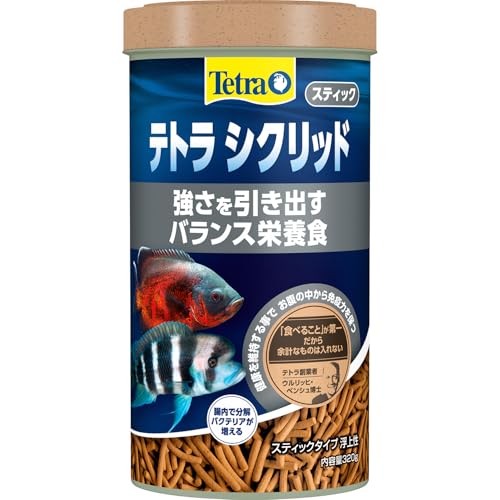
シクリッド専用ペレット、イサザアミ、ブラインシュリンプ、赤虫など。Cichlid pellets, mysis shrimp, brine shrimp, and bloodworms.
給餌のポイント / Feeding Tips
「サンドシフティング」を行うため沈下性の餌を好みます。赤や青の発色を助けるカロテノイドを含む餌が推奨されます。Prefers sinking food due to “sand sifting” behavior. Foods containing carotenoids are recommended to enhance red and blue coloration.
性格と混泳 / Temperament and Tank Mates
性格 / Temperament
やや攻撃的。ムブナの気質を継いでおり、縄張り意識が強い傾向にあります。Semi-aggressive. Inherits Mbuna temperament and tends to be territorial.
混泳の相性 / Compatibility
同系色の魚や温和なハプロクロミス類とは争いやすいため注意。計画的な過密飼育で攻撃性を分散させる手法も一般的です。Caution is needed with similarly colored fish or peaceful Haplochromis. Overcrowding techniques are sometimes used to disperse aggression.
病気と対策 / Diseases and Prevention
かかりやすい病気 / Common Diseases
マラウイ・ブルート(腹水病)、白点病。Malawi bloat (abdominal dropsy), Ich (White spot disease).
対策と予防 / Prevention
哺乳類由来の脂質(牛ハツなど)を避け、高タンパクかつ消化に良い餌を与えます。適切なpH維持が最大の予防策です。Avoid mammalian lipids (like beef heart) and provide high-protein, easily digestible food. Maintaining proper pH is the best prevention.
増やし方(繁殖) / Breeding
繁殖形態 / Reproduction
マターナル・マウスブルーダー(母親による口内保育)。Maternal mouthbrooder (mother broods eggs and fry in her mouth).
繁殖のポイント / Breeding Tips
産卵後、卵を咥えたメスを隔離するか、2-3週間後に「ストリッピング」を行い稚魚を回収することで生存率を高められます。Isolate the holding female or use “stripping” techniques after 2-3 weeks to collect fry and increase survival rates.
雑学と豆知識 / Trivia and Fun Facts
1. OB遺伝子とW染色体の神秘 / 1. The Mystery of OB Genes and W-Chromosomes
この魚の最大の特徴である斑紋(OB)は、元々はムブナ(岩礁性シクリッド)のメスにのみ稀に現れる突然変異でした。この遺伝子はメスを決定する「W染色体」に連鎖していると考えられていましたが、異属間交雑の過程でオスにもこの美しい模様が発現するようになり、現在のトリカラー系統が確立されました。The “OB” pattern, the defining feature of this fish, was originally a rare mutation found only in female Mbuna. This gene was thought to be linked to the female-determining “W-chromosome,” but through intergeneric hybridization, males began to express this beautiful pattern, leading to the established Tricolor lineage.
2. 深海から受け継いだ視覚能力 / 2. Visual Abilities Inherited from the Deep
ピーコックシクリッドの祖先はマラウイ湖の水深50m以深という青色光しか届かない暗所に適応しており、水晶体の透明度を調整する特殊な遺伝子(BFSP2)を持っています。これにより、水槽内の限られた光量下でも驚くほど鮮やかに仲間や敵の色を識別することが可能です。Peacock Cichlids’ ancestors adapted to the dark, blue-lit depths of Lake Malawi (over 50m). They possess a unique gene (BFSP2) that adjusts lens transparency, allowing them to identify colors of mates and rivals vividly even under limited aquarium lighting.
3. 「マーマレード・キャット」の愛称 / 3. The “Marmalade Cat” Nickname
海外では、この独特なオレンジと黒の斑点模様を「マーマレード・キャット」と呼ぶことがあります。これは単に見た目が似ているだけでなく、シクリッド愛好家の間で親しまれてきた歴史的な愛称であり、人工交雑種でありながら独自のブランド価値を築いてきた証でもあります。Abroad, this unique orange and black spotted pattern is sometimes called “Marmalade Cat.” This is not just because of its appearance, but a historical nickname cherished by cichlid enthusiasts, proving its established brand value despite being a hybrid.
4. 流通名に潜む南米産との混同 / 4. Confusion with South American Species in Trade
日本の市場では稀に「リオ・グランデ・ド・スル産」といった南米の地名が付けられて販売されるデータミスが見受けられます。しかし本種は100%アフリカ起源の交雑種であり、南米には生息していません。これは「ピーコックバス」などの南米産種と名称が混同された結果であり、正確な知識を持つことが正しい飼育への第一歩となります。In the Japanese market, data errors occasionally list these fish as being from South American locations like “Rio Grande do Sul.” However, this species is 100% African in origin. This confusion arises from names like “Peacock Bass” from South America; having accurate knowledge is the first step toward proper care.
まとめ / Conclusion
トリカラーピーコックシクリッドは、人工的な交配によって生まれたハイブリッド種でありながら、その三色の美しさと優雅な泳ぎで、マラウイ湖の宝石としての魅力を存分に体現しています。ムブナ譲りの強い気質を持つため、混泳や水槽サイズには細心の注意が必要ですが、適切な環境下で見せるその発色は、他のどんな魚にも代えがたい圧倒的な存在感を放ちます。The Tricolor Peacock Cichlid, though a man-made hybrid, fully embodies the charm of a Lake Malawi jewel with its tricolor beauty and graceful swimming. Due to its strong Mbuna-inherited temperament, careful attention to tank mates and aquarium size is necessary. However, under the right conditions, its coloration emits an overwhelming presence that is irreplaceable by any other fish.
飼育の要は、弱アルカリ性の高いpHを維持すること、そしてハイブリッド特有の性格を理解したコミュニティ管理にあります。口内保育というドラマチックな繁殖行動も観察しやすく、アクアリウムの奥深さを教えてくれる最高のパートナーとなってくれることでしょう。The key to successful keeping lies in maintaining a high alkaline pH and managing the community with an understanding of its unique hybrid temperament. With its dramatic maternal mouthbrooding behavior being easy to observe, this fish will surely become a wonderful partner that teaches the profound depths of the aquarium hobby.
Roberts, R. B., Ser, J. R., Kocher, T. D. (2009). “A genetic basis for the sexually dimorphic coloration of cichlid fishes.” Nature, 462(7275), 915-919. doi:10.1038/nature08572(OB遺伝子のW染色体連鎖に関する研究)
Brawand, D., et al. (2014). “The genomic substrate for adaptive radiation in African cichlid fish.” Nature, 513(7518), 375-381. doi:10.1038/nature13726(マラウイ湖産シクリッドの視覚遺伝子進化を含むゲノム解析)
Marmor, M. F. (2006). “The Eye of the Beholder: Spectrum and Lightness in the Retina”. The Lancet.(網膜におけるスペクトル感度と色彩知覚の生物学的基礎)
2. ブリーディング史・実務ガイドライン
Goliad Farms (2020). “Selective Breeding and Population Dynamics of African Cichlids.”(コロニー管理における多雌少雄比の有効性に関する実証報告)
Pinkouski, H. & E. (Historical Records). “The origin of the Pink Peacock line and early OB mutations in captivity.”(タンジェリン・ピーコック等の系統作出に関する歴史的記録資料)
Rubin, P. (Registry). “Aulonocara jacobfreibergi variants: Selection and naming of the Ruby Red Peacock.”(ルビー・レッド・ピーコックの選別・固定化に関する登録データ)

 ポチップ
ポチップ


コメント